

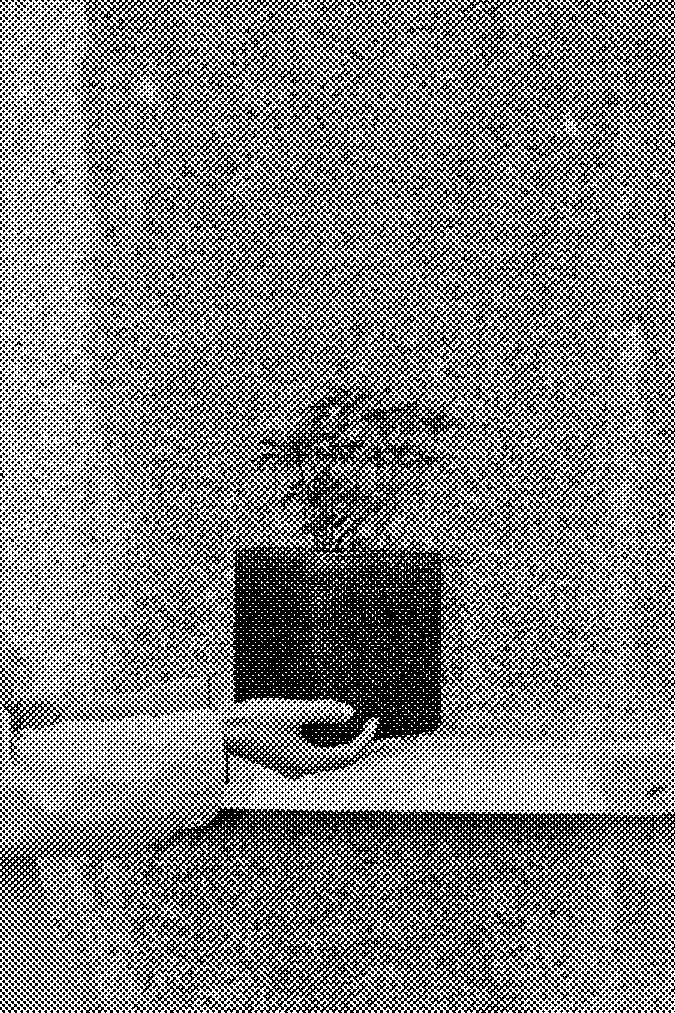
KleeKlee / Landscape containers
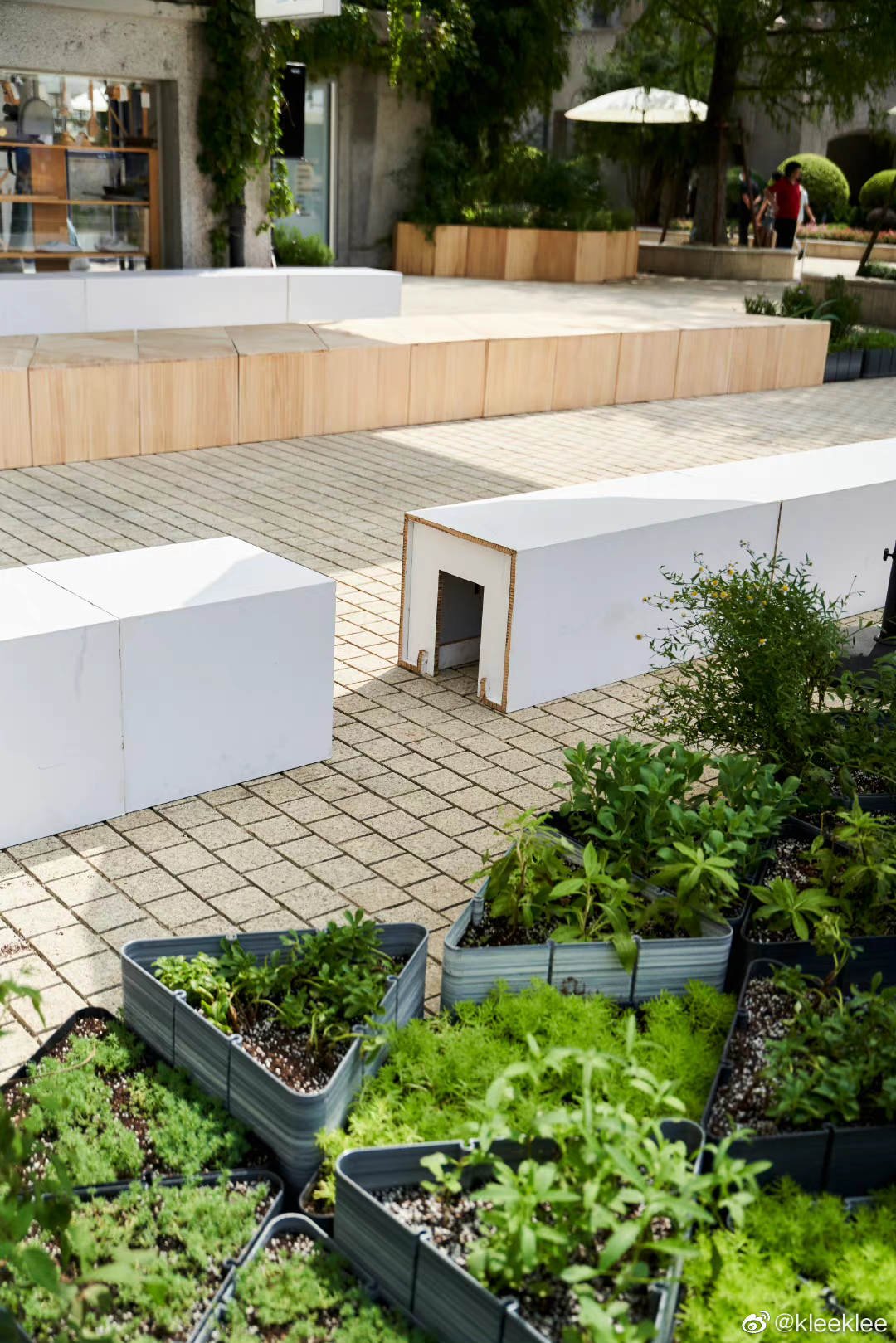
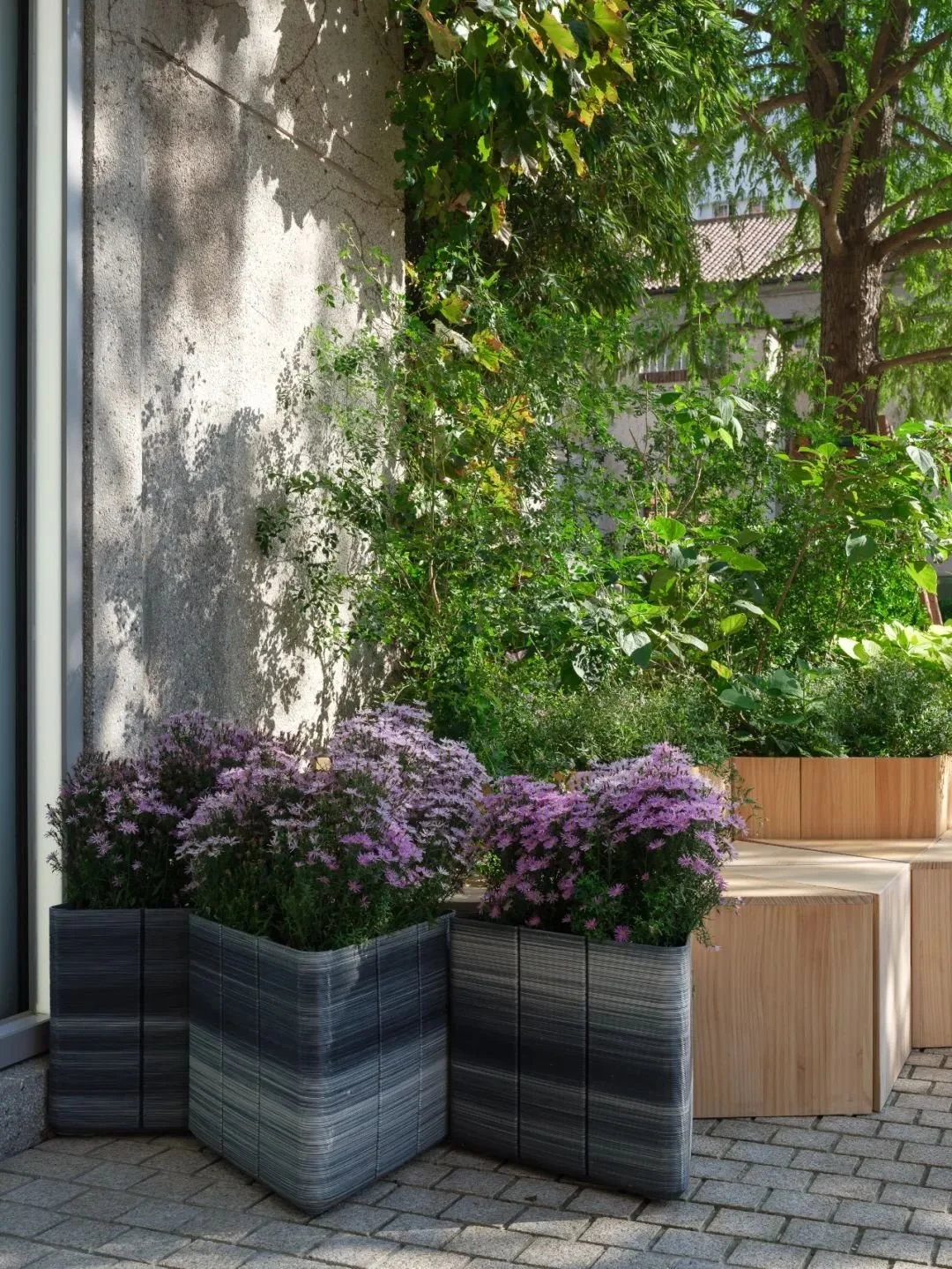
Helping the sustainable clothing brand KleeKlee to design the outdoor spaces of its stores with a landscape architect. Developing a project around the circular economy and industrial 3D printing.
Designer & producteur a la fois
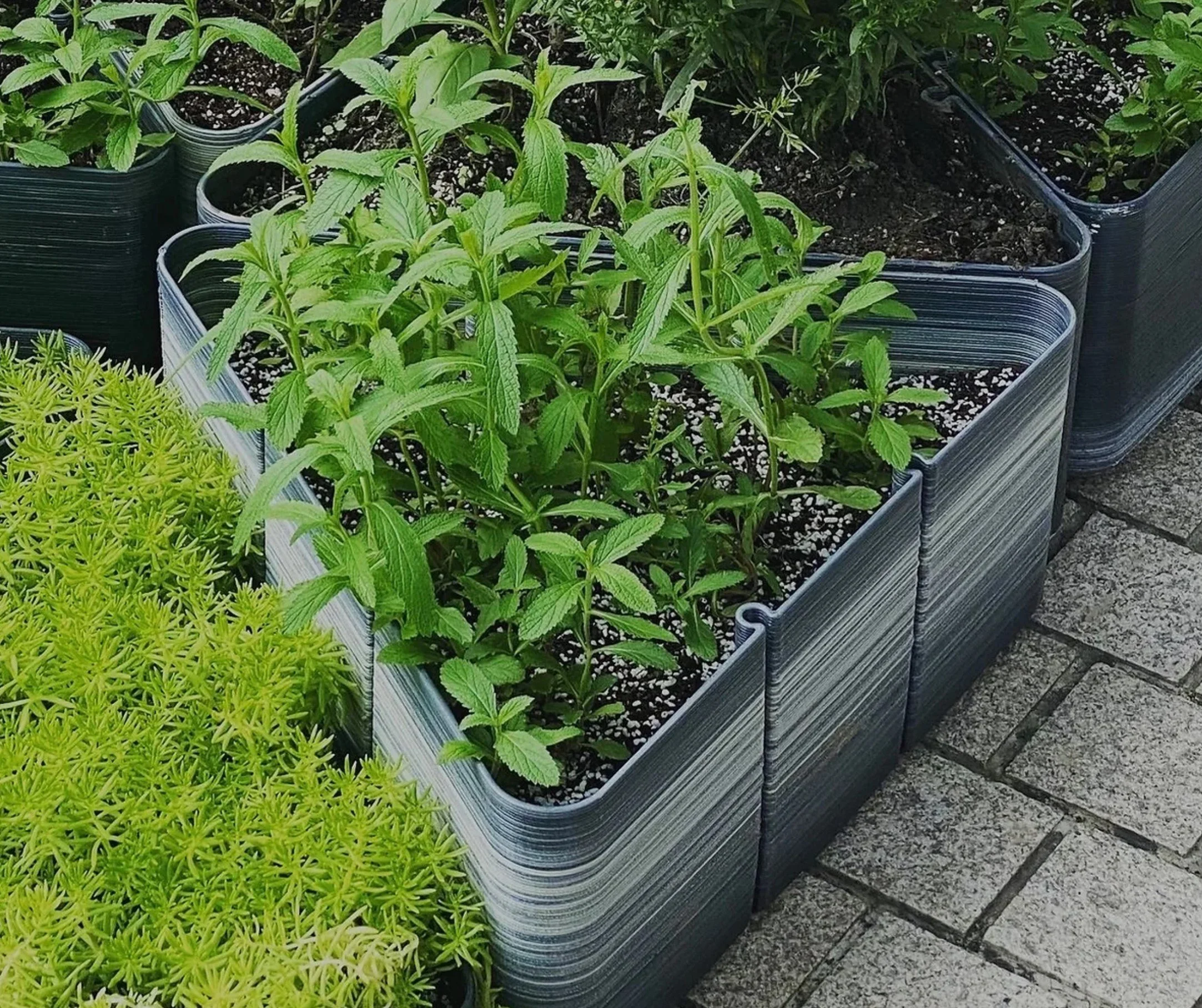
To meet the demand for custom-designed plant containers, it was decided to turn to industrial 3D printing. This eliminates the need for mold making for small production runs, allows for different sizes, and enables our agency to become producers, thus allowing us to fully control the project from design to industrial manufacturing.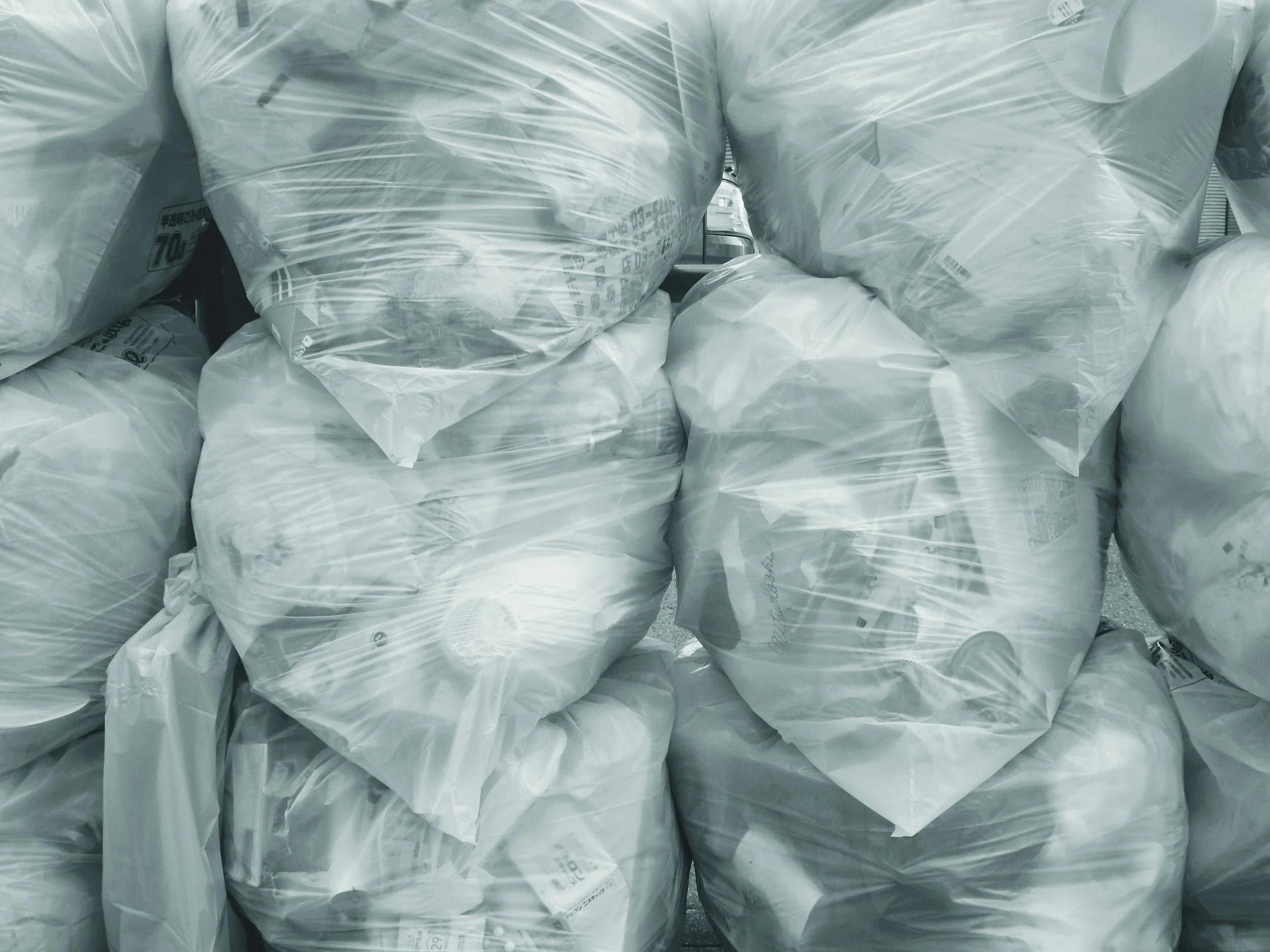
Extensive research was necessary to determine the most suitable recycled material for manufacturing the bins. Having previously worked in technology companies like Lenovo, reusing electronic waste such as computer mice and keyboards gave this project new meaning for us. The ABS plastic used to manufacture these items met our needs for producing the bins. A long period of testing followed to achieve the desired result.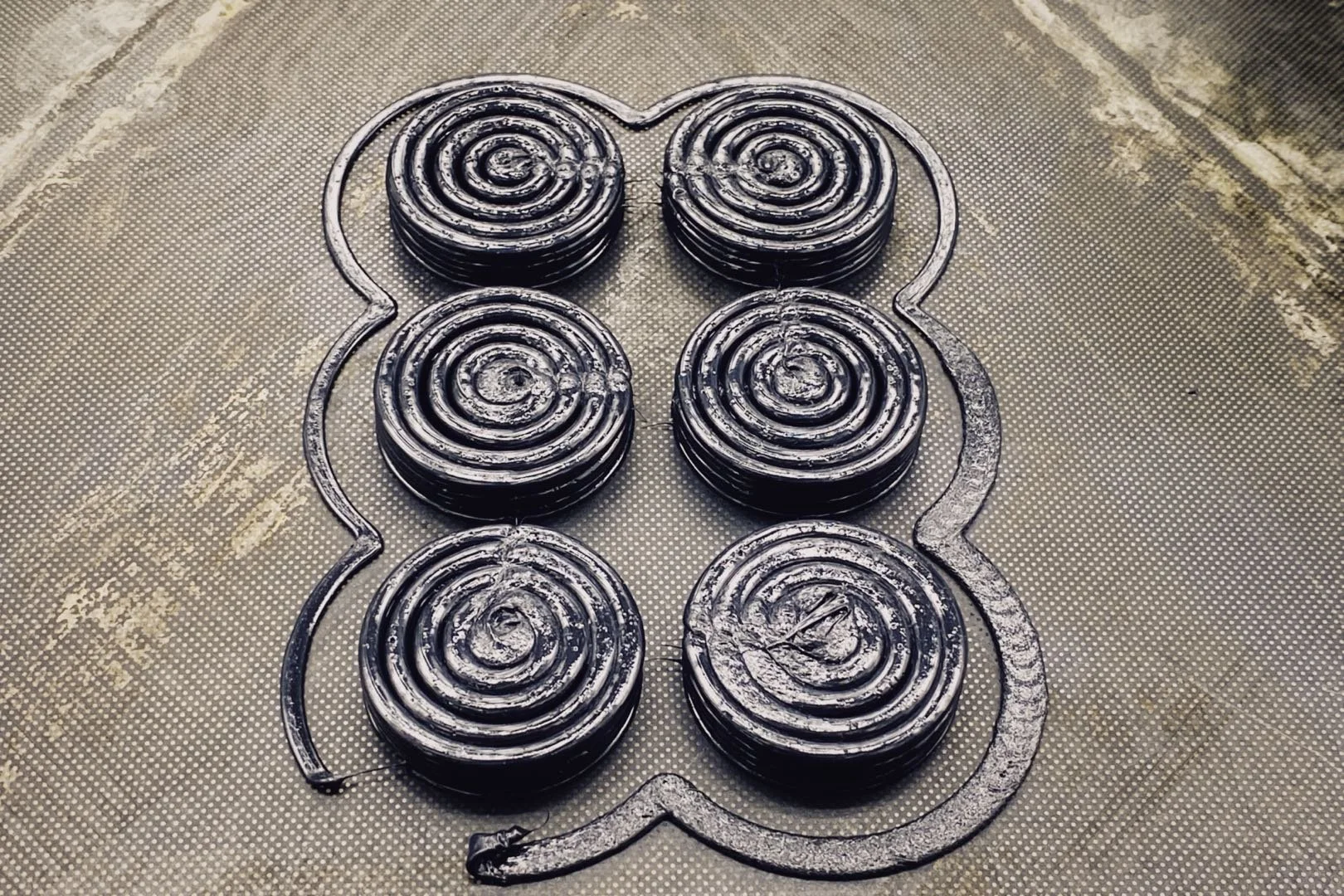
Experimental Approach
Recycled plastic is more difficult to work with for 3D printing and requires a long phase of trial and error and improvement to achieve the desired aesthetic and functional results.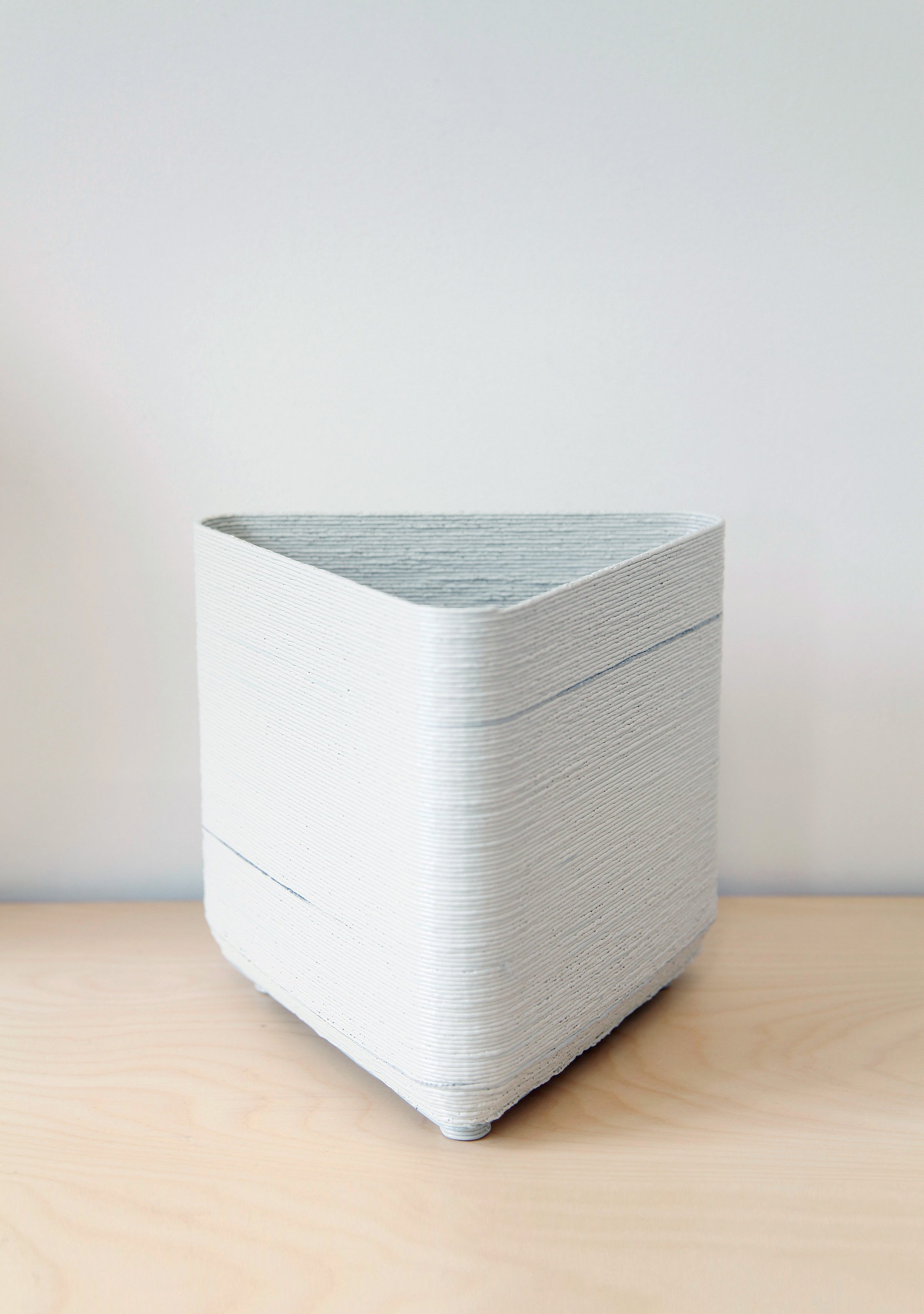
Uniques
Textures
After showing samples produced to the artistic director of the Kleeklee brand, she agreed to follow our direction, which consisted of highlighting the color variations on each printed piece, coming from random waste, and transmitting this result in the final objects to better communicate the story of this project.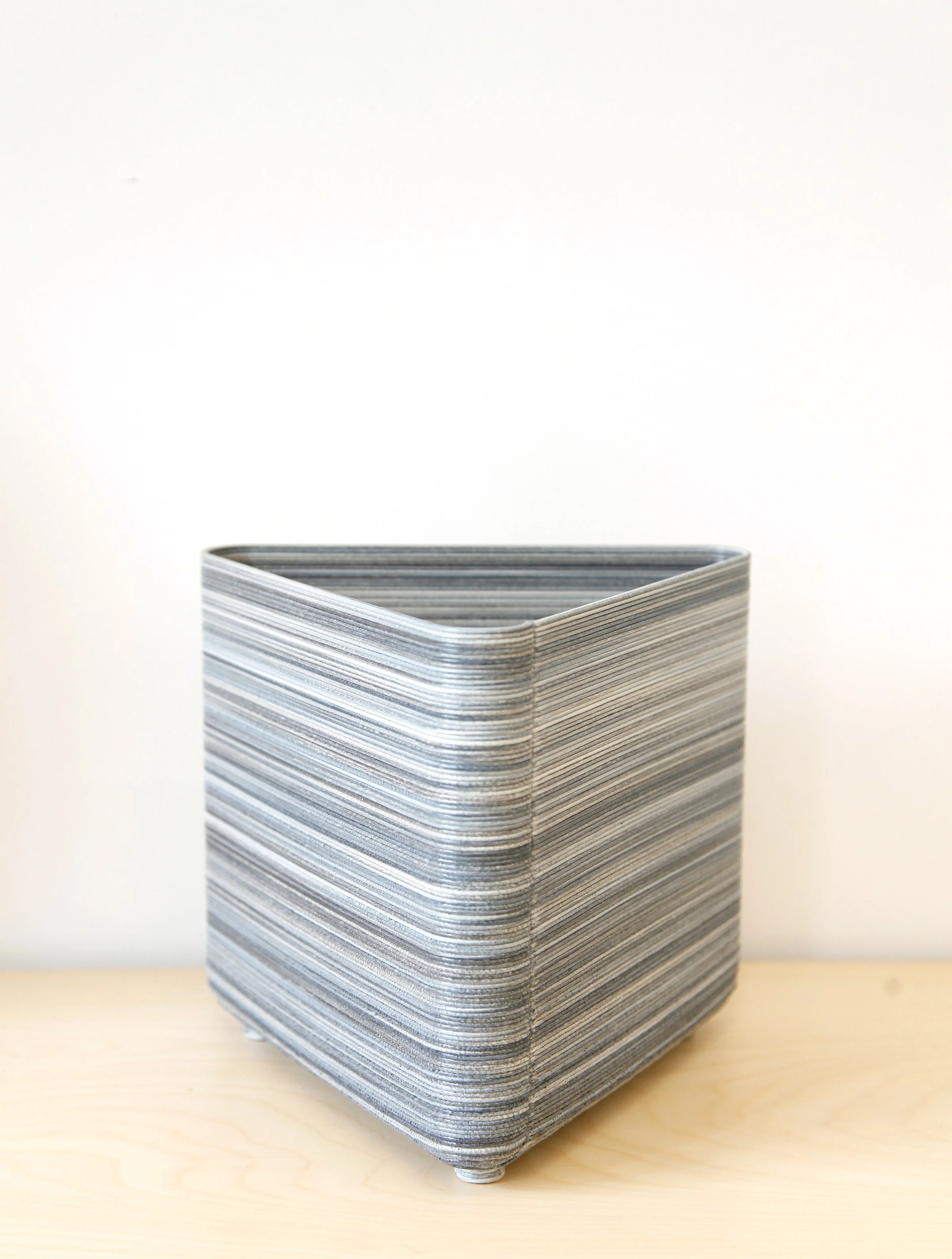
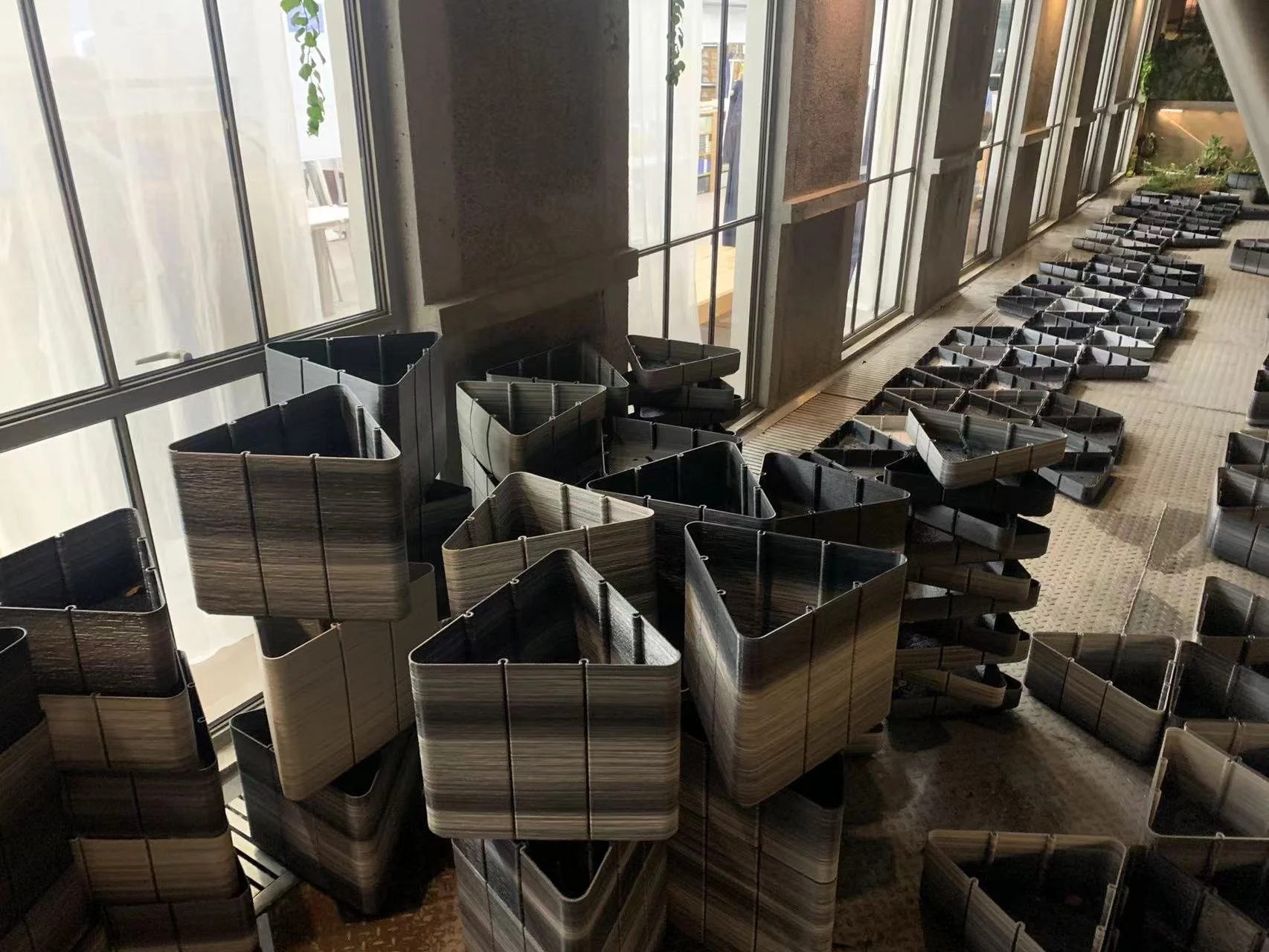
Industrialisation
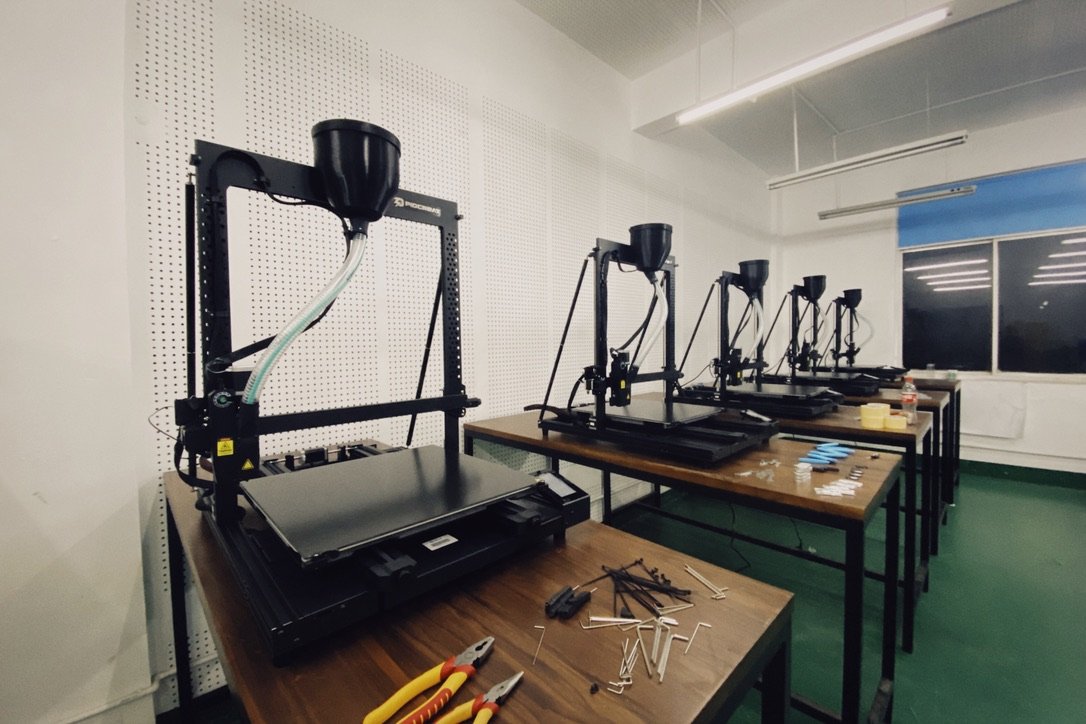
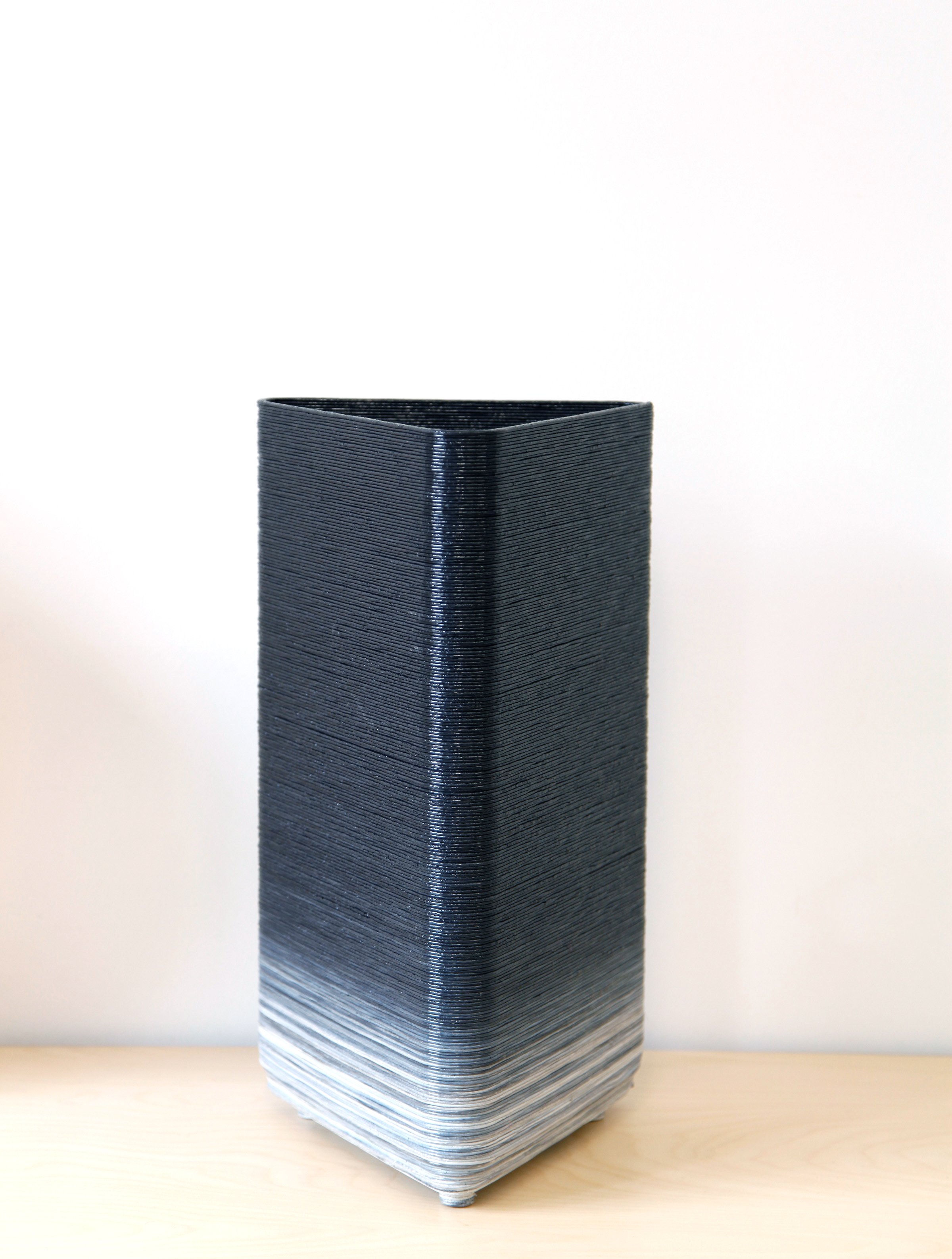
After setting up our micro-factory, we were able to mass-produce this item, exceeding 1000 units, and it became a product in the Kleeklee catalog.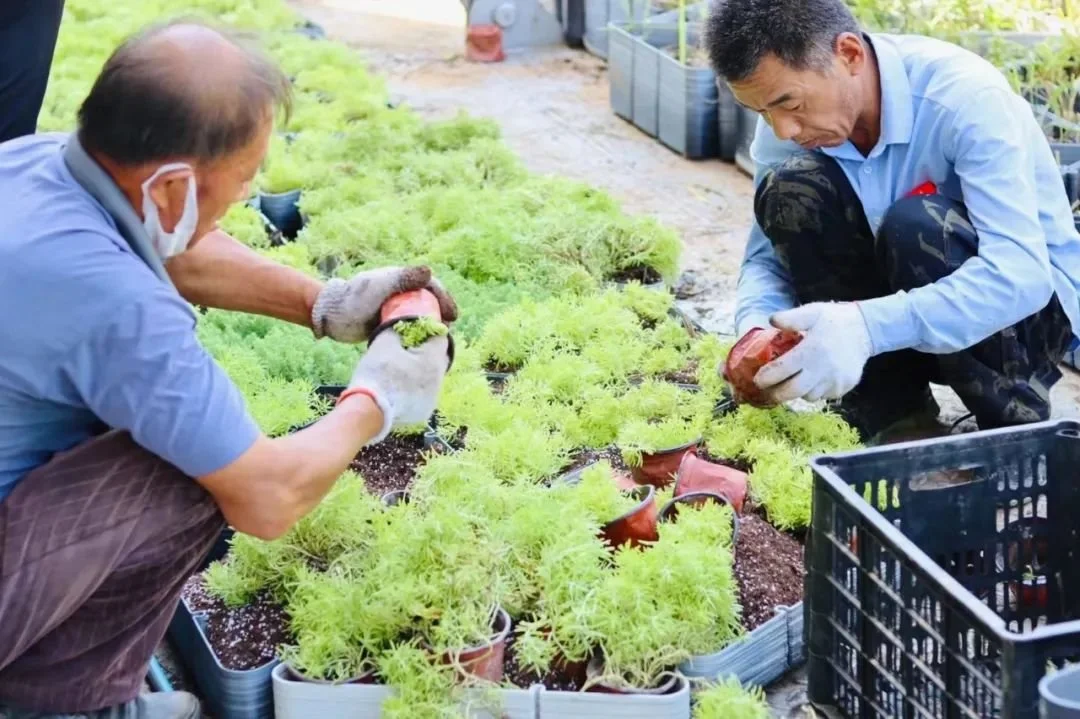
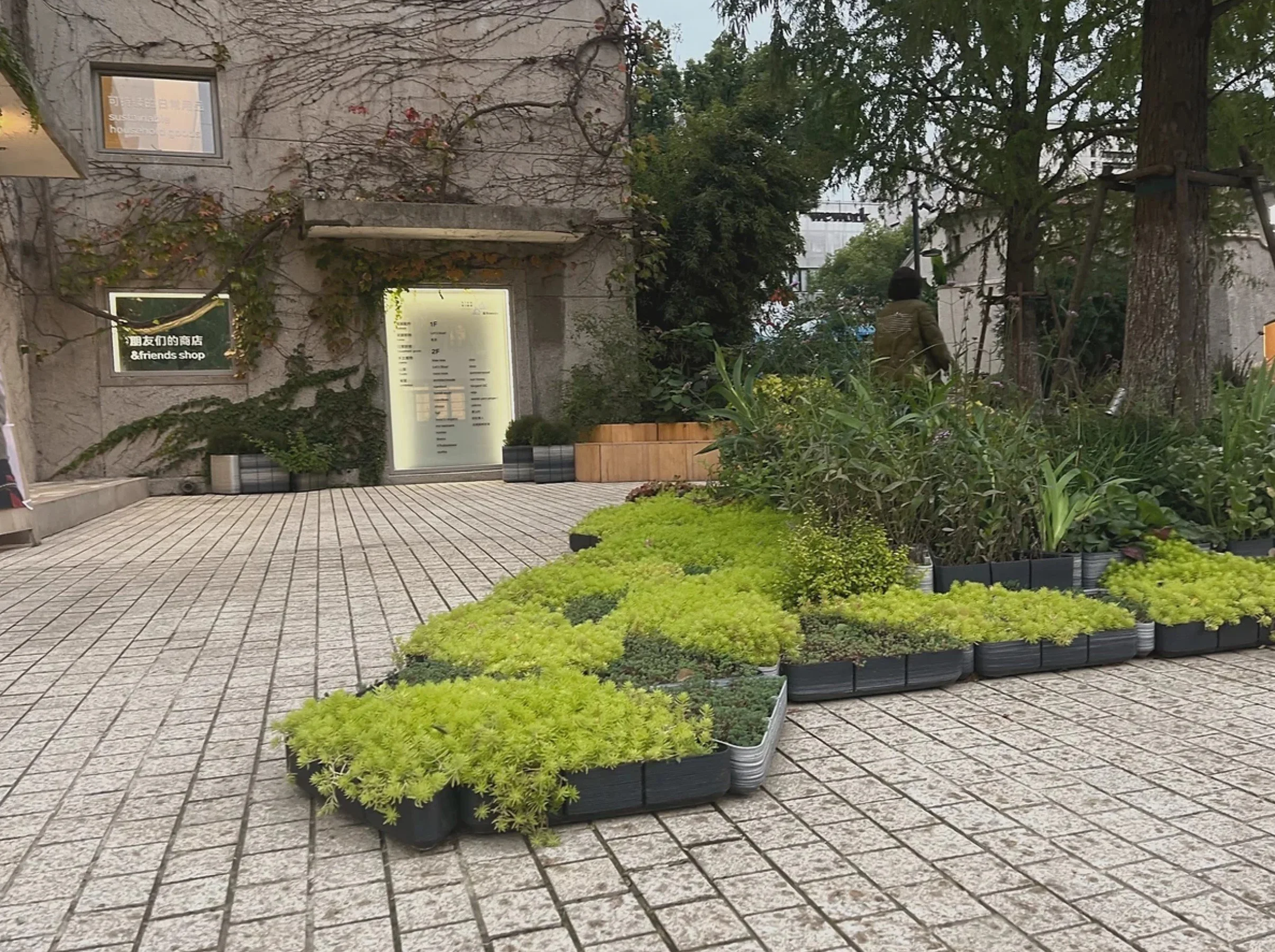
Project Installation
Installation du projet avant defile
Presentation
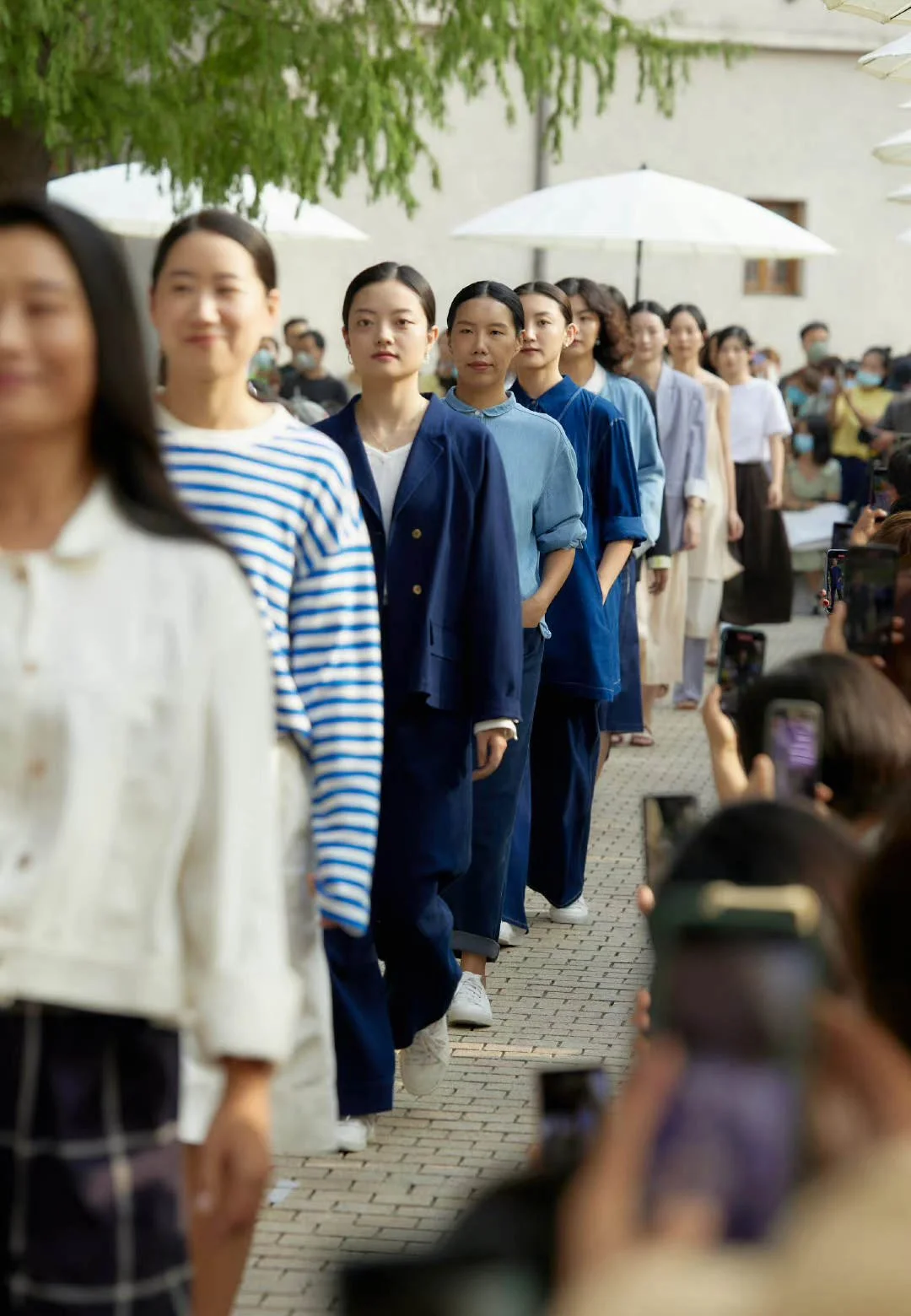
Parade
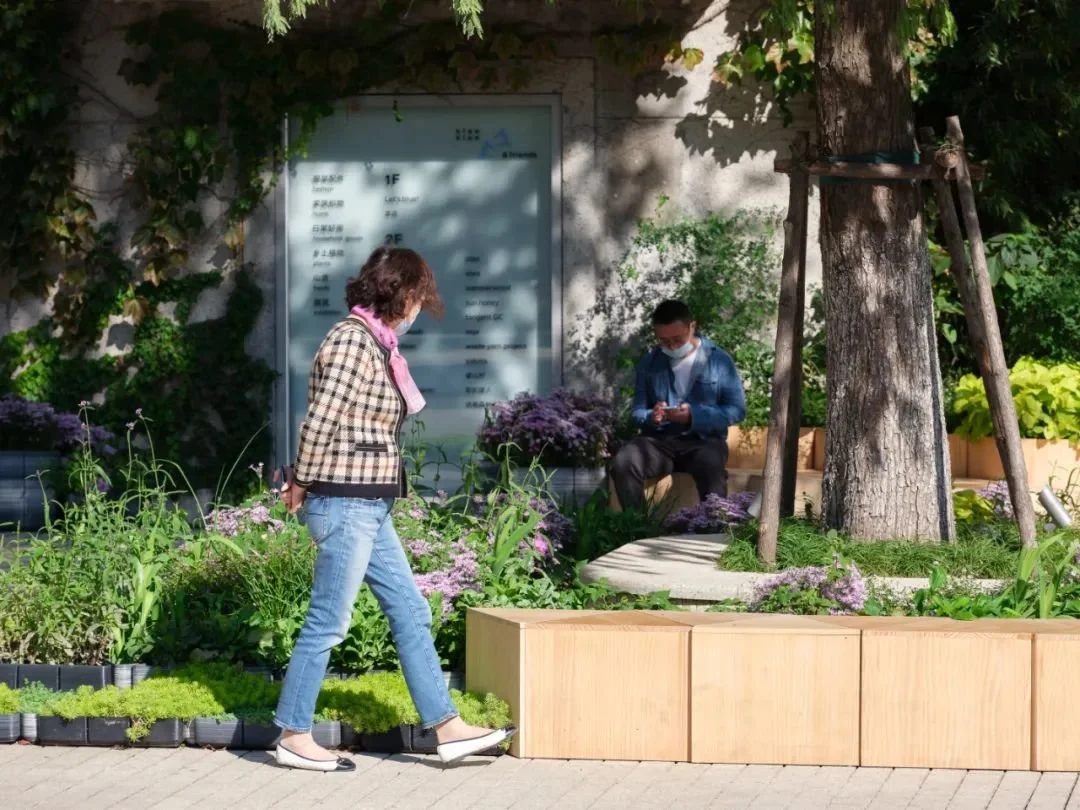
1 year later...
One year after completion, the plants have grown, demonstrating this brand's commitment to sustainability, far removed from event-based projects where short-term success is paramount, and destruction often follows the end of the festivities.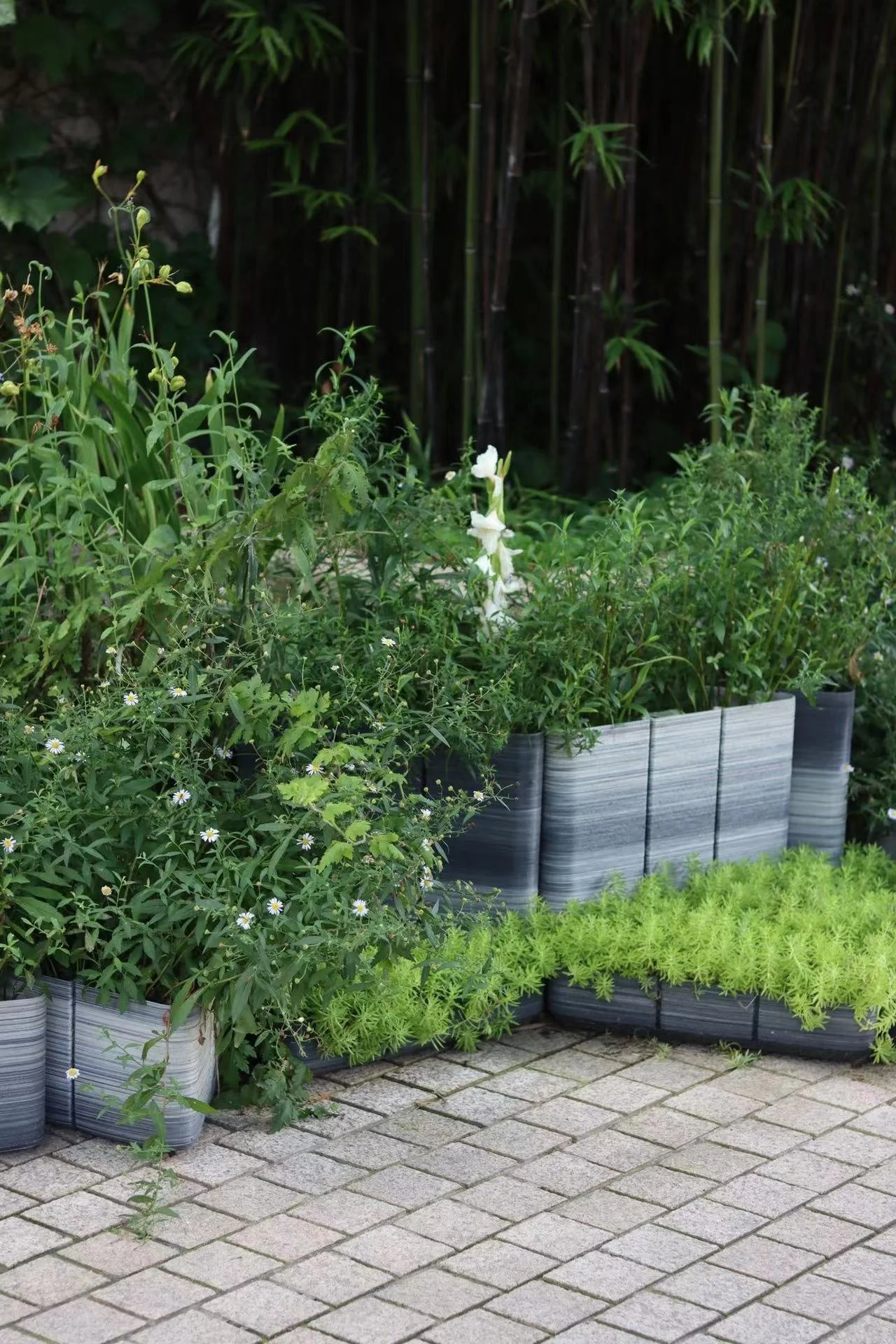

Maxence Loisson: a parametric journey between innovation, craftsmanship and industrial design.

The recent interview by FRAME magazine with Maxence Loisson, co-founder of Agence Paramétrique, offers a rare insight into the vision of a French designer who has worked in France, China and now the Vendée region of France. Through his international career and his philosophy of product design, he reveals a unique approach to innovation and contemporary issues in industrial design.
A French designer trained in Dijon, Lausanne... and by the big names in design
Born in Versailles and trained in interior architecture and then product design, Maxence Loisson was spotted early on as one of the young talents to watch. He honed his skills working with major figures such as Pierre Paulin and Philippe Starck, before collaborating with large European companies that were already manufacturing in China.
This experience laid the foundations for a decisive turning point: understanding manufacturing in order to design better.
From France to China: understanding the value chain to innovate more effectively
Faced with the complexity of remote production, Maxence decided to move to China to immerse himself fully in the local industrial culture. As he explains, he wanted to ‘understand how factories work’ and learn to work with a different problem-solving culture, one that is much more action-oriented and efficiency-driven.
This stay of several years turned him into a hybrid designer: rooted in European aesthetics, but mastering Asian industrial capabilities — a combination that is now highly valuable to international brands.
Parametric Agency: a design agency that explores all parameters
In 2019, Maxence founded Agence Paramétrique with Junying Wang, in order to break free from the constraints of large corporations and regain total creative freedom. The studio's name symbolises this idea: design is not a single answer, but a set of parameters to be balanced — function, cost, sustainability, aesthetics, life cycle... like the potentiometers on an audio console
With this vision, the agency positions itself as a design agency capable of navigating between:
industrial design (5G antennas, air purifiers, smart locks)
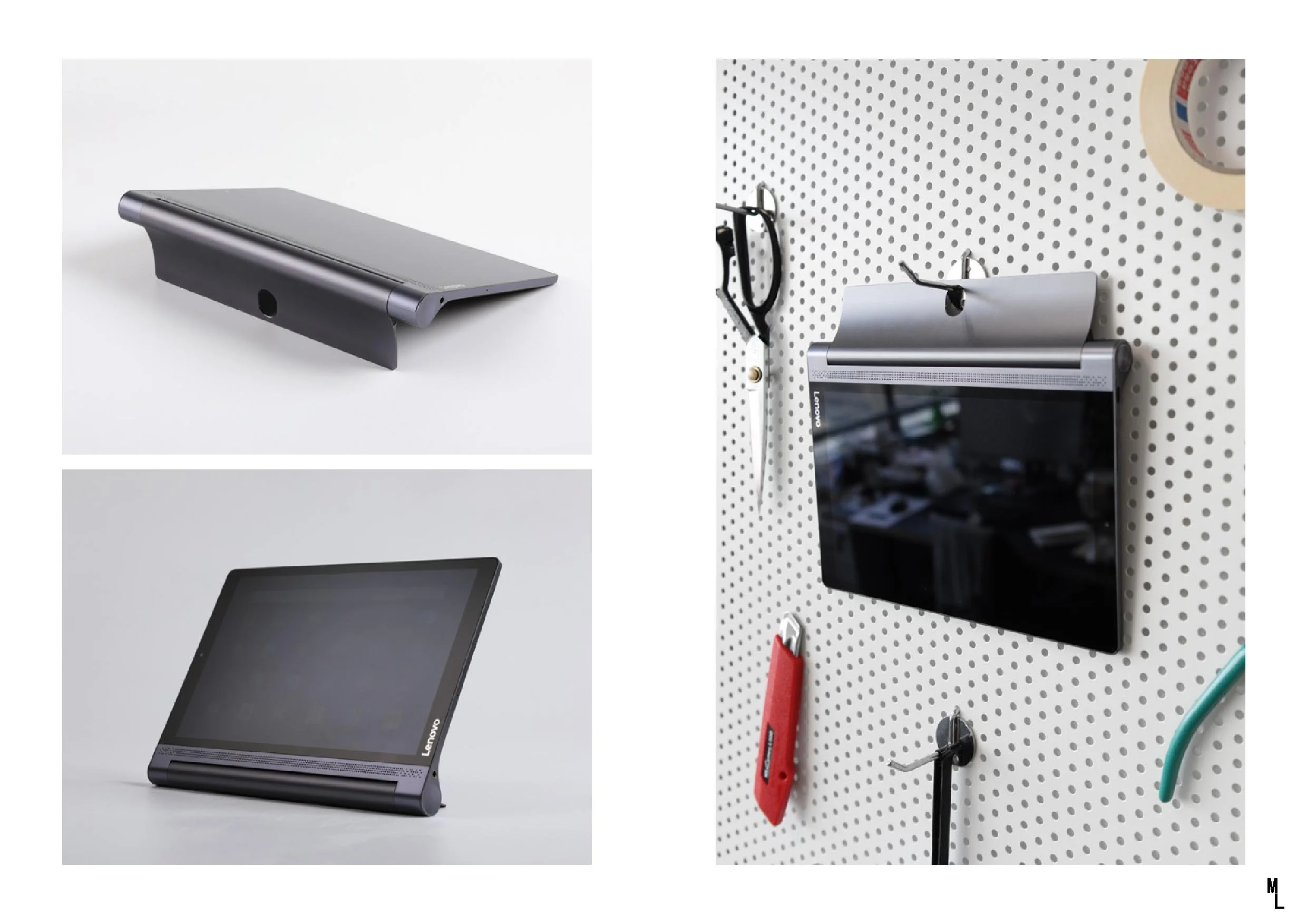
consumer product design (VR cameras, tablets, baby monitors)
artisanal or low-tech projects
strategic design and repositioning of international brands
This cross-disciplinary approach has become the studio's signature.
A design rooted in user experience and industrial feasibility
The products designed by Maxence all share one thing in common: they perfectly balance function, context and feasibility. The designer explains that he starts each project by immediately thinking about its manufacture, which has earned him several Red Dot Awards for his work at Lenovo and YI Technology.
Rather than following trends, the team favours a rational approach, focusing on the essentials and avoiding functional excess — a stance that is in line with the agency's ecological and sustainable values.
When innovation rhymes with simplicity: the return of ‘low tech’
According to Maxence, one of the major emerging trends of the next decade will be the return of ‘low tech’. Faced with technological saturation, some users are looking for simpler, more durable and more repairable objects. The design agency is already exploring this avenue through projects such as:
a beach mat made from natural materials, designed as an alternative to plastic tents.
a ceramic loudspeaker that exploits the acoustic properties of the material, combining Chinese craftsmanship with high-end industrial design.
These creations embody a sober, authentic, yet deeply innovative design.
Between France and China: the uniqueness of Agence Paramétrique
In 2023, the agency opened a branch in France — a return to its roots, particularly in Vendée, where the studio developed a bridge between:
the finesse of French design,
the manufacturing power of China,
the technical innovation sought by international brands.
This duality enables the agency to support companies that wish to go beyond simple ODM to develop a genuine brand strategy and premium product design.
Conclusion: a human-centred approach to design and manufacturing
Maxence Loisson's career path illustrates a key trend in contemporary industrial design: understanding materials, factories and cultures in order to create meaningful objects. Based in the Vendée region, Agence Paramétrique is now establishing itself as a key player for companies looking for a designer capable of combining creativity, industrial expertise and sustainable innovation.

VATTI / Cooking hobs
Designing hobs for Chinese households. Understanding a culture and customs that differ from our own, with issues that are both different and similar.
Gas first and foremost
Analysis of usage in China
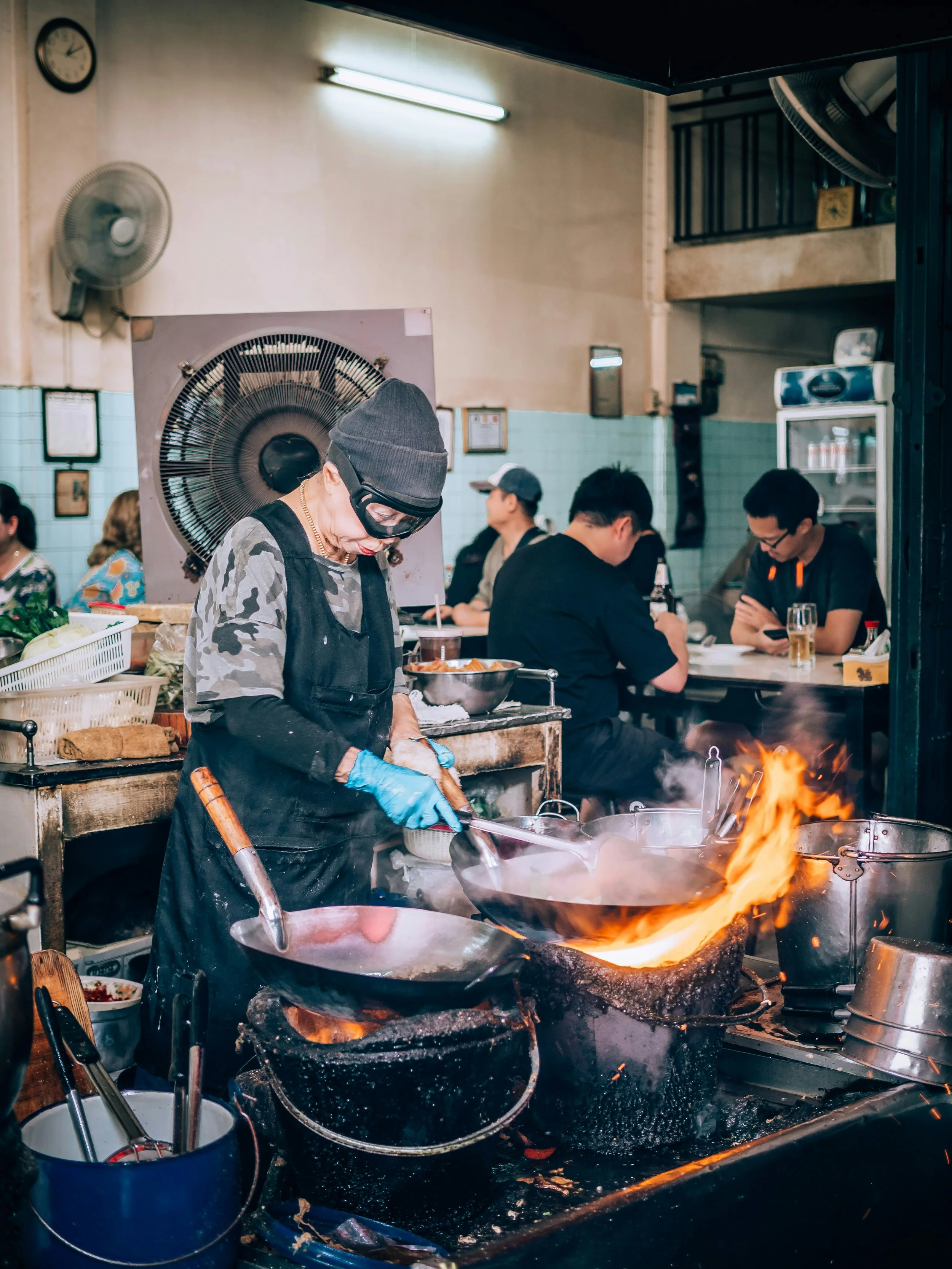
Cooking hobs in China are much more powerful than those used in the UK. Cooking over high heat, frying and using a wok for stir-frying mean that gas is the dominant fuel source, unlike in the UK where ceramic hobs are more common.

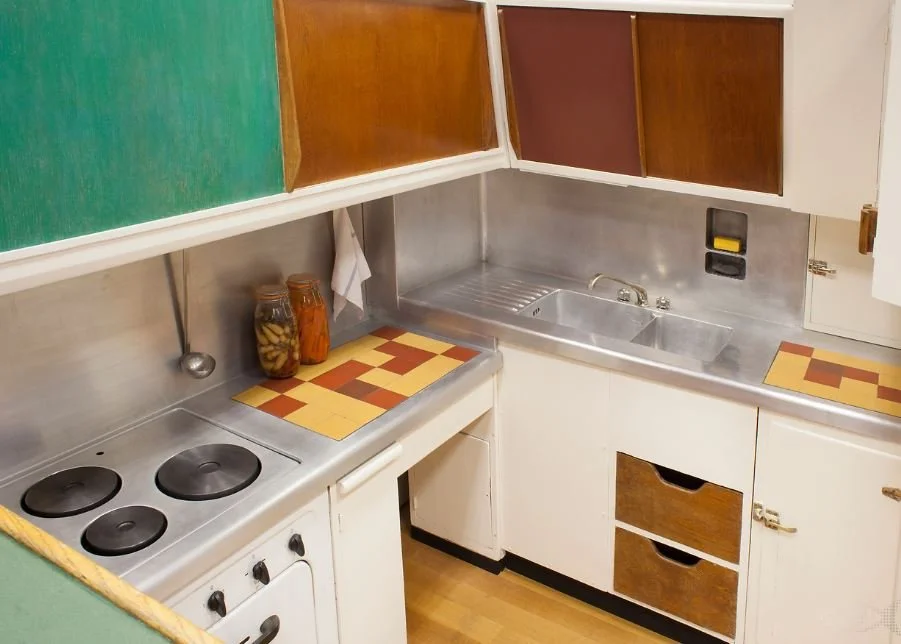
Modernism, the fully automated home, controlled by buttons and smartphones, is already mocked in Jacques Tati's Mon Oncle. The immaculate white kitchen without a speck of dirt is far from our subject. Chinese cooking is manual, tedious, involves flames and splatters, and requires constant attention from the user.

Burners
The burners on Chinese hobs are two to three times more powerful than those used in France in order to meet their requirements: frying, stir-frying and high-temperature cooking.

Projections
Deep frying requires high heat, which means oil splatters. Containing splatters and ensuring safety are therefore important requirements for these hobs.
Reference
A visit to Le Corbusier's apartments, designed in collaboration with Charlotte Perriand, remains a powerful reference point. Aesthetic, functional, without being ostentatious.
Idea 1
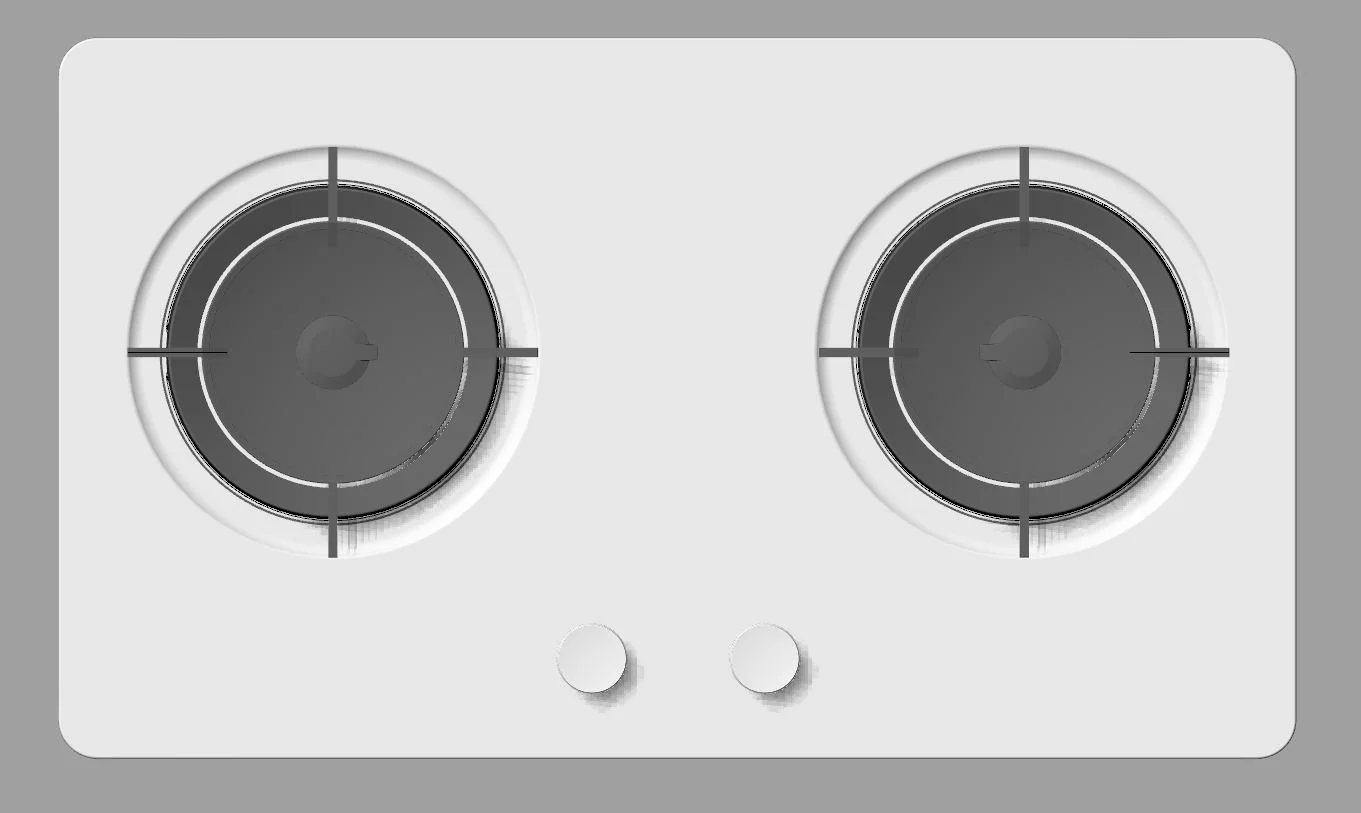
Two circles to contain the oil and make cleaning easy / Use
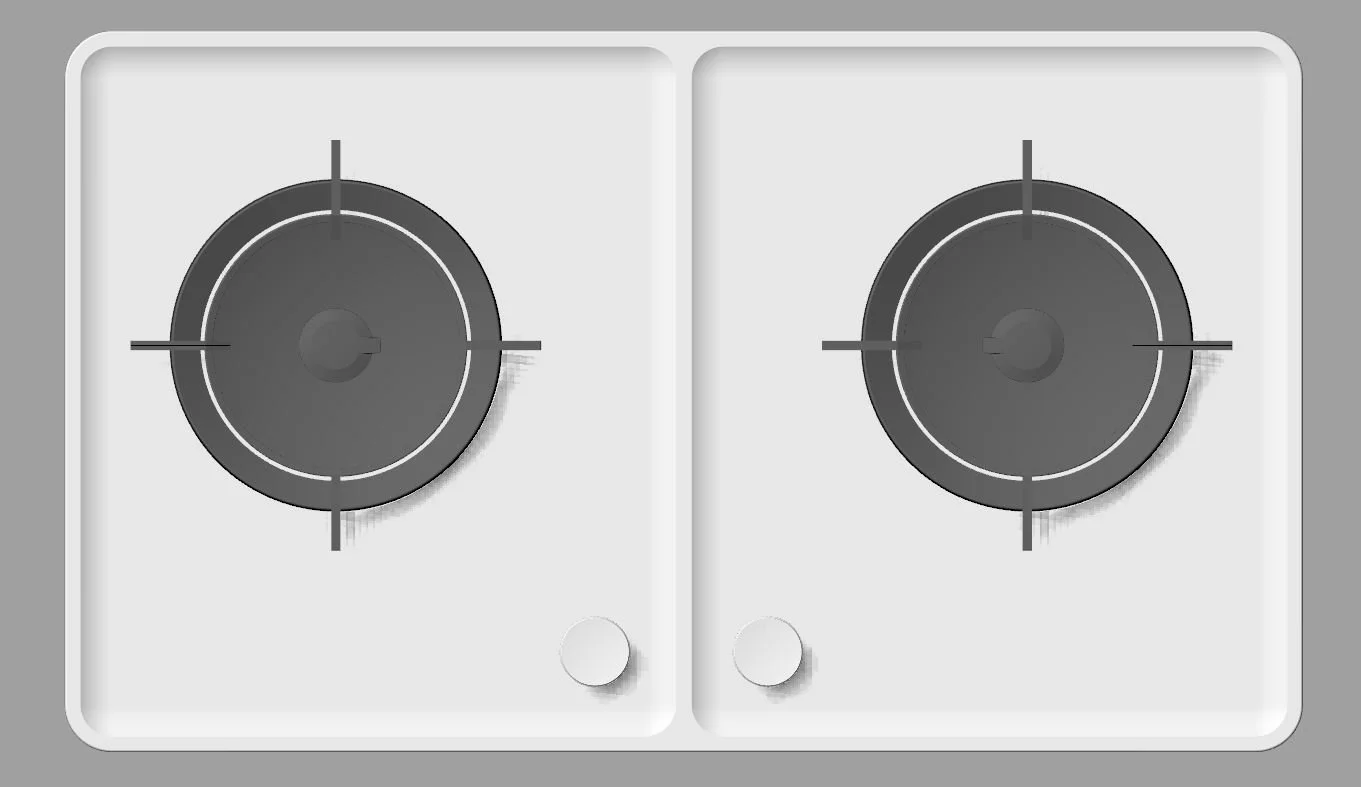
Idea 2
Divide the baking sheets into two parts.
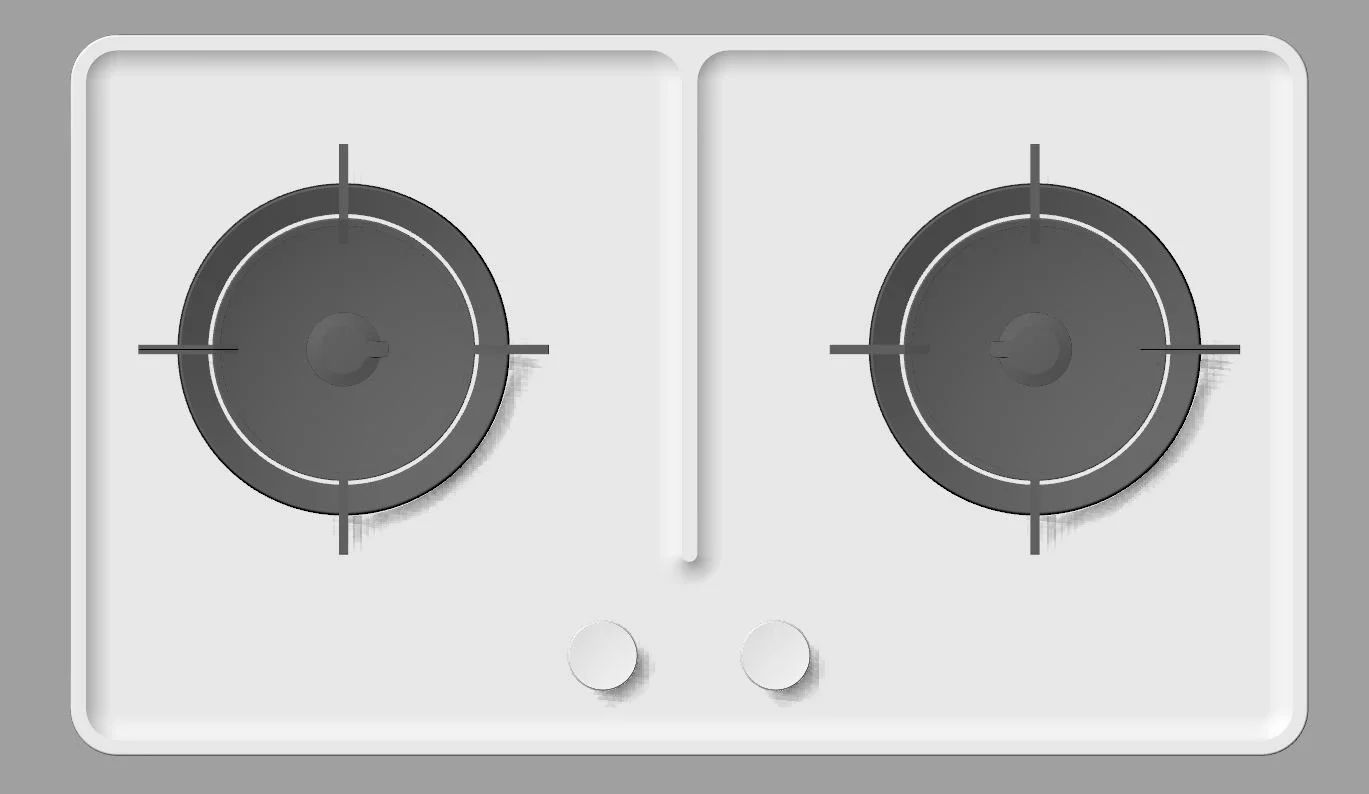
Idea 3
Separate while maintaining a shared space
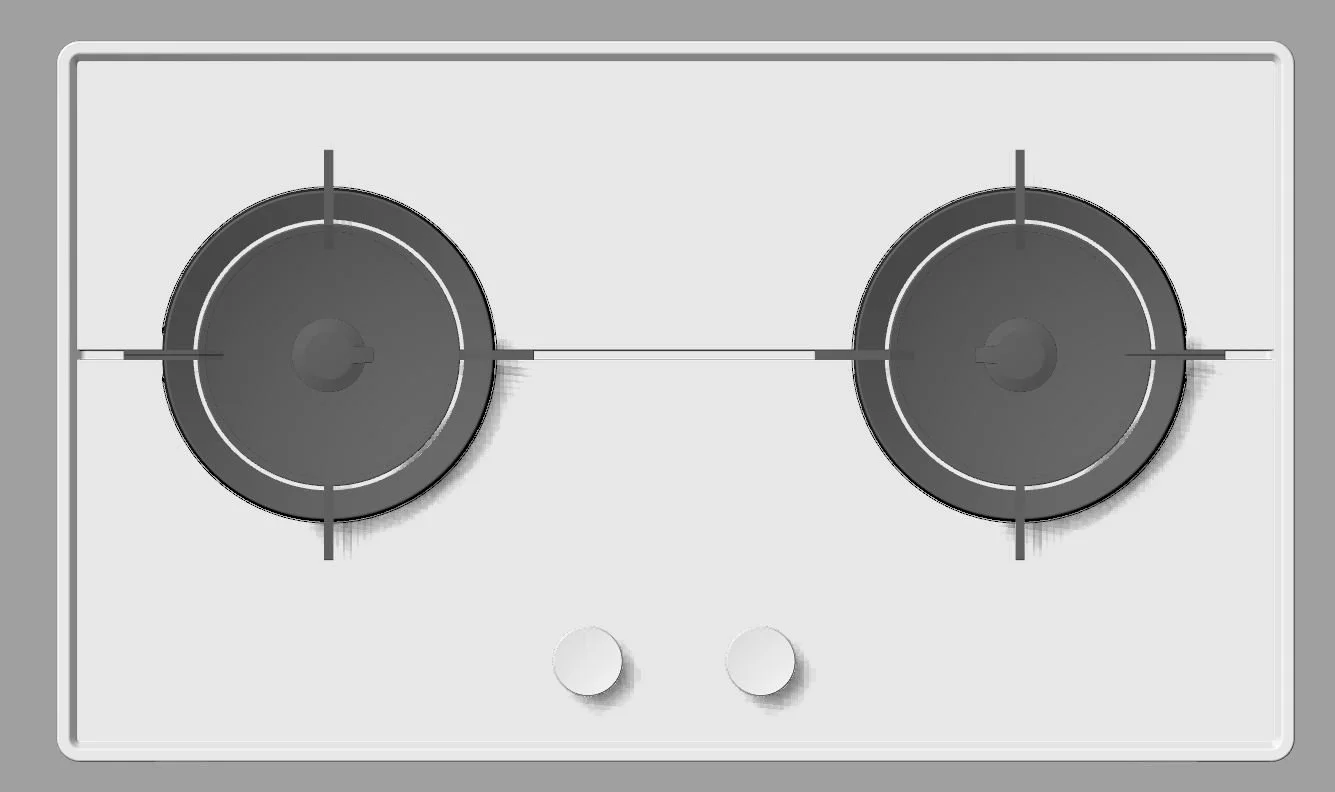
Idea 4
A common area defined by a frame, the groove in the middle helps to stiffen the stamped plate.
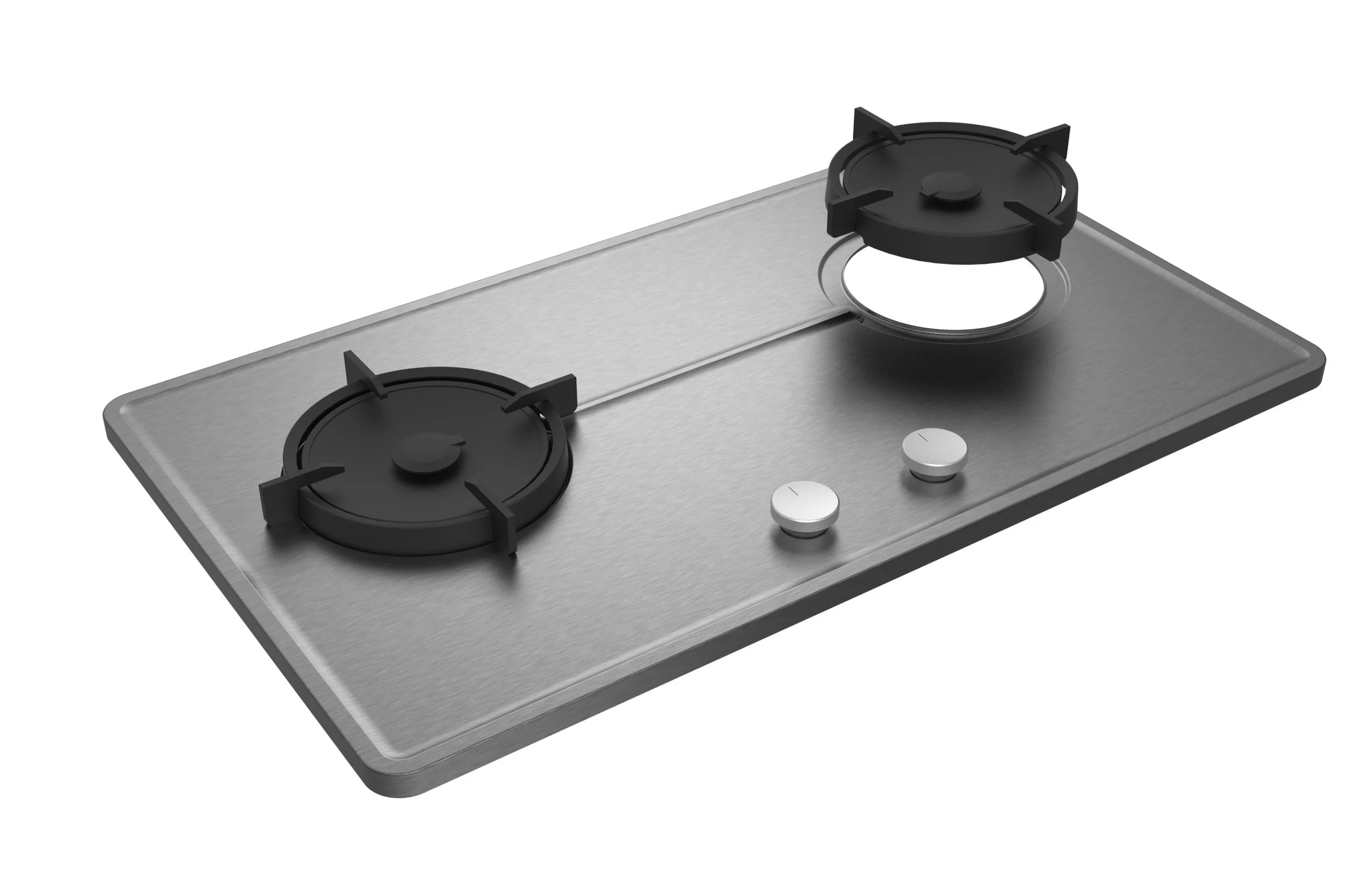
Proposal 1
The simplest design: a groove in the middle to stiffen the whole thing, and a groove all around to contain the cooking oil.
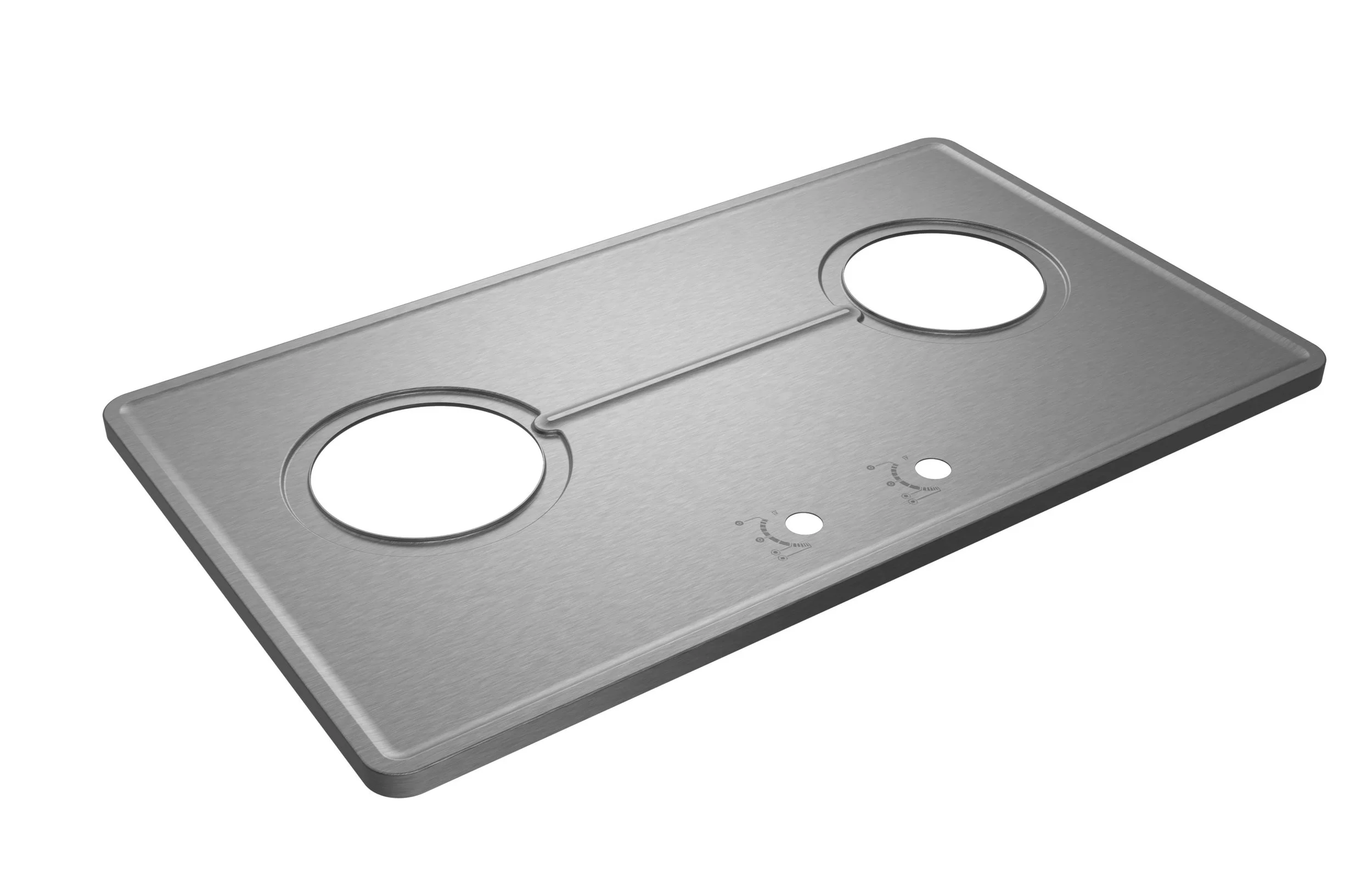
The groove in the middle is both a functional and aesthetic detail.
Proposal 2
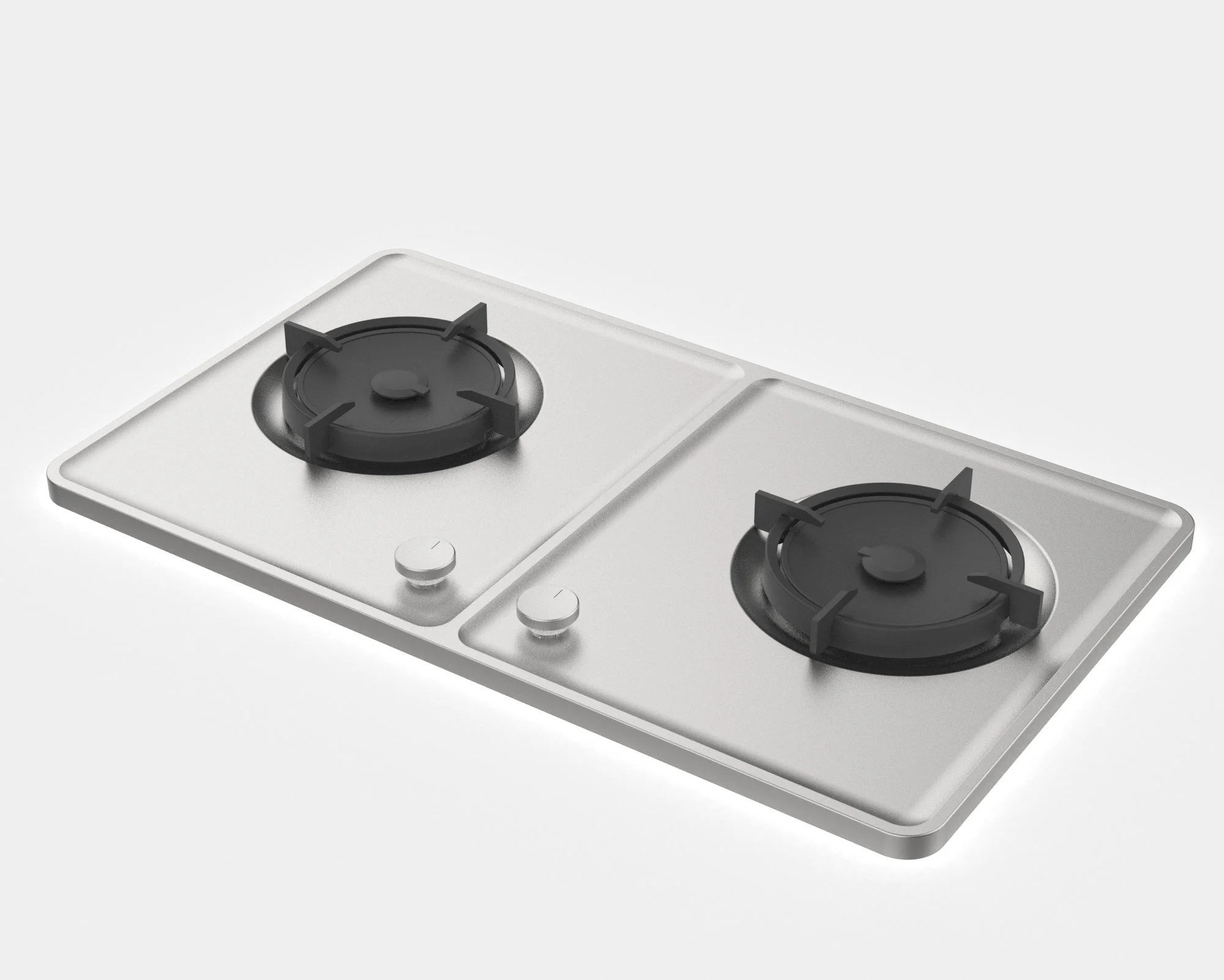
The two parts are separated so that, in the event of liquid splashes, half of the plate is spared.

The proposals obtained aim to make the product easy to use, quick to clean, and aesthetically pleasing and timeless. It will not make cooking faster, and there will be no exaggerated promises. It is also the designer's role not to oversell an idea, so as not to cause disappointment or frustration later on.
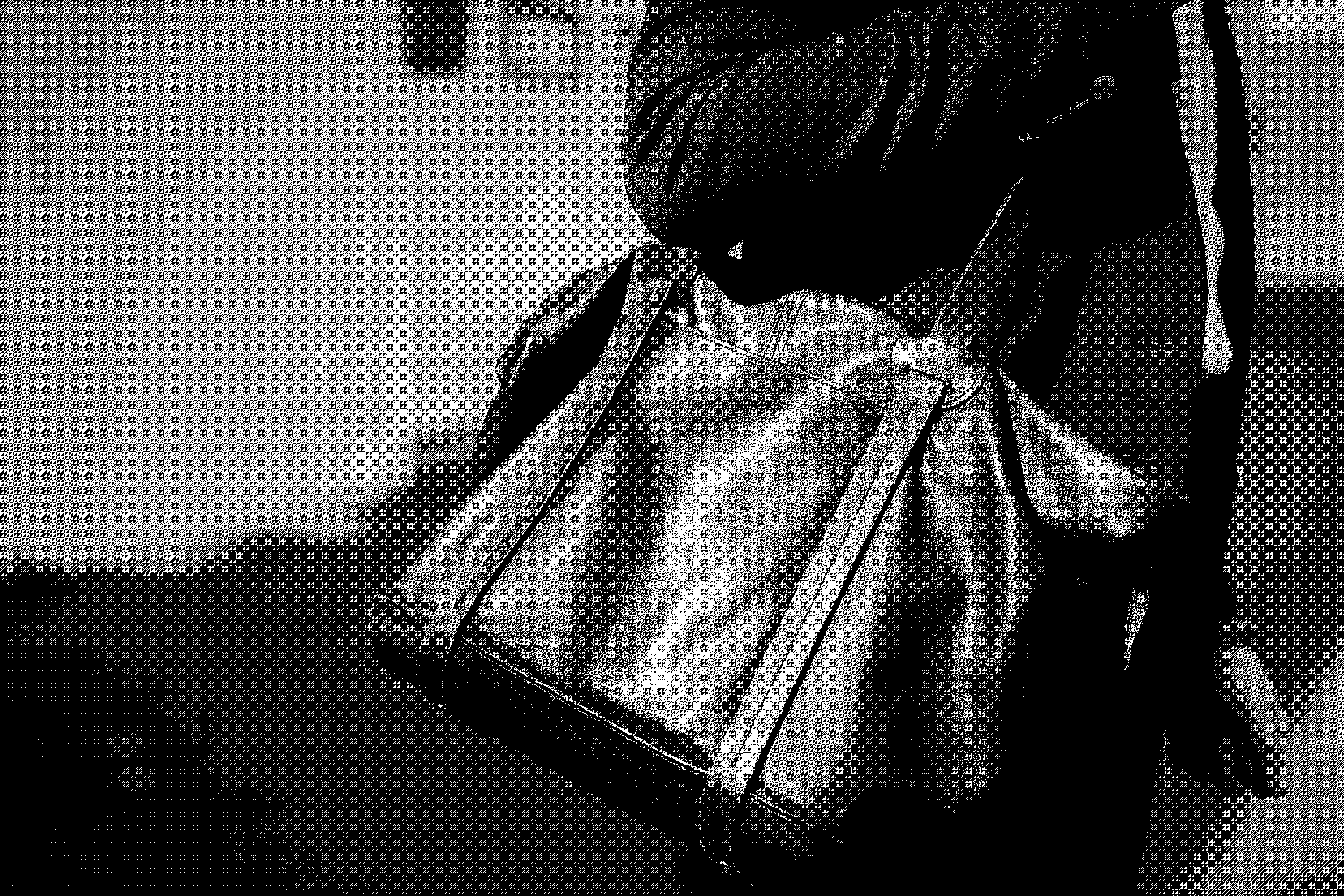
Study on shopping bags/tote bags
Designing a comfortable, durable and attractive handbag without reinventing the wheel. If we take the Longchamp Le Pliage bag, a bag that is firmly rooted in popular culture, analysing its flaws can serve as a starting point for designing a handbag.
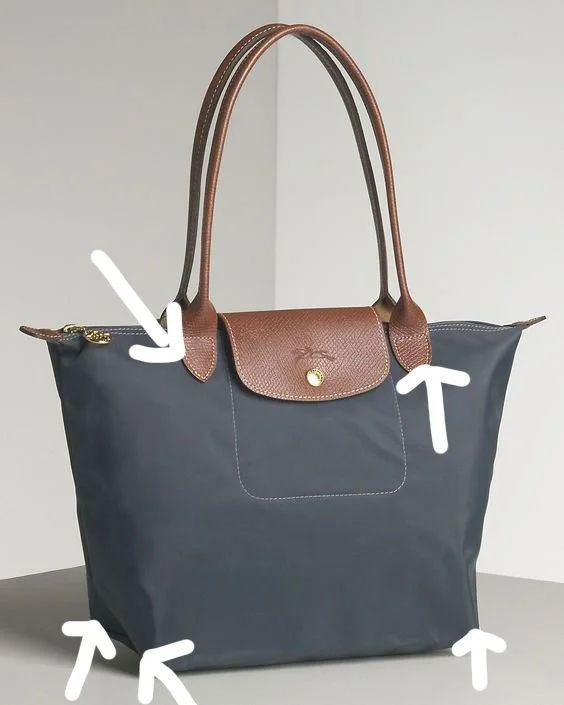
Longchamp The Fold
Identification of recurring wear points on this product.
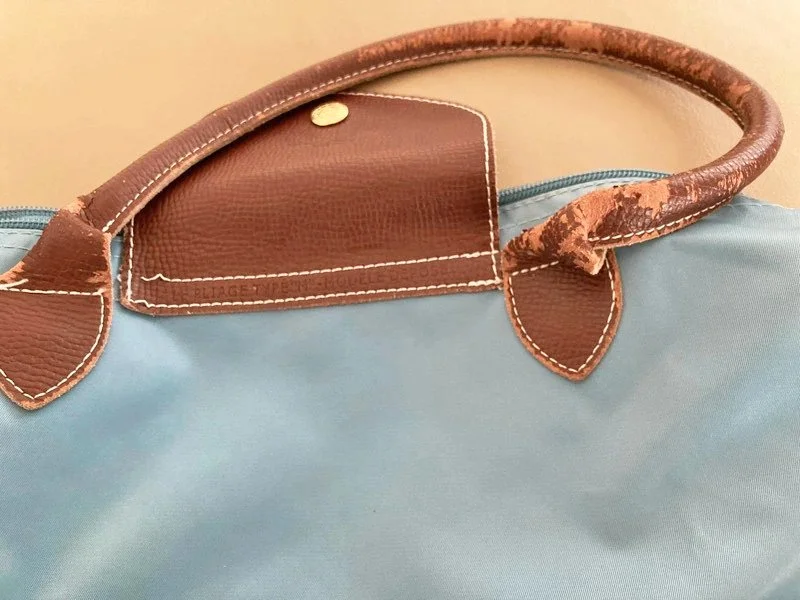
Handle
The leather handle is subjected to too much stress at the junction point and always ends up breaking after a certain amount of use.
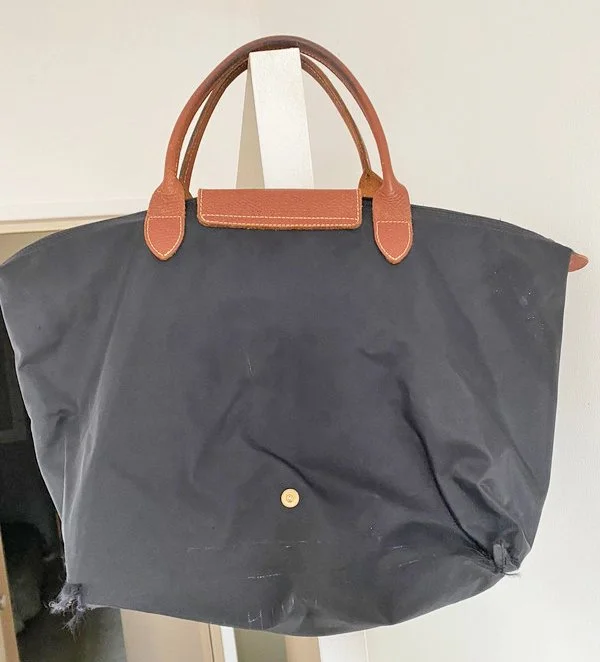
Protrusions
Here we can clearly see the corners worn away by friction on the sharp edges formed by the folding of the nylon fabric.
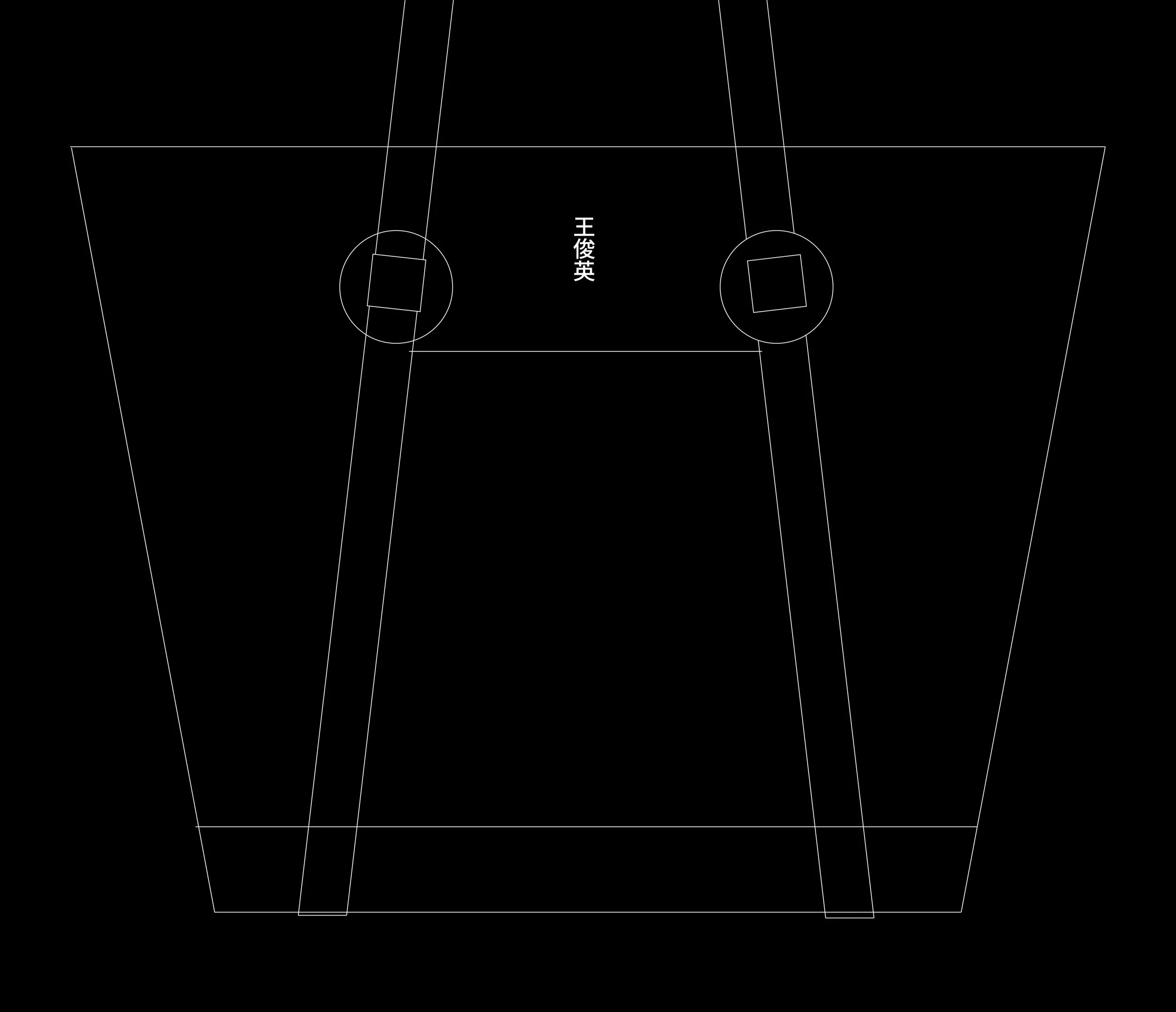
Tote bag design
Draw straps that will pass under the base of the bag to reinforce its strength, and design a mould to obtain a base with rounded corners.
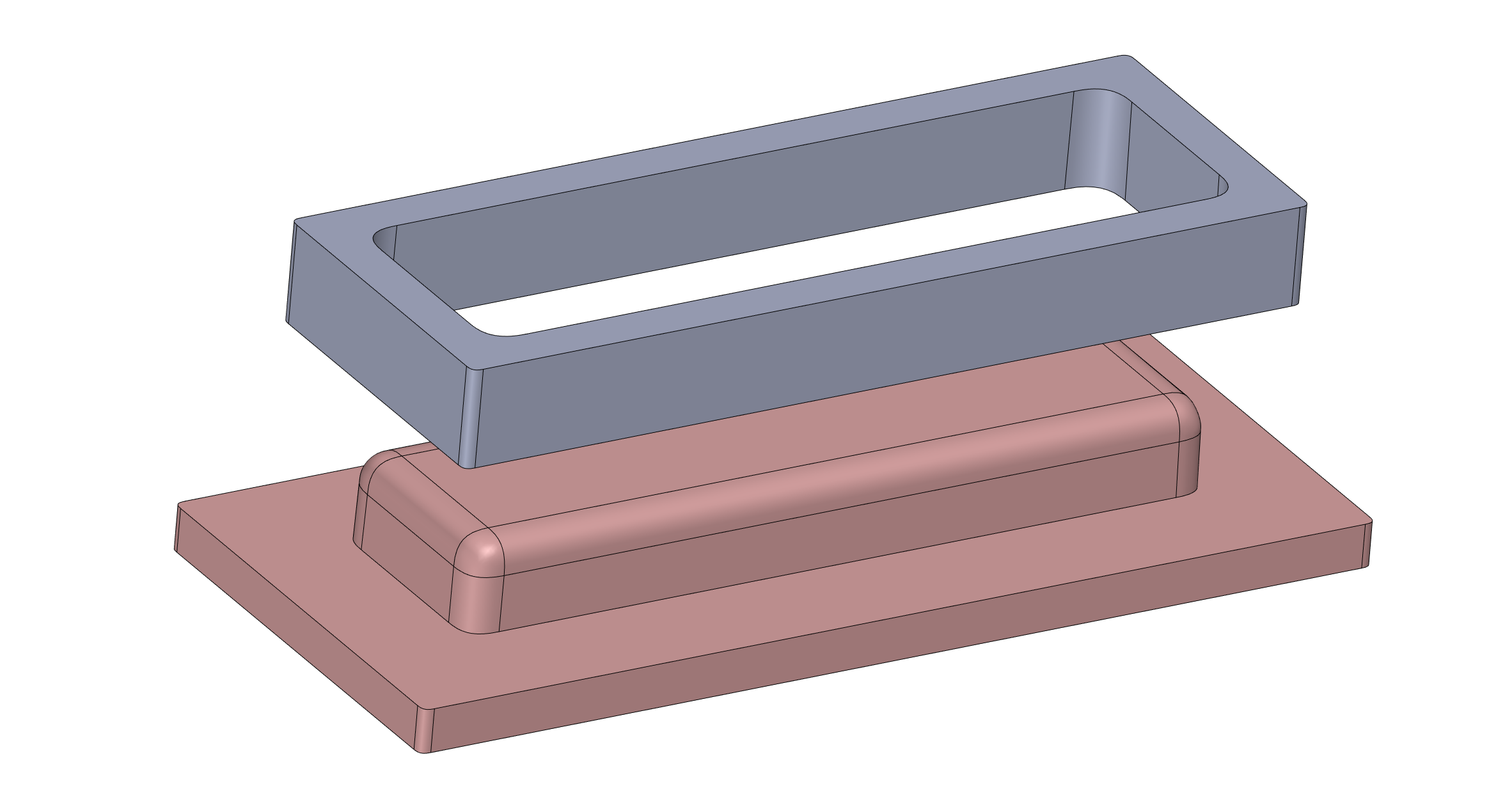
Mould design
The leather will be layered in this two-part mould.
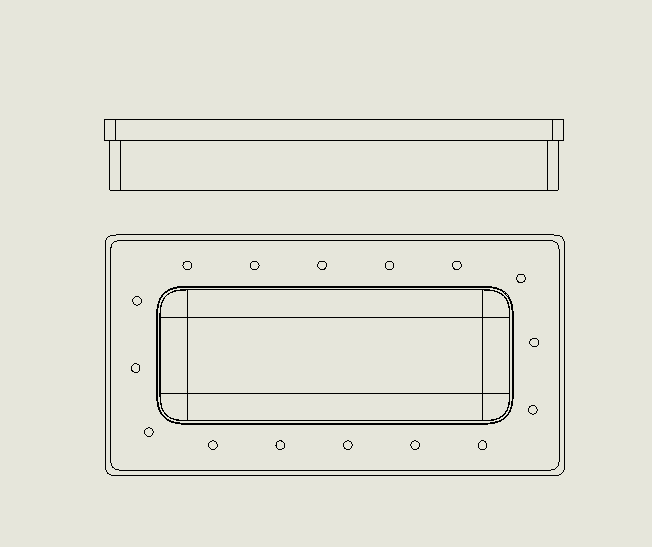
Finalisation
The holes around the base will allow the part to be removed from the mould.

Prototype
Testing on an initial sample for validation.
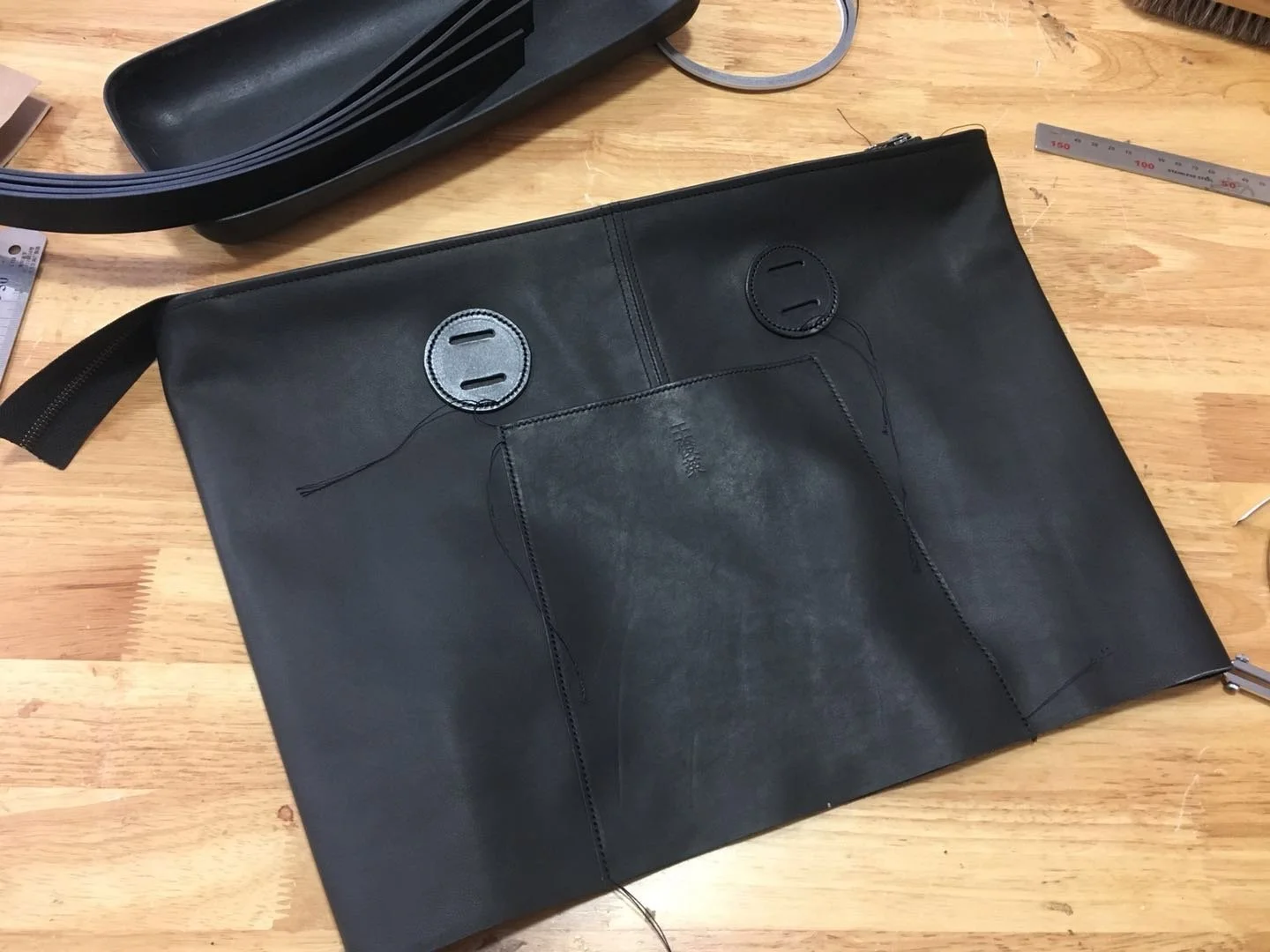
Production
The final product begins with two circular patches that reinforce the point where the strap will be subjected to stress. This technical reinforcement is also an aesthetic feature of the bag's design.
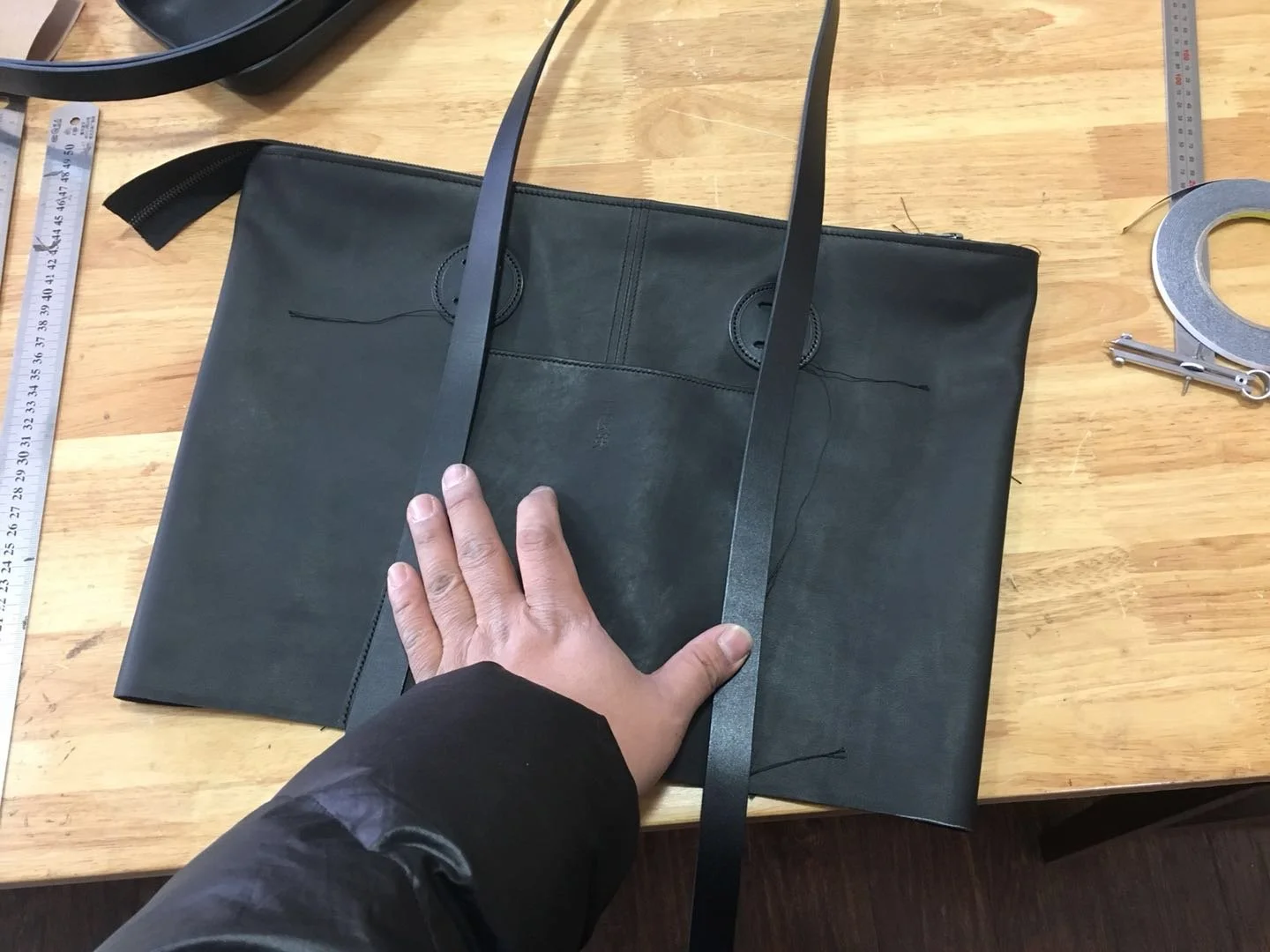
Installing the strap
Verification of measurements before sewing.
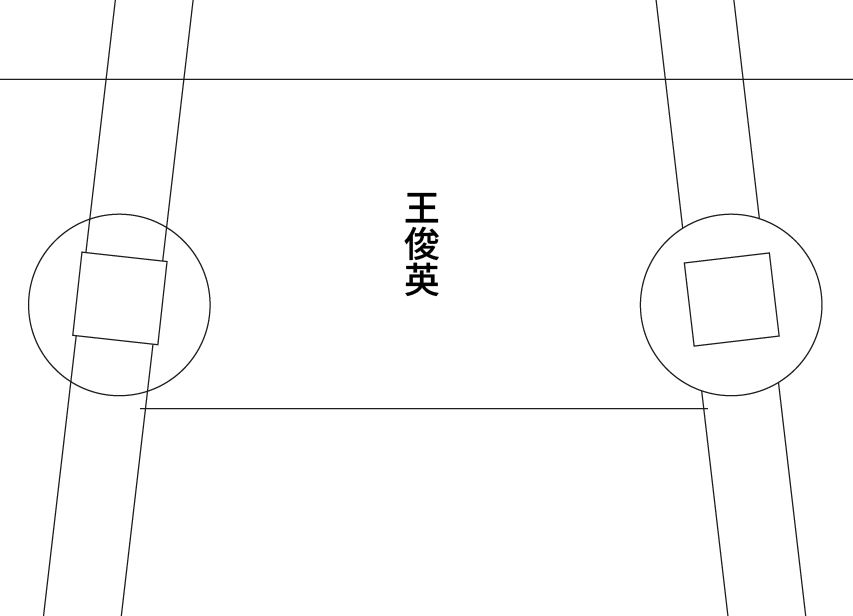
Without logo
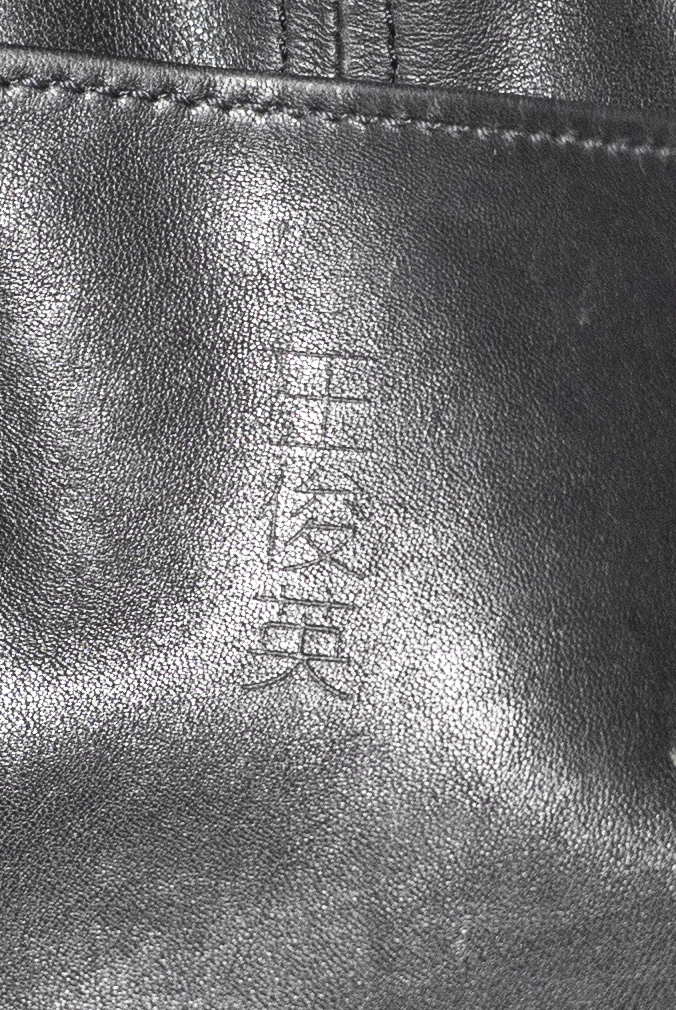
Name embossed on the user's leather.
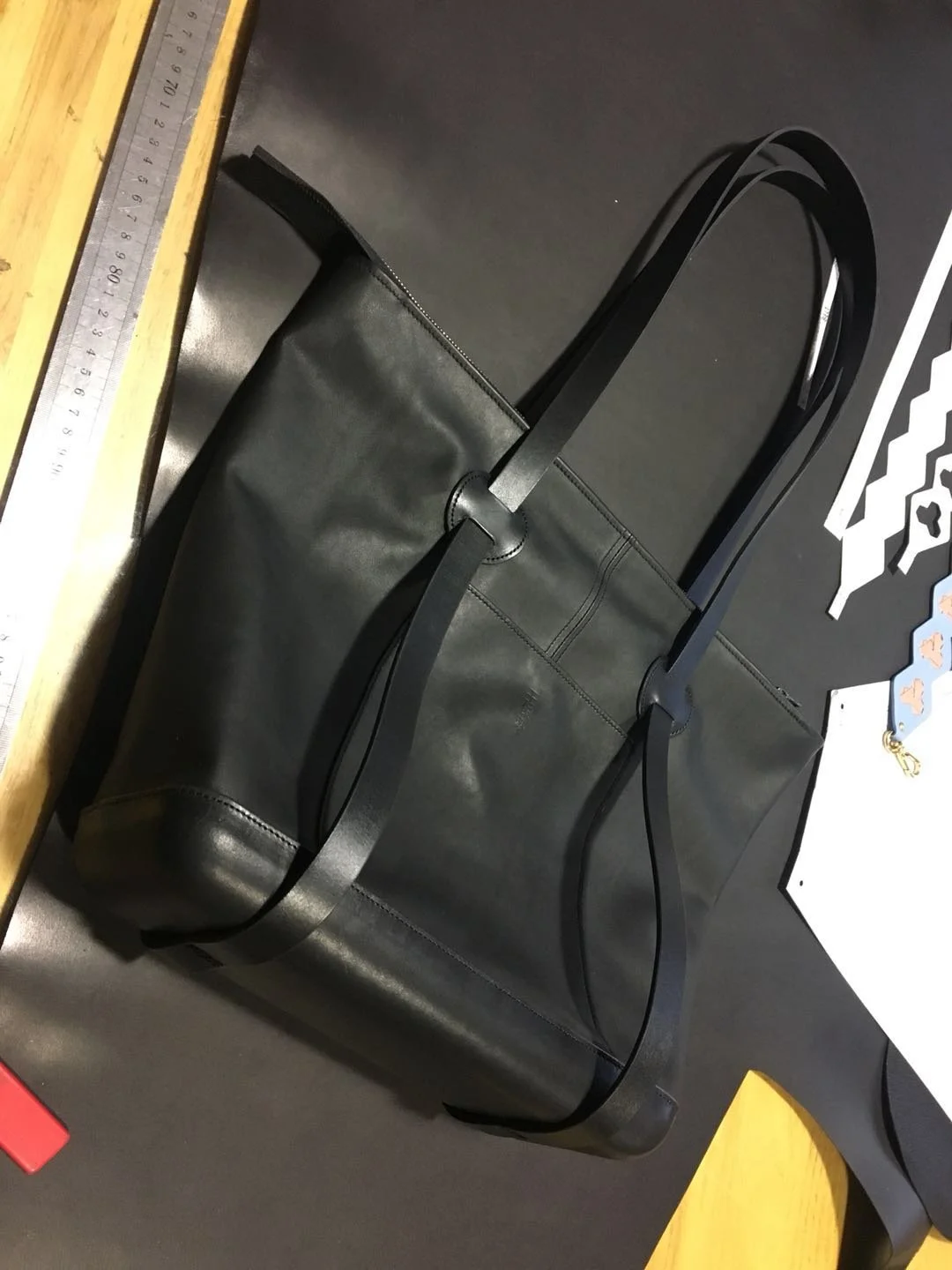
Finishes
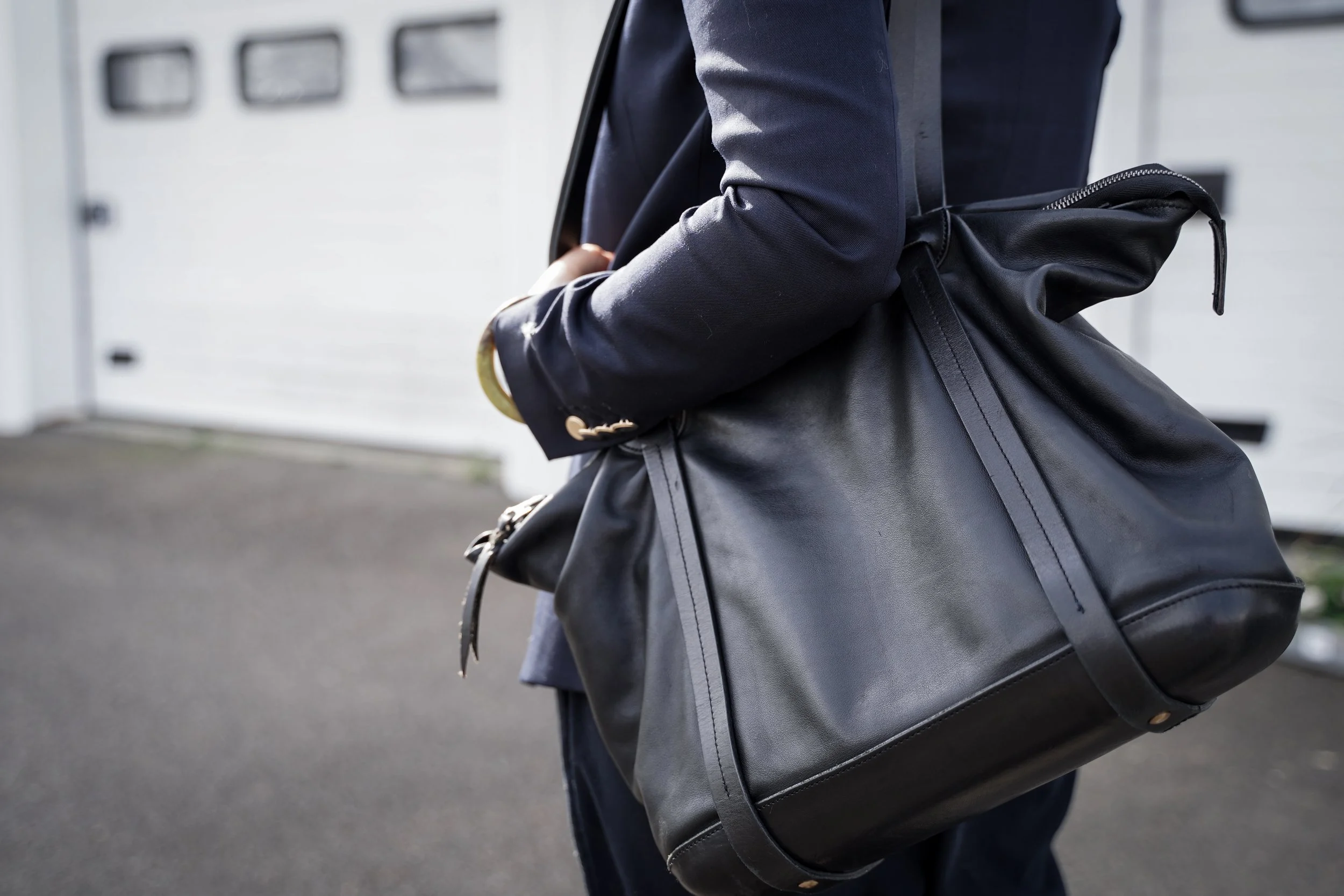
The bag now has sewn straps that pass under the base of the bag. The logo has been embossed with the customised name.
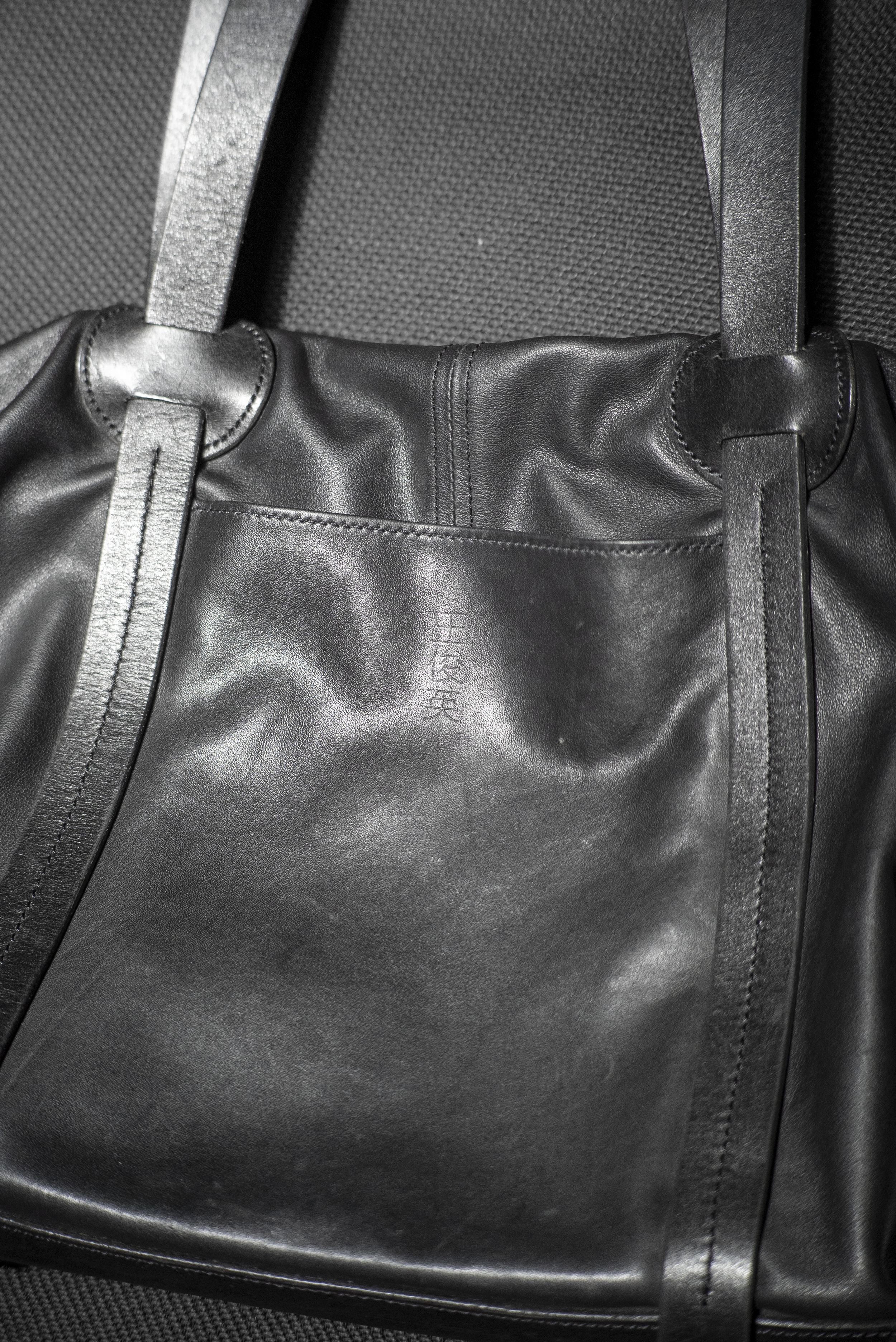
The embossed logo
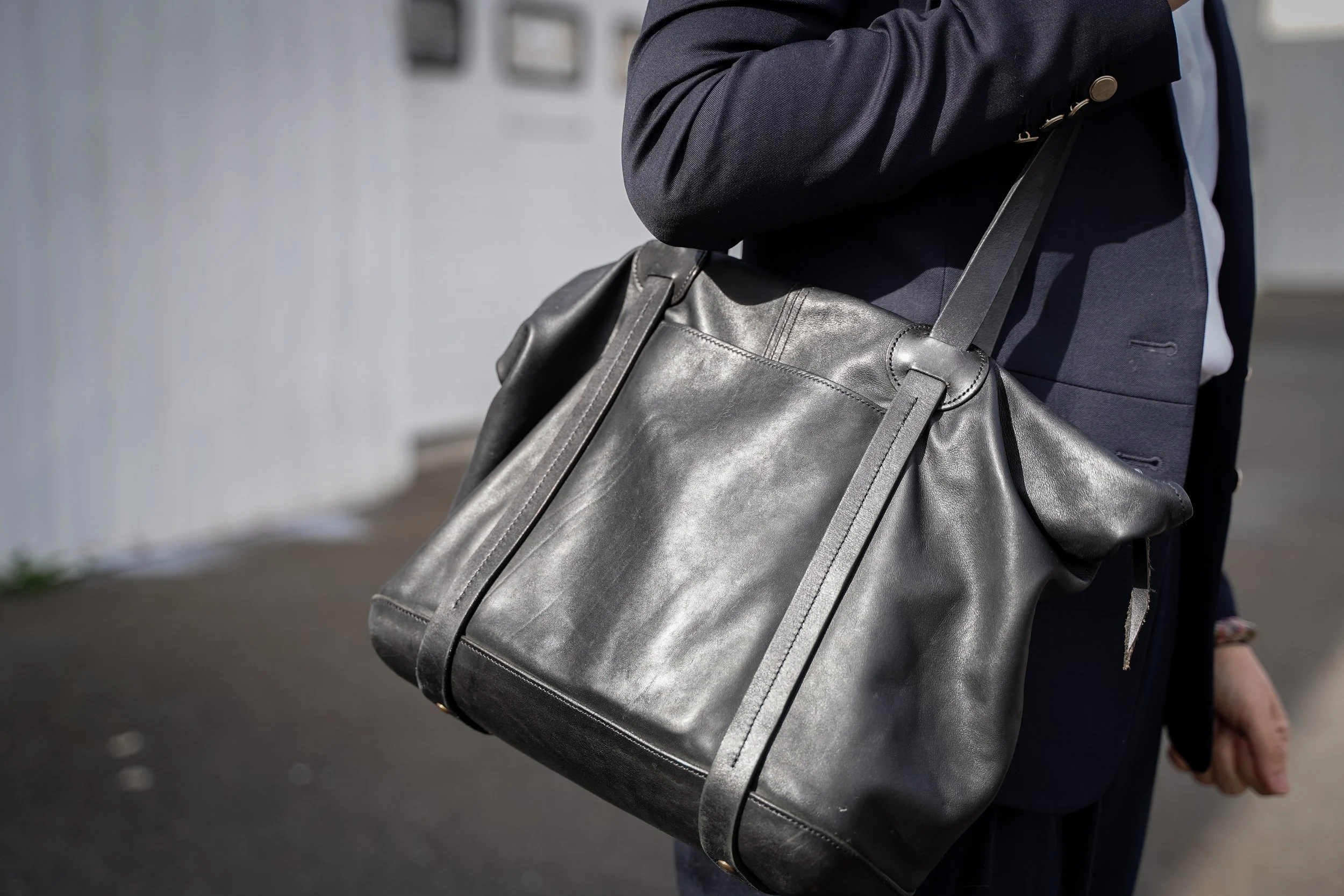
Long-term test
After five years of use, the bag confirms the hypotheses raised at the beginning of the analysis. The leather has developed a patina over time, the straps have remained intact without breaking, and the base has not been punctured or worn prematurely thanks to the absence of protruding corners.
Improvements
As areas for improvement, it should be noted that less supple leather could be used for the upper part to give it more support, or a coated fabric could be used.
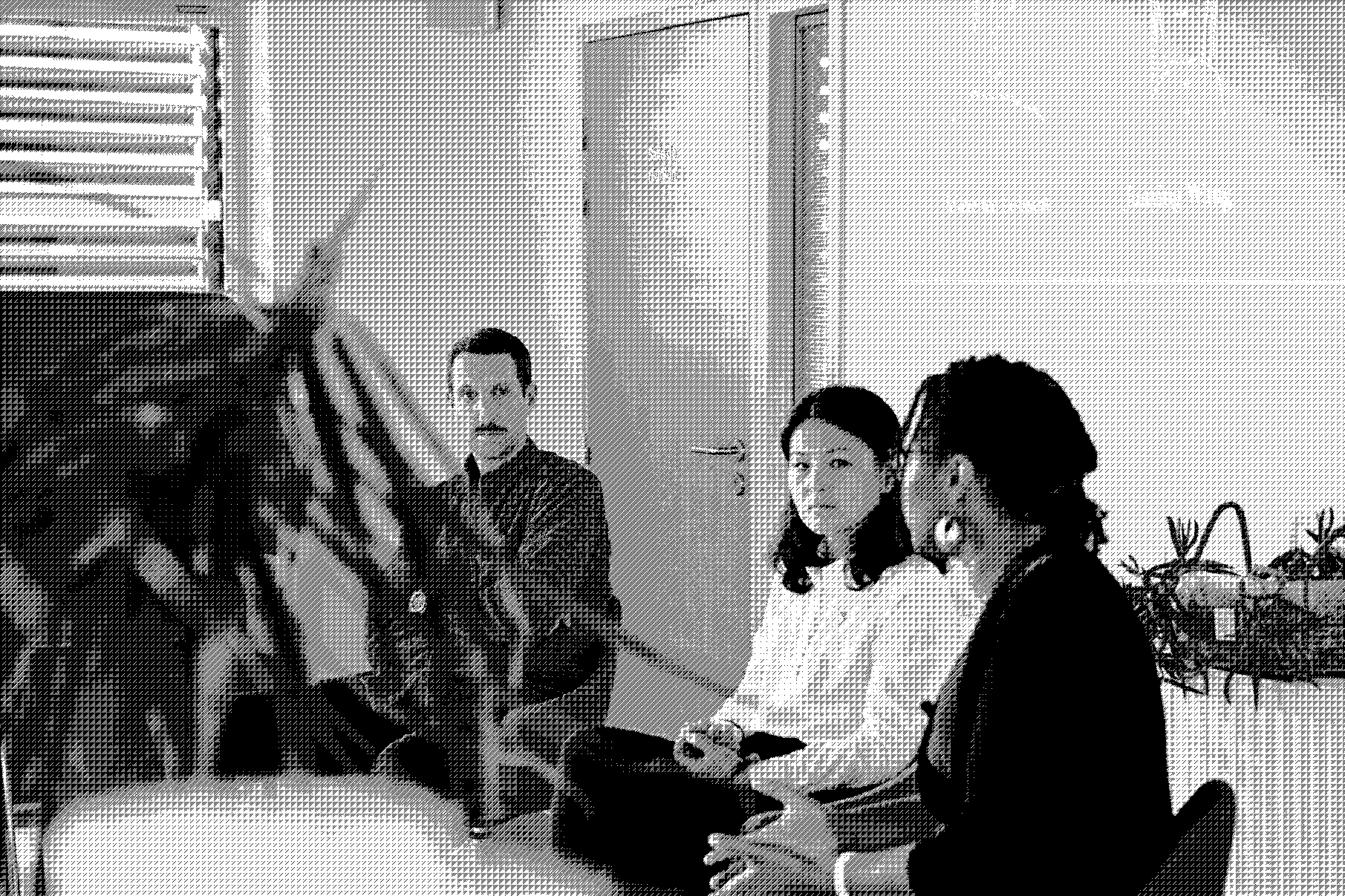
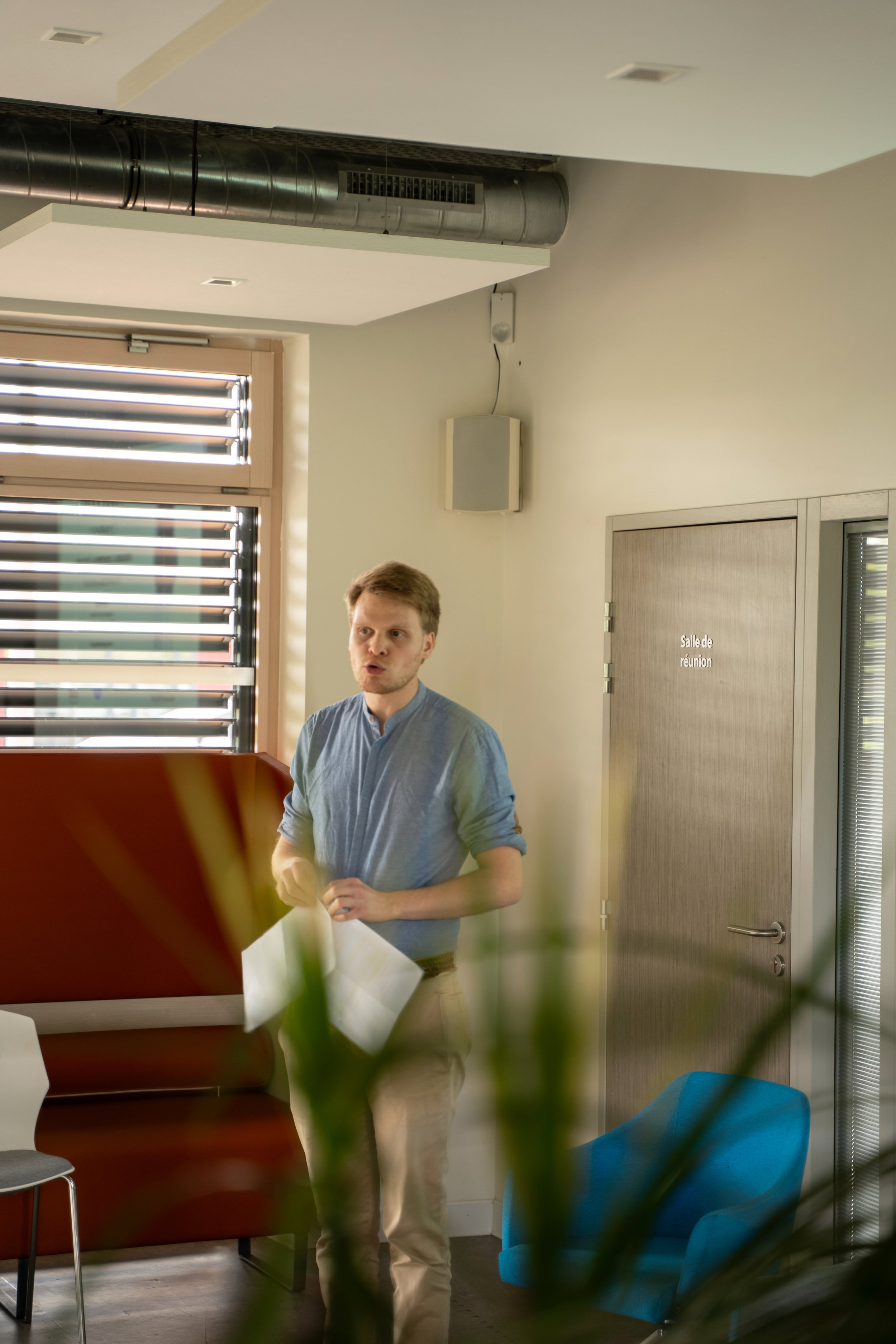
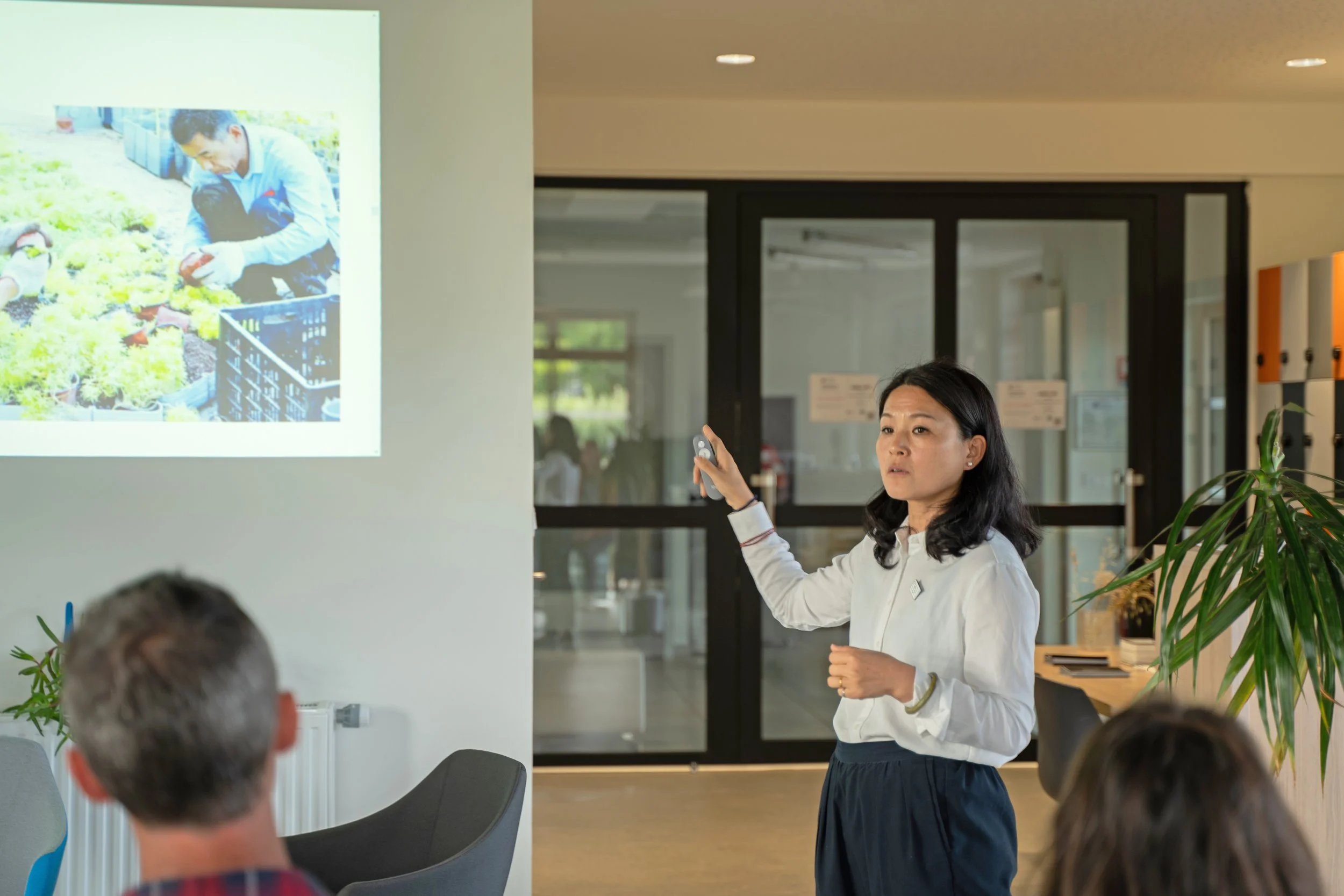
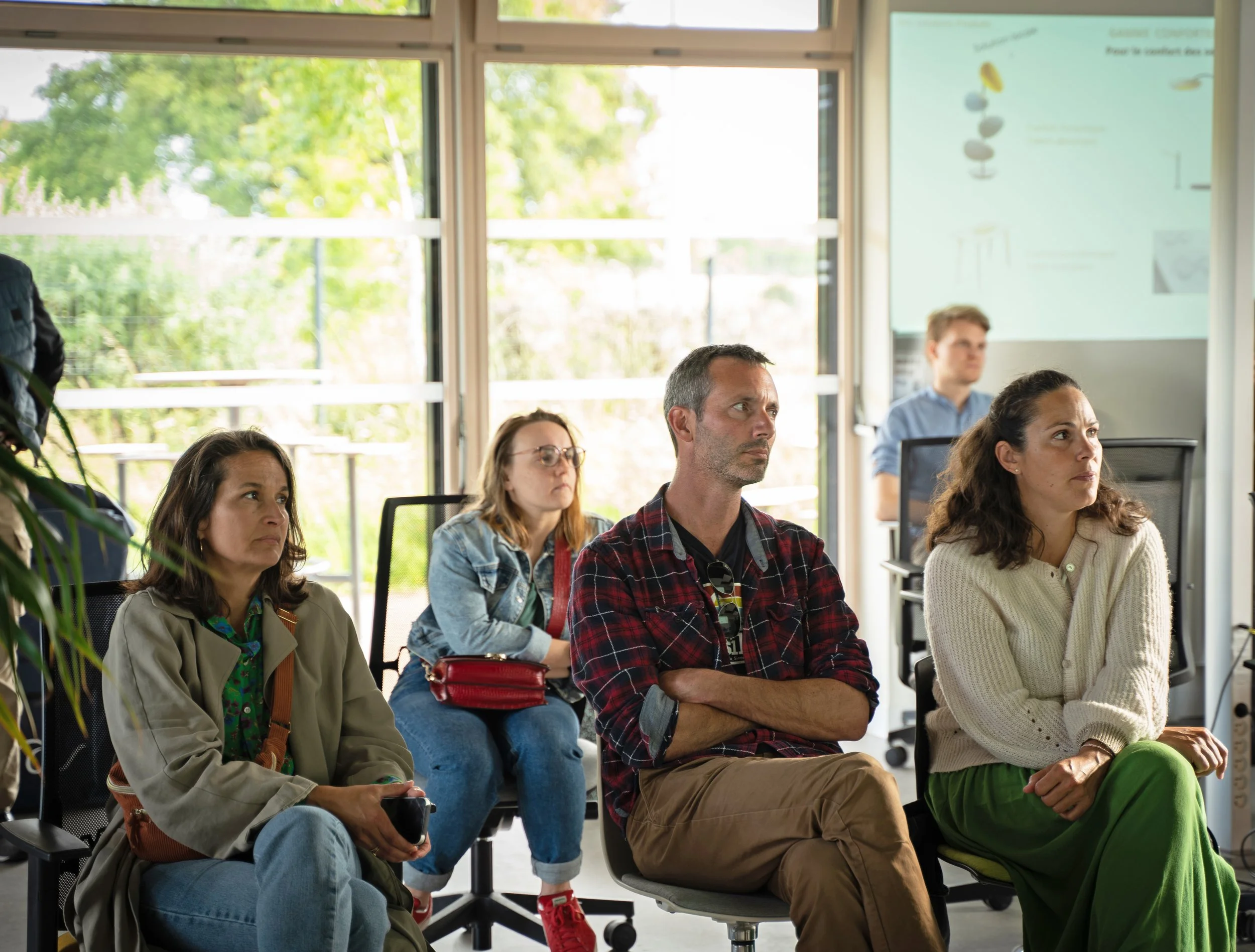
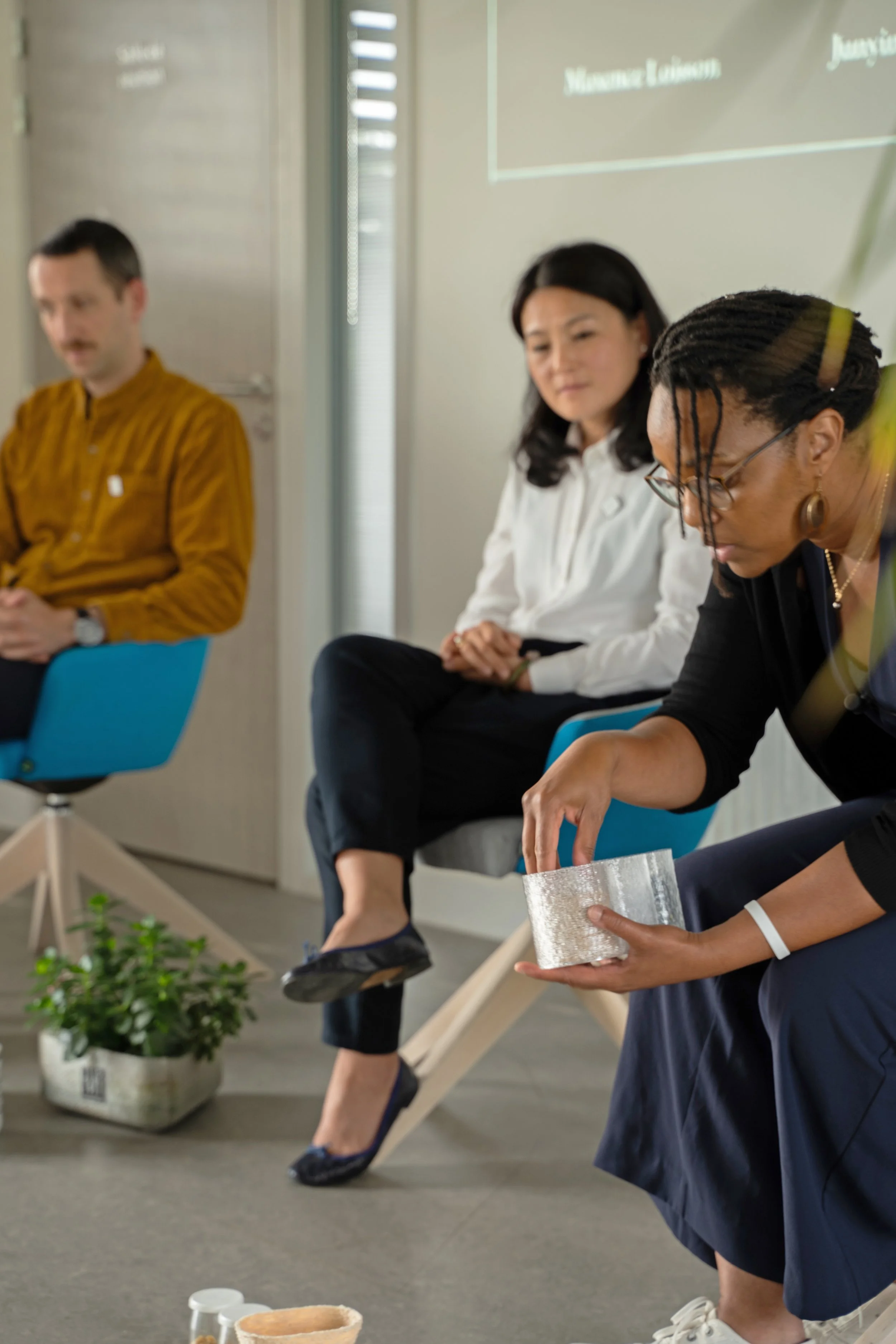
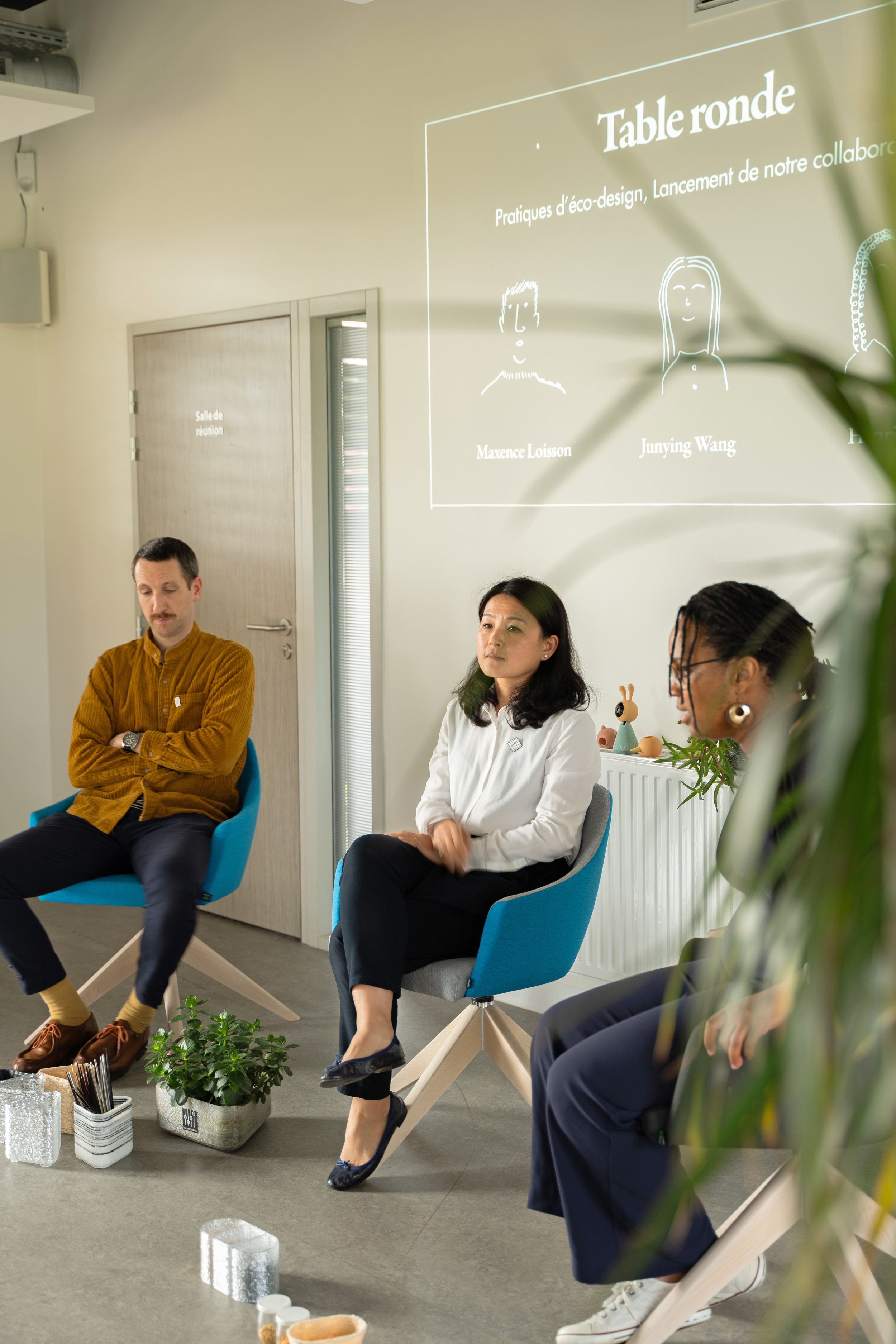
A look back at our eco-design workshop on 14 June
Eco-design and eco-planning with Agence Paramétrique, Lonaeh and La SEM Les Sables d'Olonne Développement!
Thank you all for joining us for our evening event in the exceptional setting of Numerimer! It was an evening full of excitement and surprises, with many highlights.
Agence Paramétrique shared its journey in eco-design since its inception in China in 2019. During this workshop, we presented three case studies covering redesign, new product design and diversity in our services. Design is a key element in transforming every project.
Maxence, former industrial design director at high-tech companies such as Lenovo and Yi Technology, and Junying, with 8 years of experience in B2B and B2C communication and 3 years leading CSR projects in international companies, shared their expertise. In summary, Agence Paramétrique is a design agency with an international vision, which also serves as a bridge to connect with responsible partners in China.
Agence Paramétrique, your design partner to bring your ideas to life! Whether you are an SME or a large company, we turn your projects into reality. From conception to completion, we are there for you. Together, let's bring your inspirations to life!
As Lonaeh, Henriette has also shared her experience since 2019, notably with projects such as toys for schools and environmentally responsible lamps.
The strengthening of our expertise has led to the creation of a new project, Atelier 3, launched on 14 June.
Project objectives:
1. Assist local businesses in discovering new materials and developing their own more eco-friendly projects.
2. Creating innovative products for the global market.
3. Establish an interactive bridge between the local market and the global market.
Project activities:
- Research and development to identify and develop new eco-designed materials.
- Testing and evaluation of the environmental and technical performance of materials.
- Development of product prototypes using eco-designed materials.
- Raising awareness of the benefits of eco-designed materials among businesses, designers and consumers.
Impact of the project:
This project aims to have a significant impact by reducing the use of natural resources and minimising waste. It will also stimulate innovation in the materials sector.
Call for collaboration:
We invite all interested stakeholders to collaborate on this project. If you have knowledge or expertise to share, or if you would like to learn more about the project, please contact us.
https://www.parametrique.fr/contact
Presentation of the materials developed:
Lonaeh and Agence Paramétrique, in partnership with SEM Les Sables d'Olonne Développement and Solution & Co, have already developed several innovative materials, such as an insulation material made from recycled materials and plant fibres. These materials have been rigorously tested and show promising performance. We are currently working on prototypes of products using these materials.
Conclusion:
The launch of our project by Lonaeh and Agence Paramétrique, with the support of SEM Les Sables d'Olonne Développement, represents an exciting initiative with the potential to make a real difference in the fight against climate change. We encourage everyone who shares our vision of a sustainable future to join us in this endeavour.
#EcoDesign #AgenceParamétrique #Lonaeh #DéveloppementDurable #Innovation #Atelier3 #SablesdOlonne #SolutionAndCo #CollaborationsResponsables
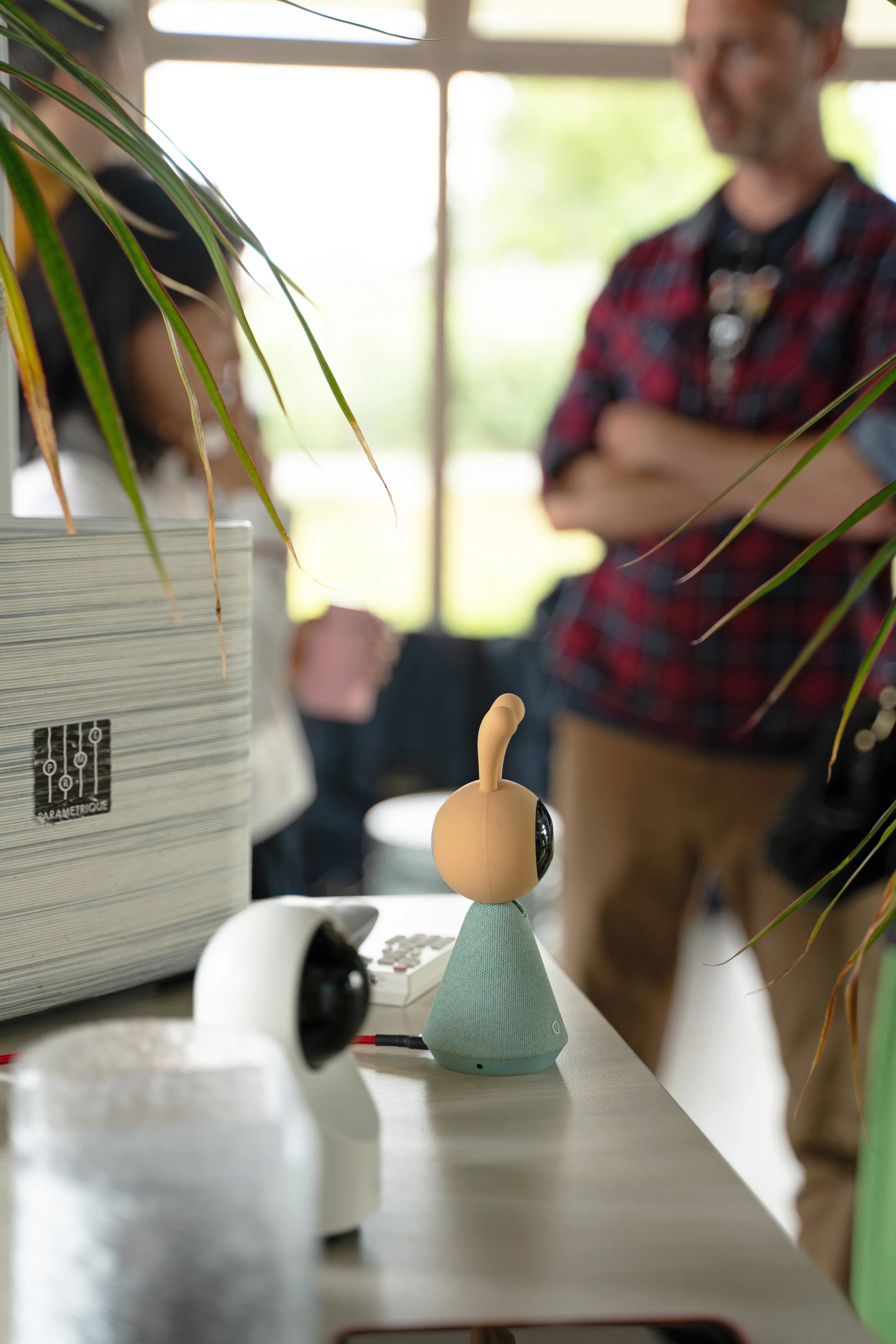


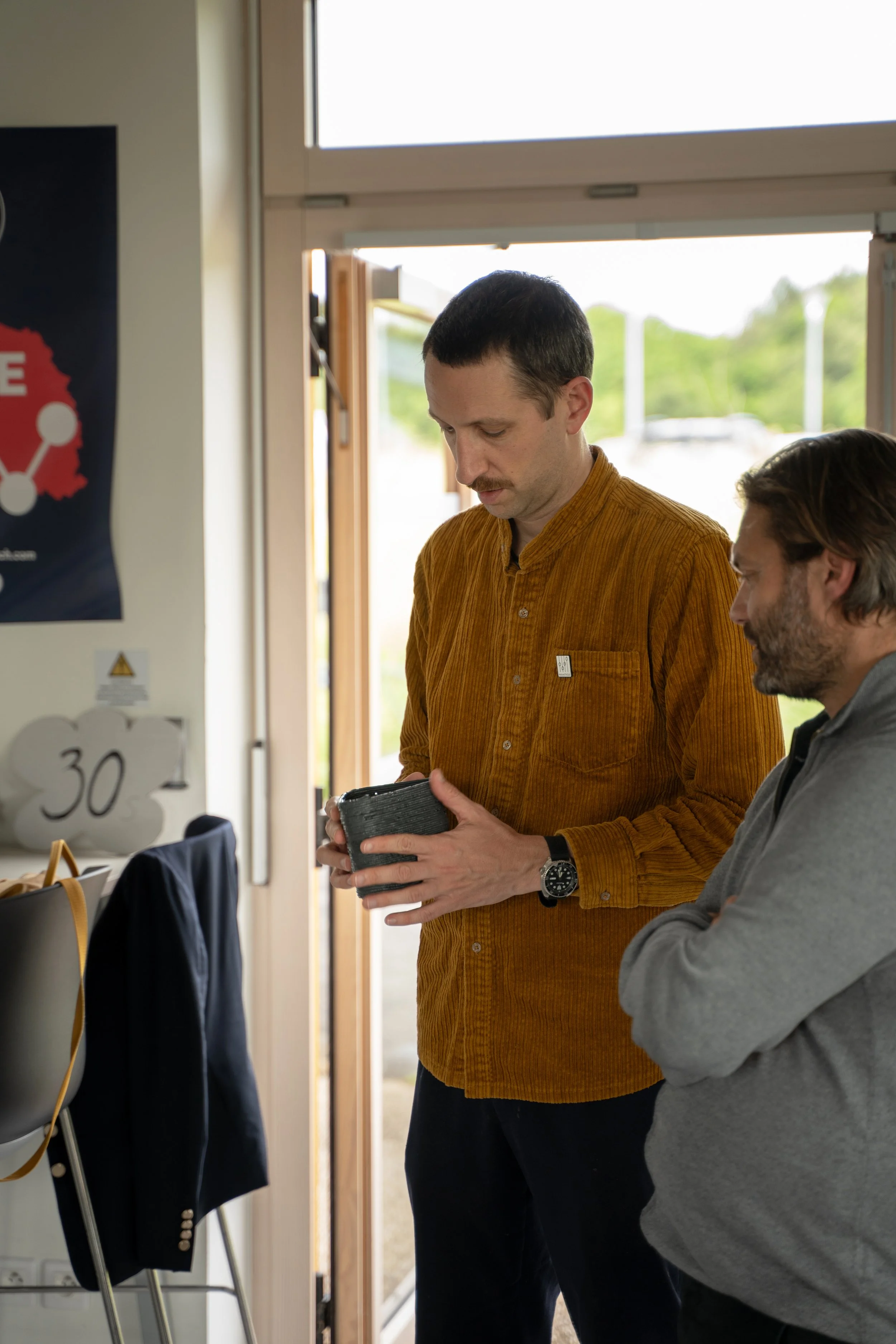







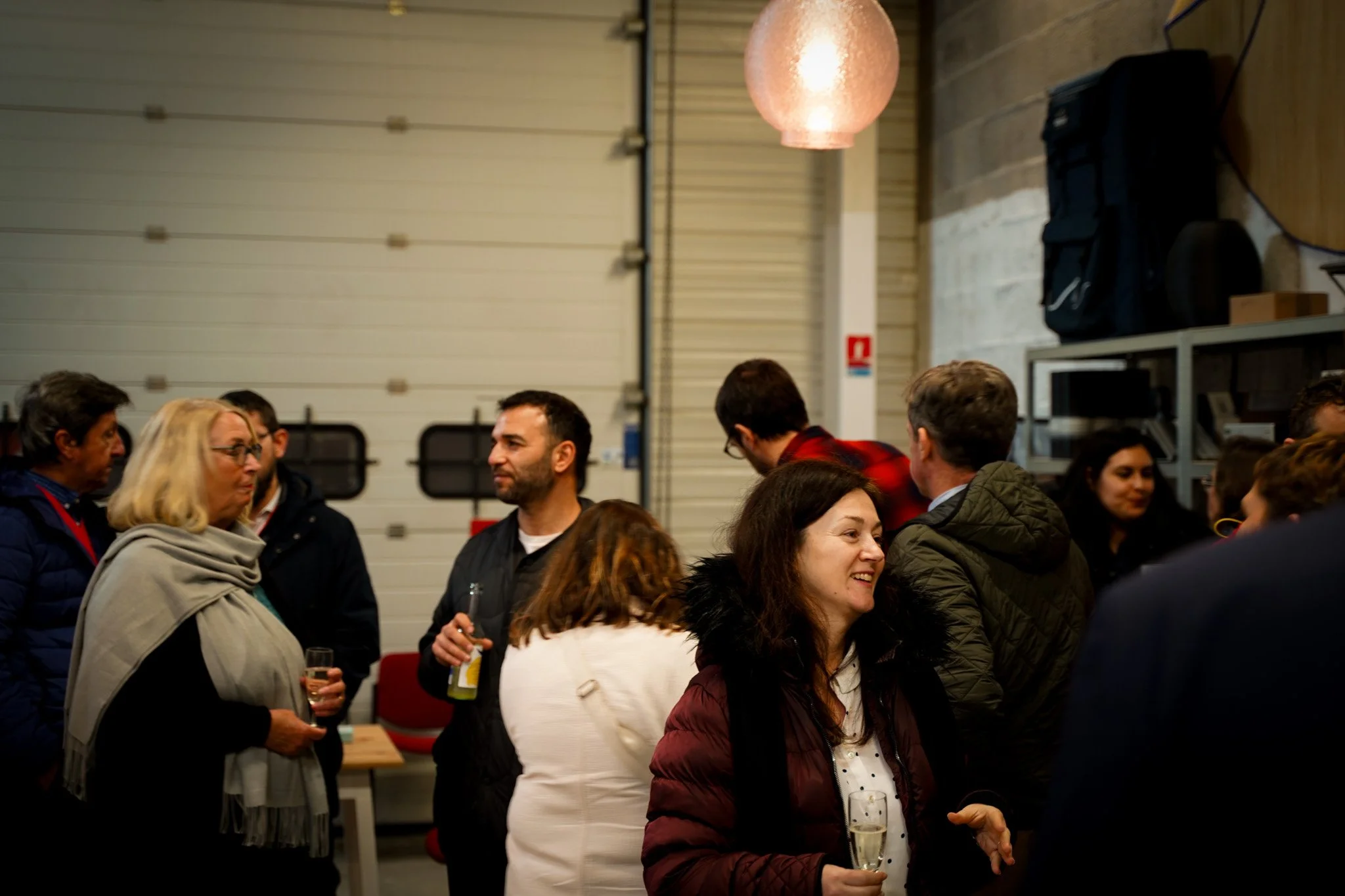
Inauguration of the Parametric Agency office
🎉🏘️ [Inauguration] Agence Paramétrique: New Office dedicated to industrial eco-design 🏘️🎉We
are extremely proud to announce the inauguration of our new office in France dedicated to industrial eco-design. With Agence Paramétrique, we are not just a design agency. Our expertise in parametric design and eco-design guides entrepreneurs towards a responsible approach, using eco-design and industrialisation as drivers of growth and performance.
Maxence Loisson de Guinaumont and Junying WANG, our founders, share the journey of Agence Paramétrique from China to France. Our mission is clear: to help entrepreneurs innovate, bring their ideas to fruition and contribute to the #reindustrialisation of France. We firmly believe that ambitious industrial projects are not only possible, but essential. We call for connections with key players such as #innovation centres, #incubators and #accelerators to support the growth of young start-ups.
Our objectives for 2024: 1. Support 12 or more start-ups in integrating eco-design into their projects; 2. Organise showcases in three cities: Beijing and Shanghai in August, Berlin in December; 3. Establish partnerships with three major players in innovation; 4. Recruit two new talents: a designer and a communications manager.
#startups and #entrepreneurs, share your projects with us. We are here to support you every step of the way, whether you are a small, medium or large business. From design to industrialisation, we are ready to transform your ideas into sustainable and innovative products. Contact us today and together, let's advance eco-design towards a better future. 🌱
A big thank you to our customers, networks and friends who joined us to discover our new office and celebrate the Chinese New Year of the Dragon together.
Choosing the right product design agency: How?
Choisir la bonne agence de design de produit est essentiel. Voici quelques conseils :
1. Culture plutôt que mentalité: Recherchez une agence dont la culture correspond à vos valeurs.
2. Recherchez l'innovation : Optez pour des studios de design engagés dans l'innovation plutôt que des portfolios similaires.
3. Ne limitez pas par la localisation: Explorez des options en dehors de votre région grâce aux outils de communication modernes.
4. Évitez trop d'alternatives : Limitez votre liste initiale pour une comparaison efficace.
5. Ne choisissez pas seulement en fonction du prix: La qualité prime sur le coût.
6. Définissez les attentes : Clarifiez les décideurs pendant le processus de design.
7. Ne choisissez pas uniquement en fonction de la marque: L'équipe dédiée compte plus que la renommée de l'agence.
Choosing the right product design agency is crucial to the success of your project. Here are a few tips to help you make the best decision:
1. Choose a spirit:
Rather than simply hiring a product design agency, look for a mindset or culture that matches your values. The agency's values say a lot about the relationship you will have with them. Choose agencies that enjoy working together, are innovative and proactive. Their office environment and website often reflect their culture and energy.
2. Seeking innovation:
Design studios that are courageous, diverse and committed to innovation create more innovative and forward-looking products. Don't limit yourself to looking for exactly similar products in their portfolio, but rather look for truly innovative solutions they have developed and the experience they have gained by taking truly new paths.
3. Do not limit your search to a geographical location:
Location is not as important these days. With email, Skype and the telephone, you can stay in touch from anywhere. Do not prejudge. Sometimes, to get a new, fresh idea, an outside perspective can be useful.
4. Avoid too many alternatives:
Considering 30, 20 or even 10 agencies is not the best thing to do. If your file is well prepared, your initial list can be relatively short and targeted. This will help you compare design agencies more effectively. Take enough time for each agency, call them several times, understand their culture, their proposal and their way of working.
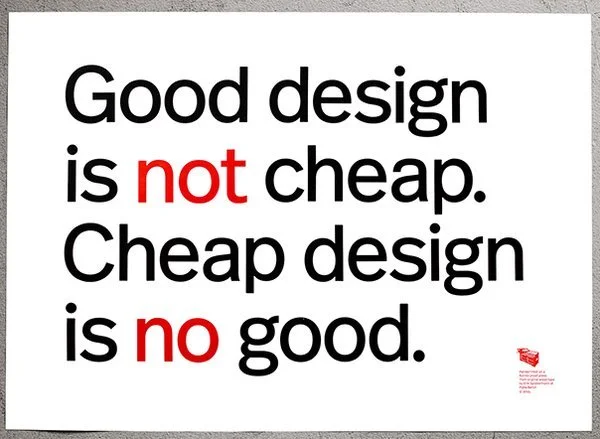
5. Do not choose based on price:
Price is important, but attempting to negotiate unreasonably could be counterproductive. It could lead to a decline in quality and dilute the service. You hire a design agency for the quality of its work, so avoid making cost the main criteria.
6. Defining expectations:
Decide who will make decisions during the design process. Participating in a design process is exciting and fun, but a limited number of people will lead to better decision-making. Favour design agencies that will help you make decisions rather than those that simply offer you more choices.
7. Do not choose based on brand:
Design agency brands are important. They provide insight into the agency's history and values. However, the agency's brand will be less important to you than the design team, the people who will be dedicated to your project. Their dedication and passion for your project will determine its success.
Waste management: the importance of informal waste collectors in China's circular economy
La Chine est confrontée à un défi croissant en matière de gestion des déchets. La croissance économique et urbaine rapide du pays a entraîné une augmentation significative de la production de déchets. Le secteur informel, qui comprend les collecteurs de déchets, joue un rôle essentiel dans la gestion des déchets en Chine.
L'impact profond du secteur informel:
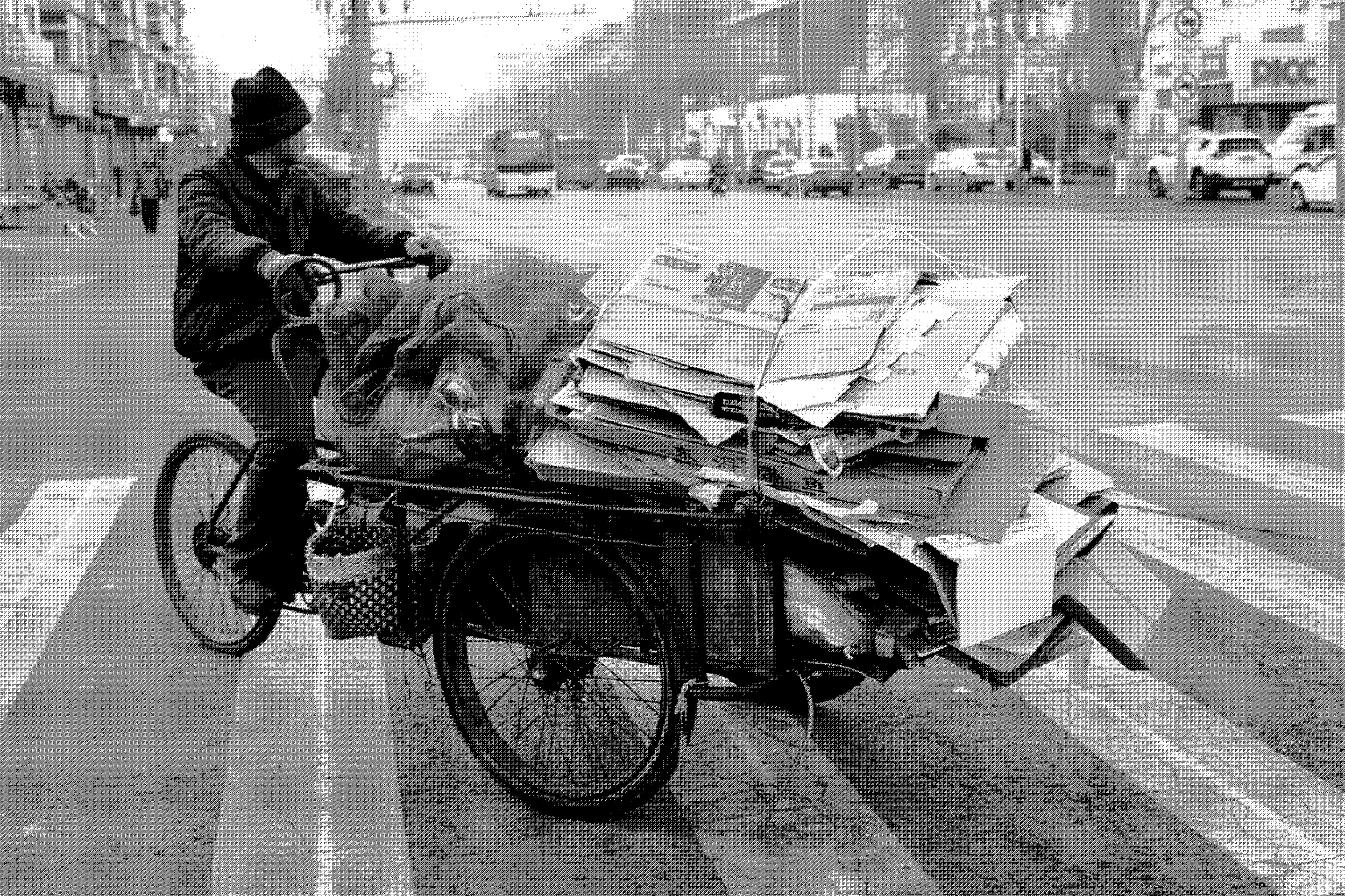
Le secteur informel de collecte des déchets en Chine joue un rôle essentiel dans le recyclage et la déviation des déchets des décharges. Les collecteurs de déchets collectent et recyclent des matériaux recyclables, tels que le papier, le carton et le plastique, qui seraient autrement destinés aux décharges ou aux incinérateurs.
Défis du commerce électronique et de la consommation:
Le commerce électronique, qui est en plein essor en Chine, contribue également à l'augmentation de la production de déchets d'emballage. Les individus contribuent également à la réduction des déchets en recyclant et en consommant de manière responsable.
Une voie à suivre:
Les gouvernements et les entreprises doivent envisager d'intégrer le secteur informel pour améliorer l'efficacité et la durabilité. Les individus peuvent également contribuer à relever le défi des déchets en réduisant leur production de déchets et en soutenant les initiatives écologiques.
Predicting waste generation at source
Over the past decade, Chinese cities, including major urban centres such as Beijing and Shanghai, have experienced remarkable economic growth and urbanisation. However, this unprecedented growth has been accompanied by a significant increase in waste production. While the formal waste management sector faces challenges, the informal sector, including waste pickers, plays a vital role in recycling and diverting waste from landfills.
This article explores the complex world of informal waste collection in China, highlights opportunities for a more sustainable waste management system, and emphasises the importance of individual actions in tackling waste-related issues.
China, a model of reuse
China is a country with a thousand-year-old tradition, and its culture is deeply rooted in resource conservation and efficiency. This mentality is reflected in the way the Chinese approach waste reuse.
In China, it is common to reuse objects, whatever they may be. For example, a water bottle can be used for 10 years or more, and a glass jar can be turned into a tea cup.
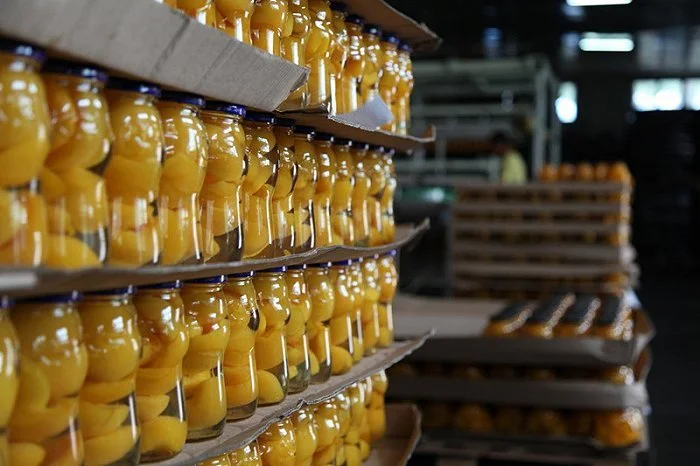
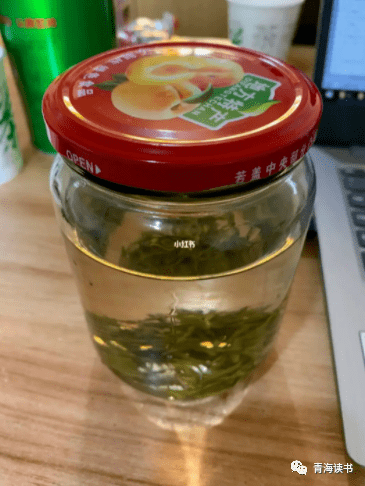
A glass fruit jar turned into a water bottle
The effectiveness of the informal waste recycling sector
China's informal waste collection sector goes far beyond mere subsistence; it is a dynamic ecosystem that has long been at the forefront of recycling various materials, including electrical appliances, plastics and metals. Benjamin Steuer, a graduate student at the University of Vienna, points out that this sector has saved significant amounts of money, amounting to hundreds of millions of yuan for cities such as Beijing.

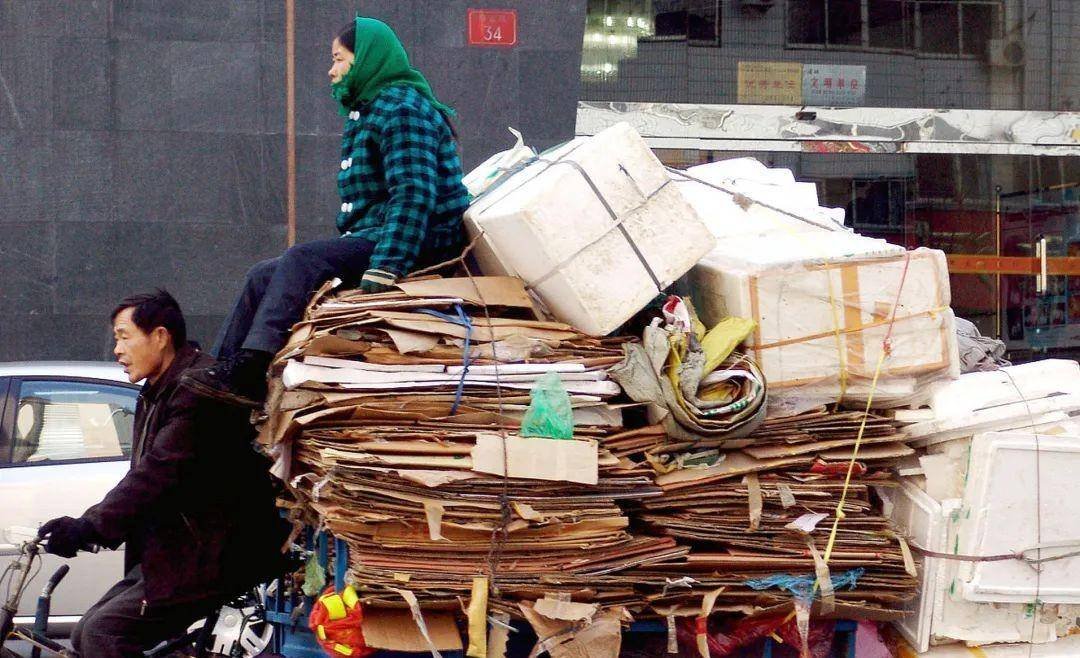


Paper, cardboard and plastic in particular are at the heart of this informal sector. These materials are often recycled and transformed into new products within 10 to 15 days of being discarded, demonstrating the efficiency of the system.
Challenges of e-commerce and consumption
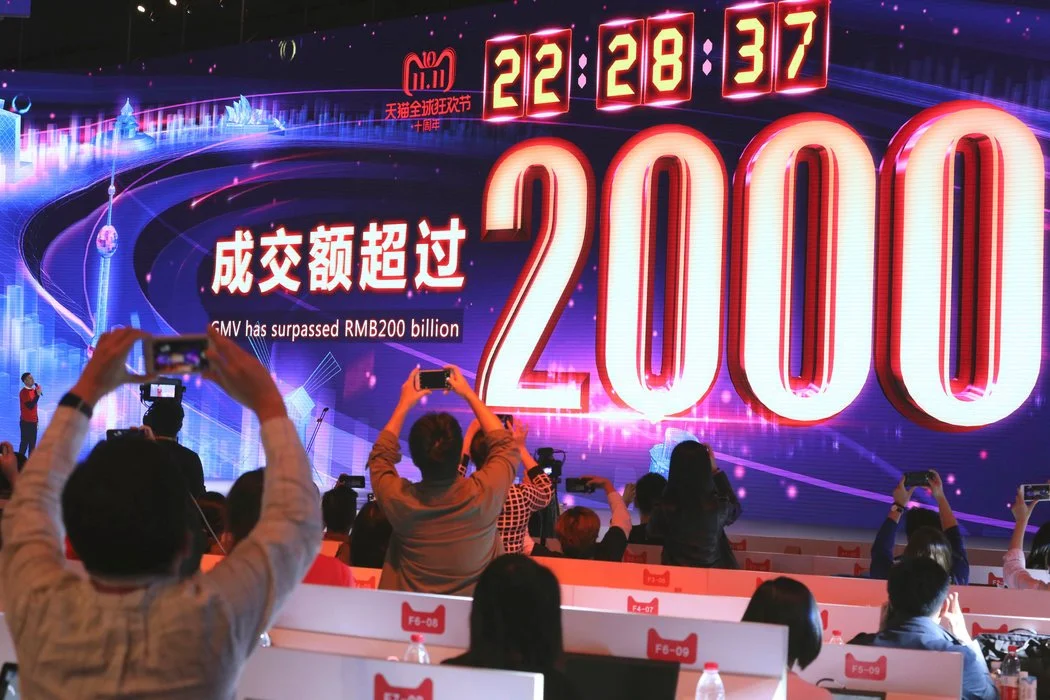
Alibaba's sales exceeded RMB 200 billion (€25,653,123,380) on 11 November 2018.
11 November in China is ‘Singles' Day’. It is a celebration of mass consumption. This commercial event, similar to ‘Black Friday’, contributes significantly to the surge in packaging waste, resulting in higher prices. The growth of the event has led to a sharp increase in demand for paper and cardboard. Indeed, the rise of e-commerce giants and delivery services has led to a relentless demand for cardboard and plastic packaging.
While large companies such as Amazon are using new packaging for their deliveries, recycling is common practice in China. Individuals regularly recycle their boxes, a small but nevertheless important step towards sustainability.
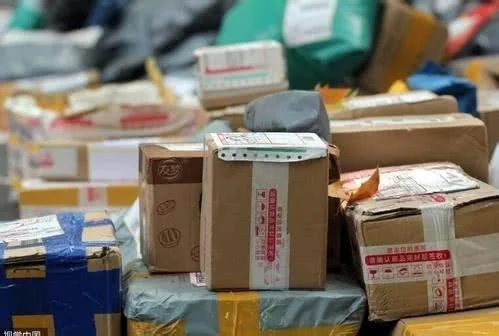
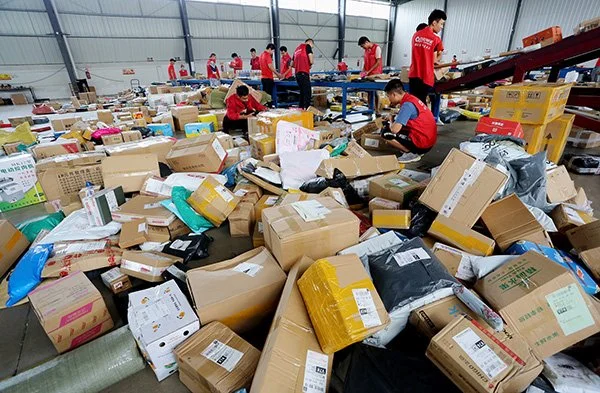
It is easy to see packaging that is often used and reused in China.
A path to follow
As China's major cities grapple with growing waste challenges, they must consider integrating the informal sector to improve efficiency and sustainability. The need to build recycling plants, develop new collection systems, and construct more incinerators while managing an increase in waste is a daunting task.
Designing for tomorrow
The waste problem is one of the most pressing issues facing our planet. In 2022, the world produced more than 2.5 billion tonnes of municipal solid waste, more than at any other time in history. This amount is expected to increase by a further 70% by 2050, reaching 3.4 billion tonnes.
One of the main factors contributing to the waste crisis is the excessive production of single-use products. These products, such as plastic packaging, disposable cups and cutlery, are often thrown away after a single use, contributing to soil, ocean and air pollution.
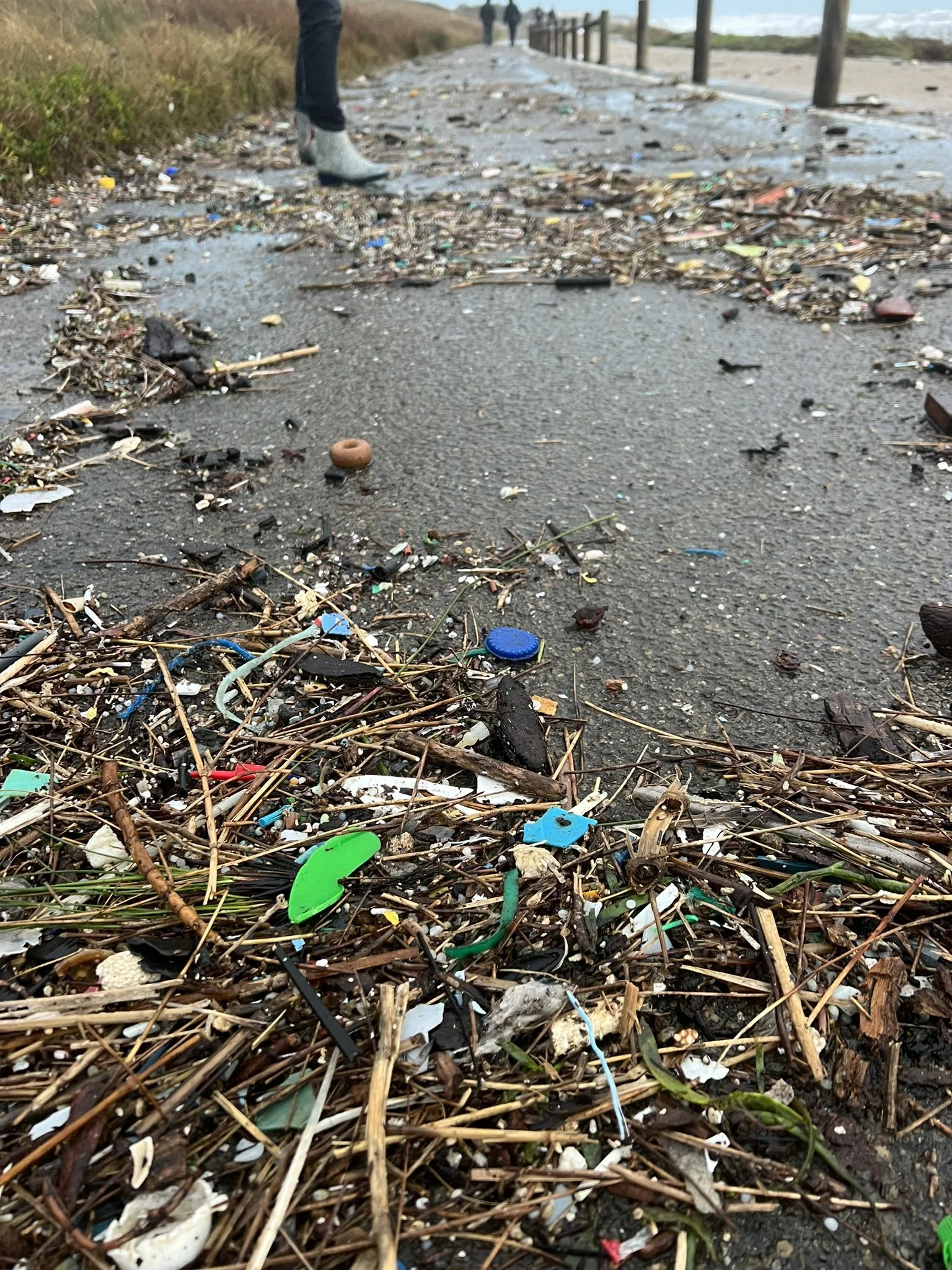
Waste from the sea after the storm
To tackle the problem of waste at source, design for tomorrow has become an essential tool. An eco-design agency tells us that 70% to 80% of environmental impacts are determined during the design phase of a product or service. By working from the very beginning of a product's life cycle, eco-design agencies aim to avoid waste and implement more sustainable practices. This proactive approach is essential for tackling the root causes of waste generation and promoting a circular economy. Companies must design products that can last longer and be easily repaired, reducing the need for replacement purchases. Companies must incorporate recycled materials and renewable resources into their products, reducing their dependence on virgin materials.
Although the scale of change required may seem daunting, every little effort counts. As individuals, communities and nations, we must collectively commit to protecting the environment. By reducing waste, supporting green initiatives and taking action, we can contribute to a cleaner and more sustainable world.
Furthermore, we must consider the significant impact of eco-design on waste reduction and apply this concept to minimise waste at the product and service design stage. These measures, combined with individual actions such as recycling and responsible consumption, can reverse the trend and pave the way for a greener and more sustainable future. Together, we can tackle the waste challenge and create a cleaner world for future generations.
Reference:
1. Chinadialogue.(2018 July 30) New waste policies leave informal traders struggling. Wang Chen. Beijing
2. Chinadialogue. Pollution (2017 June 5) China to release plan for tackling e-waste by end of year. Feng Hao
3. Ifeng. (2020 mars 20) En ramassant les déchets pour acheter deux maisons et en recyclant les déchets, ne voulez-vous pas vous laisser transformer par Internet ? Jilin.
4. Collective Responsibility (2017 June 27). New report: informal waste management in China. Richard BRUBAKER. Shanghai. Blog
5. news.cn (2022,Novembre,12 ) “双11”当天全国快递处理量达5.52亿件, 新华社
6. Recyclage des canettes et des verres
7. NBC News (2018 novembre 11). Alibaba’s Singles Day Sales Top $30 Billion. The Party May Not Last.Raymond Zhong.
8. La nouvelle république(2023 Octobre 2023 ). Tempête Céline : les plages de Vendée submergées par des tonnes de déchets plastiques. Pollution Vendée.

Designing for tomorrow: call for CEOs to integrate sustainability into their strategy, particularly SMEs and micro-enterprises
This article encourages CEOs of SMEs and micro-enterprises in the industrial sector to incorporate eco-design into their strategy. A study shows that the impetus for eco-design often comes from the personal convictions of the CEO, highlighting the importance of their commitment to the transition to more sustainable practices within their company.
Date : 10/27/2023
This article aims to draw the attention of CEOs who run SMEs and micro-enterprises, particularly in the field of industrial production, to encourage them to integrate eco-design into their strategy. Eco-design is an approach that reduces environmental impact while generating tangible benefits.
A study conducted by Pôle éco-conception reveals that the desire to undertake an eco-design initiative often stems from the personal convictions of the company's CEO, who is generally highly committed to sustainable development. In fact, nearly 75% of respondents to the study indicated that the impetus for eco-design came from the CEO.
Eco-design: A way to reduce environmental impact and increase profitability
We wish to highlight the importance of eco-design for managers of SMEs and micro-enterprises operating in the industrial sector. This approach not only minimises environmental impact, but also significantly increases profitability.
CEOs of SMEs and micro-enterprises: Key players in change
We call on the chief executives of SMEs and micro-enterprises to incorporate eco-design into their strategy for the following reasons:
Sustainability for a better future
By adopting eco-design, CEOs of SMEs and micro-businesses can contribute to preserving the environment, thereby offering a more sustainable future for generations to come. According to a study conducted by the Eco-Design Cluster, between 2008 and 2018, the number of companies committed to eco-design rose from 30 to 90. The approach mainly concerns small and medium-sized enterprises, with more than 80% of them employing fewer than 250 people, and more than 75% of companies committed to eco-design maintaining or increasing their profits over the last three years.
Proven profitability
Eco-design is not limited to environmental considerations; it also offers concrete financial benefits: reduced production costs, increased profit margins and stimulated growth. According to a study by the Eco-design Cluster, more than 80% of companies engaged in eco-design have maintained or increased their research and development (R&D) spending, underscoring their commitment to innovation. More than half of these companies have been recognised with awards or certifications for the quality of their management or products.
At Paramétrique, we led the Kami Vision project from 2019 to 2023, and we continue to follow it with enthusiasm. We are delighted to contribute to improving the economic model of this project, making it more profitable and positioning it as a high-end product. The selling price of the products has risen from an average of £20 to £170, which has significantly increased profitability. Profit margins have risen from 3% to 45%. It is important to emphasise that eco-design is a long-term process, but that the financial results and sustainability are well worth it.
Market differentiation
Sustainably designed products stand out in the market, enabling SMEs and micro-enterprises to attract the attention of environmentally conscious customers and set competitive prices. As part of their eco-design approach, many companies have succeeded in improving the functional aspects of their products. On average, these companies have identified two functional benefits (out of a possible seven). The four most frequently cited benefits include improved quality of life (53%), greater savings on purchase (28%), greater ease of use (28%) and greater durability (28%).
Preparation for regulations
Eco-design prepares companies for future environmental regulations, thereby avoiding unexpected costs and penalties. According to Article L 541-10-12 of the AGEC law promulgated in February 2020: ‘All producers are required to develop and implement a prevention and eco-design plan aimed at reducing the use of non-renewable resources, increasing the use of recycled materials, and increasing the recyclability of their products in treatment facilities located on national territory.’
Strengthening Brand and Customer Loyalty
Consumers are becoming increasingly aware of sustainability. Eco-design improves brand image, increases customer loyalty and opens up new business opportunities.
For example, following the success of the Kami Vision project, Kami expanded its new brand, Kami Care, which specialises in providing IoT services in the healthcare sector, thereby significantly improving its public reputation. Consumers now have a positive image of the brand, which strengthens their loyalty. This also opens up new business opportunities for the company.
Attractiveness as an employer
A focus on sustainability can also make SMEs and micro-enterprises more attractive to talented individuals, thereby strengthening their recruitment potential.
Take Action
Eco-design is much more than just a trend. It is a real revolution for SMEs and micro-businesses, propelling them to the forefront of sustainability while boosting their profits.
The implications of these findings are manifold. For business leaders, eco-design offers not only financial benefits, but also the opportunity to stand out from the competition. To launch an eco-design initiative, it is essential that senior management fully embraces this approach, thereby sending a strong signal to the rest of the organisation.
The involvement of various administrative units, including senior management, R&D and manufacturing, is essential. A structured and systematic methodology is required to successfully implement the eco-design process.
By obtaining awards or certifications for management or product quality, a company can strengthen its credibility in the market, thereby facilitating the adoption of its eco-designed products.
Finally, when eco-design also improves the functional aspects of the product, it becomes even more profitable. So now is the time to take action and make eco-design a driver of success for your business.
We call on CEOs of SMEs and micro-businesses to embrace eco-design and integrate it into their business strategy. It is a way to preserve the environment while generating substantial profits. The future of industrial products is undeniably geared towards sustainability. By adopting eco-design, CEOs can pave the way for a prosperous future for their businesses, while contributing to a more environmentally friendly world.
Paramétrique is here to support you in this process, helping you to comply with environmental obligations while thriving economically. Please do not hesitate to contact us to implement eco-design within your company.

The design engine of tomorrow
Le Moteur de Conception pour Demain
16 octobre 2023 à 07h30
‘Eco-friendly design helps preserve the environment by reducing the negative impact of products.’
Trashaus was founded in China in 2019. In 2022, it was registered as a Parametric ecological design office on the west coast of France, in Les Sables d'Olonne. Its goal is to help manufacturers reduce the negative impact of their products on the environment.
Maxence LOISSON de Guinaumont, co-founder of Paramétrique, shares his vision: "I lived in China for eight years. I worked as Industrial Design Director for a major electronics manufacturer. I saw opportunities for improvement in the field of ecology. But in technology, as in many other fields, time is money, and opportunities to challenge design methods and propose new ideas are rare. Yet eco-design is a real lever for innovation and differentiation from the competition.
As for my partner, Wang Junying, she has worked for companies in the Mi ecosystem, Himalaya Technology, and an Australian sustainable development consulting firm in Shanghai. She noticed that not all projects were living up to their environmental commitments. So we decided to take action, and in 2019, we launched this sustainable development project with our partners.
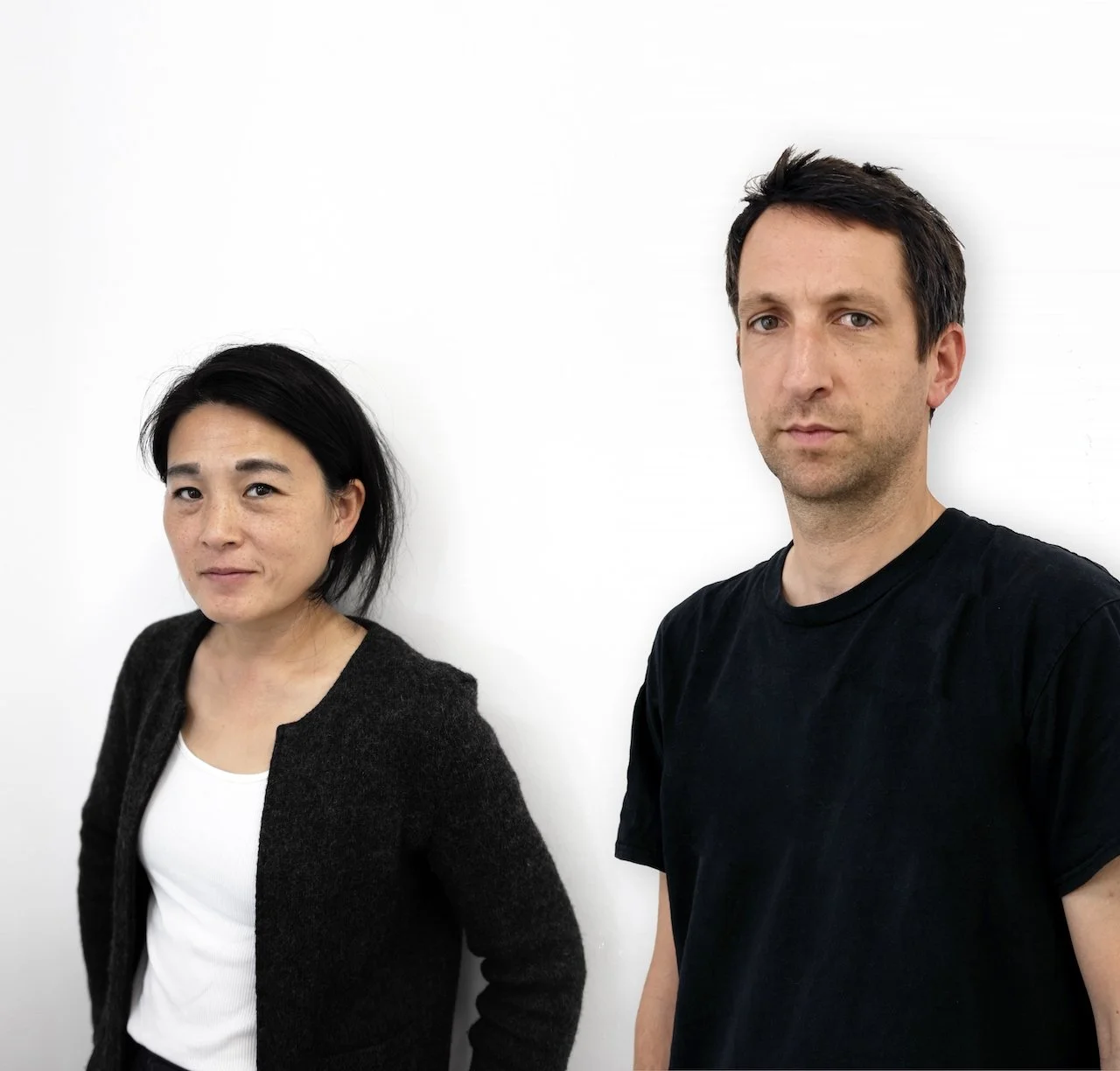
Junying WANG and Maxence LOISSON de GUINAUMONT
Recycling plastic waste
Maxence goes on to explain: "Our experience with sustainable projects began with transforming plastic waste into entirely new products. We participated in the Uber Eats project in China, using their own recycled materials to manufacture delivery boxes. Although the overall plastic recycling rate in France is relatively low (only 20%), thanks to the impetus of selective collection, some private sectors are already achieving recycling rates of 80%. This industry is becoming increasingly organised. Even though waste recycling remains a task for the future, we firmly believe that in five to ten years, plastic will no longer dominate. I think sorting centres can solve this problem without having to rely entirely on designers like us.
Our area of intervention begins at the earliest stages of product design, which has a direct impact on 70% to 80% of the overall environmental impact.
Paramétrique's start-up project has received support from Réseau Entreprendre Vendée. It is currently in the early stages of development and has received a grant of €25,000. Its mission is to establish a solid foothold in the local small and medium-sized business market and achieve a turnover of €91,000 in its first year.
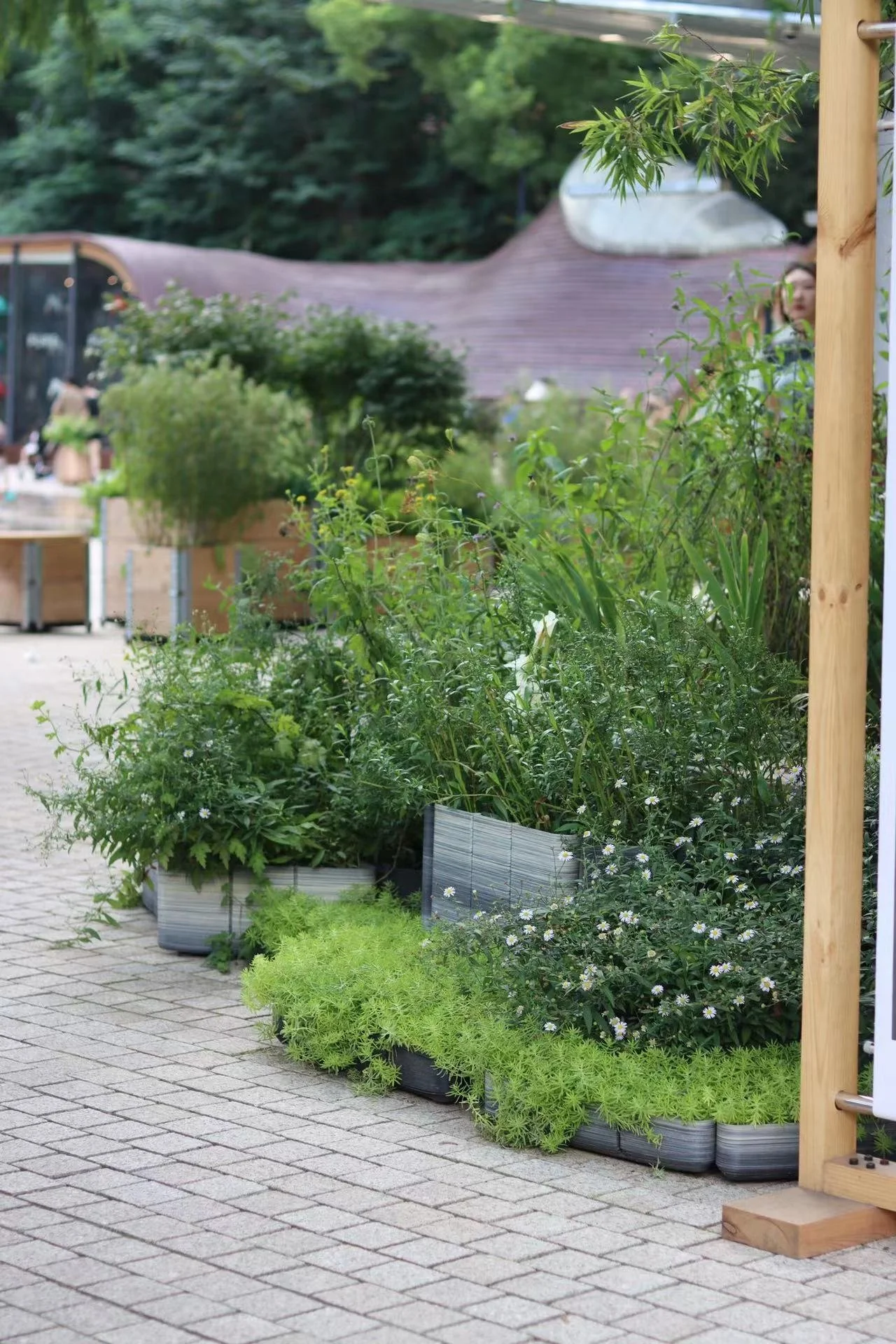
The plants in the recycled plastic flower pots in front of the new headquarters building are thriving, demonstrating the success of the eco-friendly design.
Paramétrique is involved in several major recycled materials projects, including the Kleeklee embossed flower pot project. Kleeklee aims to develop a unique design for environmentally friendly flower pots. These flower pots are made from recycled materials, using 3D printing technology and a large-format granule 3D printer. Product features include structural strength, recycled plastics, environmentally friendly design, high-performance triangles, and innovative and unique design.
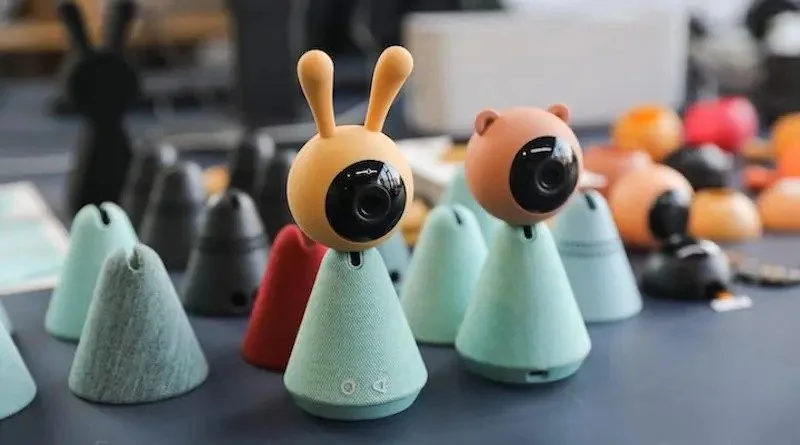
Kami camera series
Customer testimonial
Feedback from Paramétrique's customers highlights the success of Kami Care's eco-friendly camera project. Faced with various challenges, including designing an attractive, functional product that delivers high-quality video and complies with toy standards, Kami succeeded thanks to its environmentally friendly design approach, the key points of which are as follows:
1. Choice of natural materials: Kami opted to use fabric instead of plastic and rubber shells wrapped in fabric, as well as a food-grade silicone cover. This provides a more advanced texture while offering a more peaceful user experience.
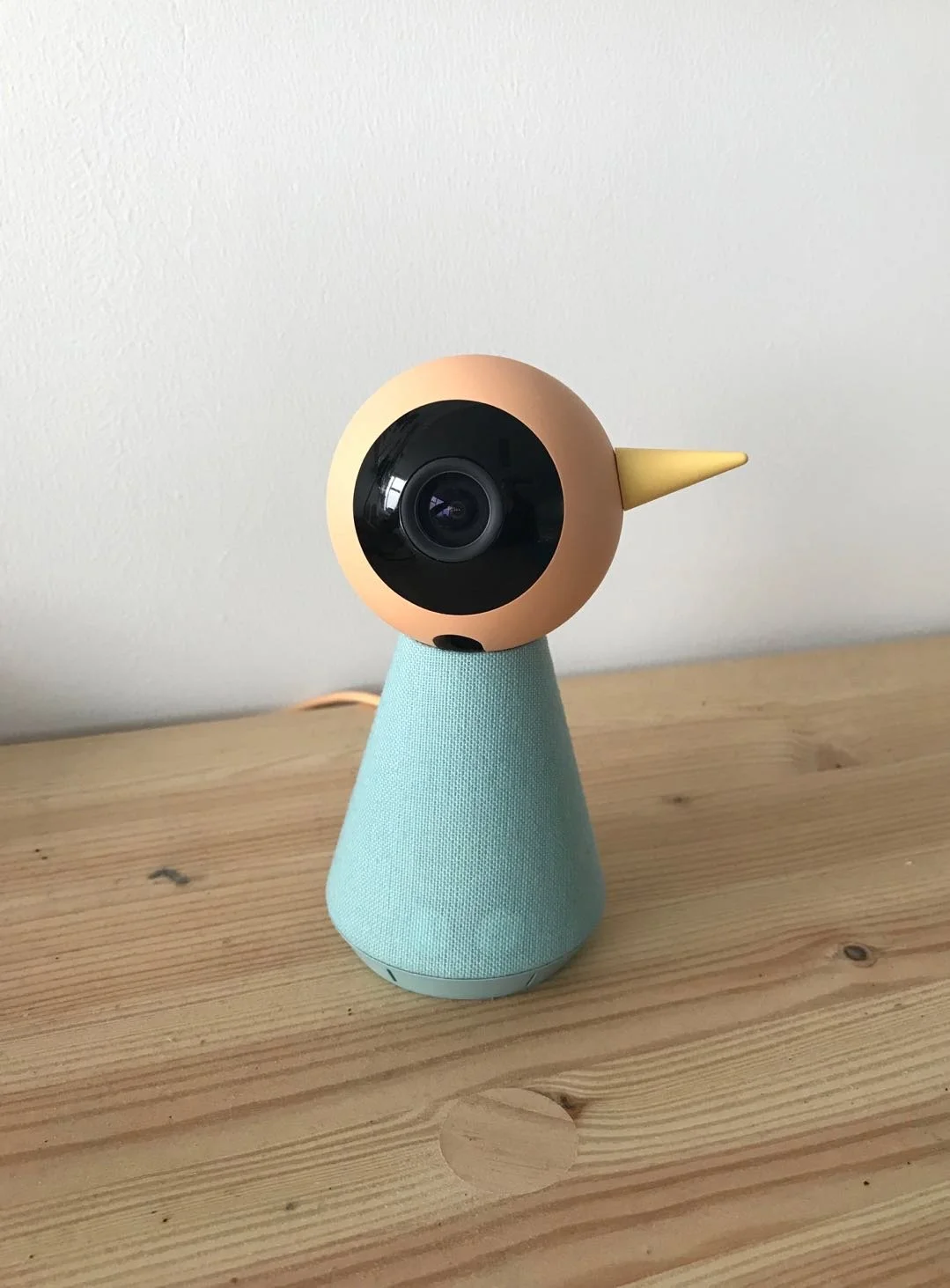
2. Reduced environmental footprint and sustainability: By using sustainably recycled materials, Kami has significantly reduced its environmental impact, with a 25% reduction in waste production across its entire product range. This approach has also increased the sustainability and quality of the products, extending their lifespan. The design of products and accessories is optimised to extend their life cycle, benefiting both users and the environment.
3. Increased profit margin: By shifting from a low-margin business model to one based on high-quality products with higher margins, Kami Care has likely seen a significant increase in profitability. This allows the company to generate more revenue while ensuring product sustainability.
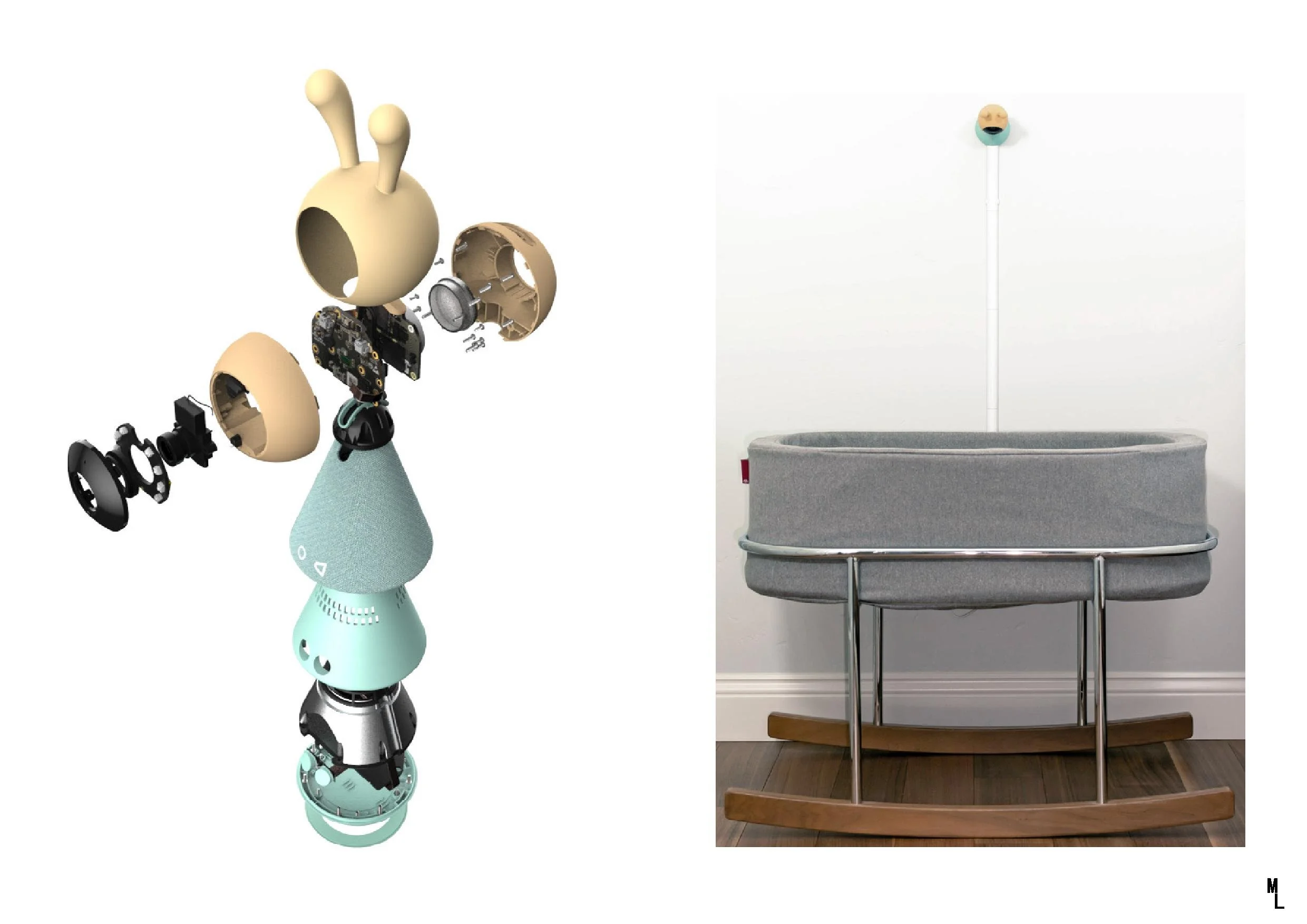
4. Design for tomorrow: Kami's designs focus on reducing environmental impact through the use of energy-efficient LED technology. The night light diffused through the wall has been chosen to avoid dazzling the baby's eyes, with adjustable brightness and a softer light to protect the baby's delicate eyes.
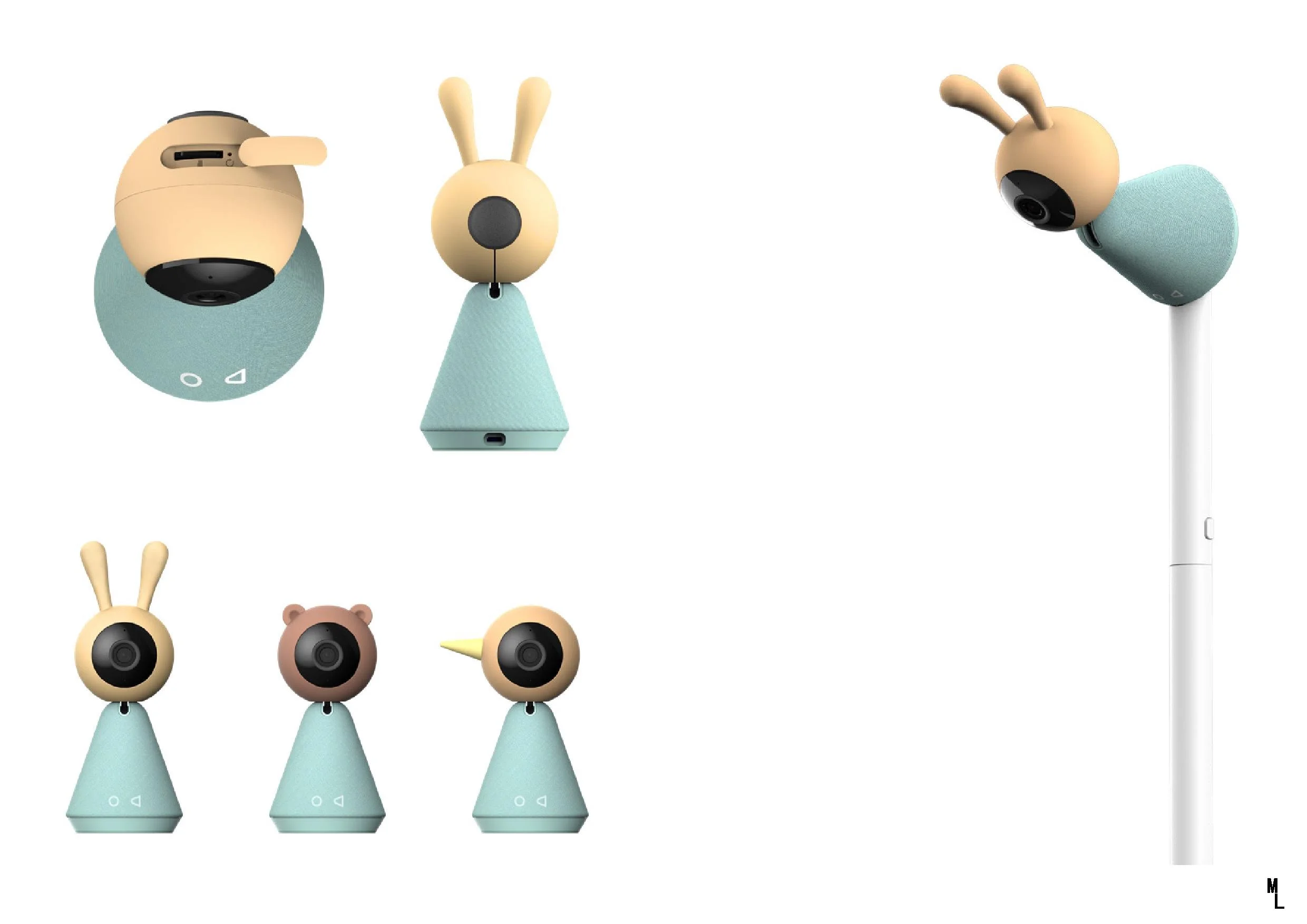
5. Impact on price: You mention that the standard Kami camera model sells for €19.99, while the Kami model with an environmentally friendly design sells for $149. This shows that customers are willing to pay a higher price for better quality and environmentally friendly products. It may also indicate that the market is willing to support products that have a lower environmental impact, even if they cost more.
6. Efficiency and functionality: Kami products offer an excellent balance between efficiency and functionality, all in compact, user-friendly packaging.
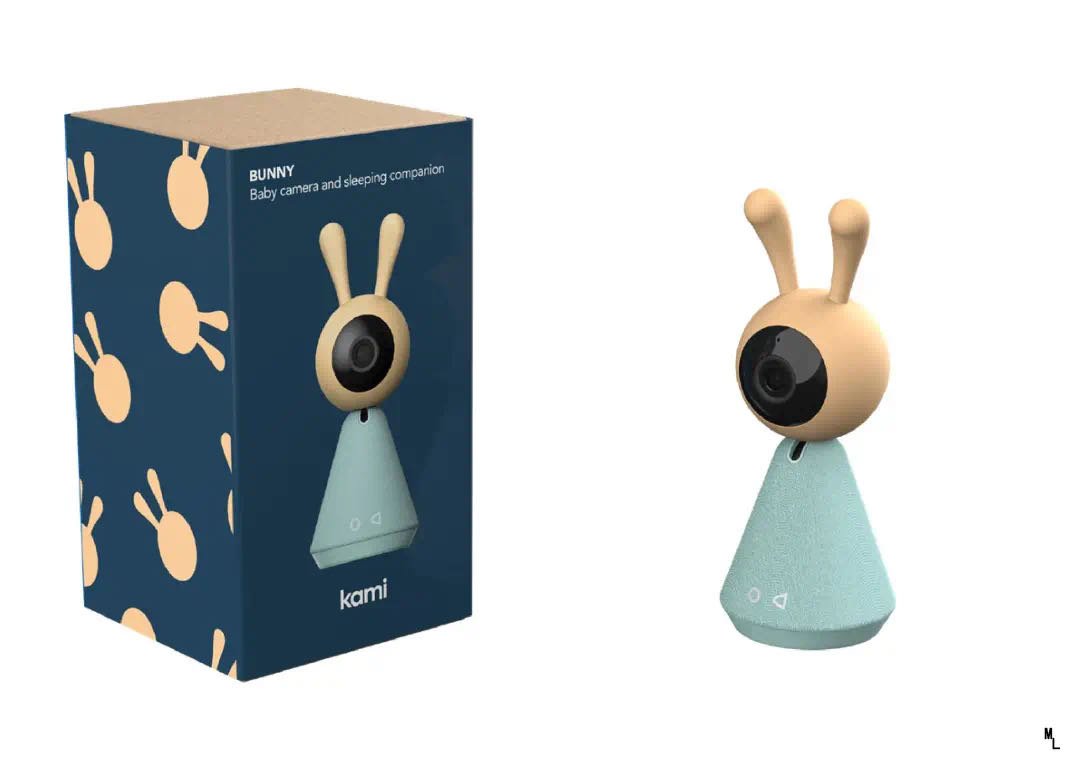
7. Data confidentiality and security: Kami's design incorporates measures to ensure data confidentiality and security, thereby strengthening user confidence. A high-precision metal shaft has been chosen, guaranteeing superior quality and peace of mind. Belief in the durability and quality of these products encourages customers to invest more, even if the price is higher.
8. User-centred design: A design method that places user needs at the heart of the process to ensure the product is easy to use and practical. When the product is switched off, it becomes a beautiful decoration or toy in the user's home.
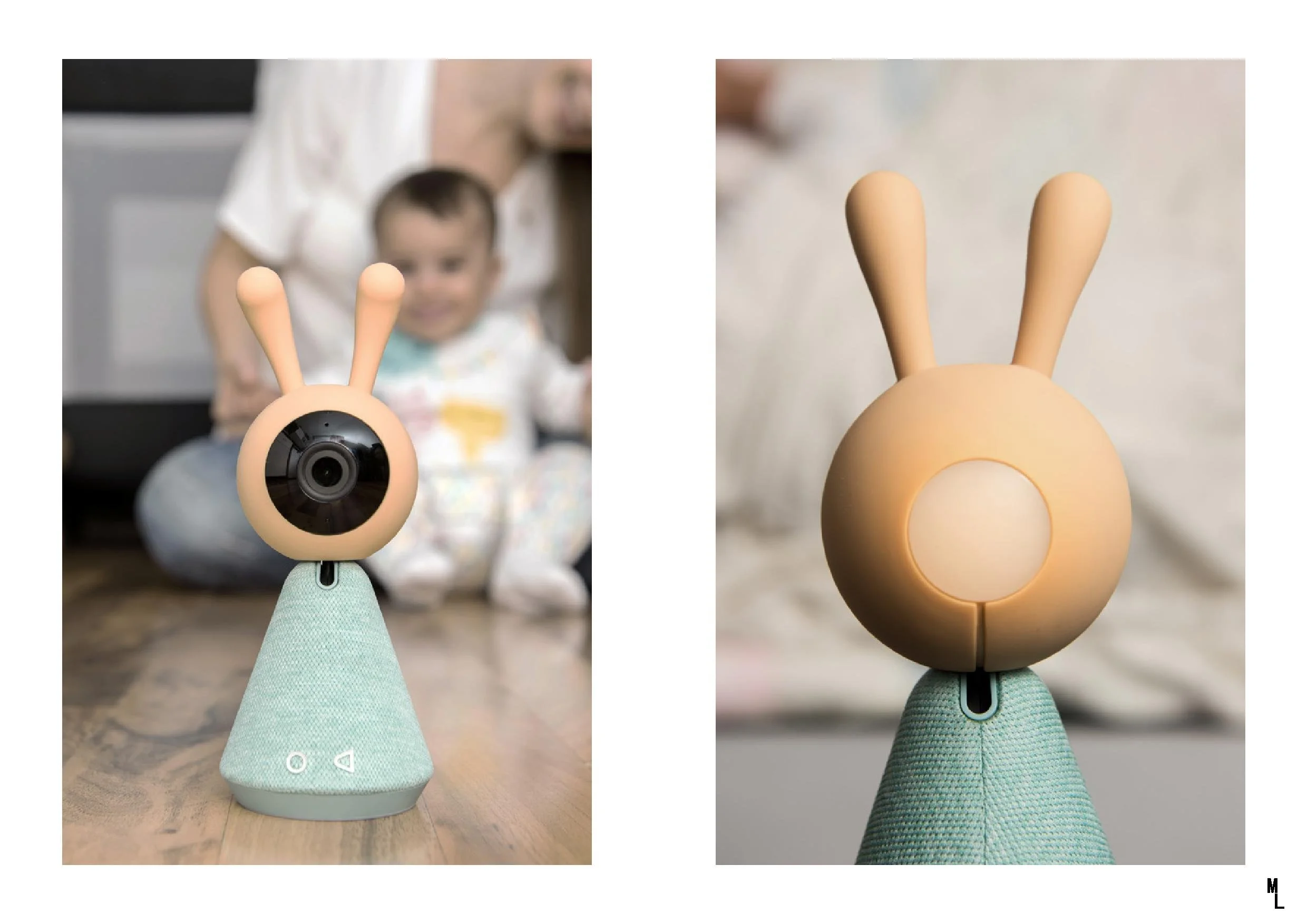
9. Timeless aesthetics: Despite continuous technological developments, Kami products retain a timeless aesthetic, thus preserving their appeal.
10. Adapting to market trends: Kami is responding to growing demand in the US market for environmentally friendly products that offer privacy and versatility.
Overall, Kami's market success is based on its environmentally friendly designs, which respond to changing consumer needs and promote sustainable products. This approach contributed to the success of Kami's crowdfunding campaign. To summarise this process, an in-depth analysis of customer profiles, sales channels and usage scenarios must be conducted, while defining clear specifications for the product.
In summary, Kami's success in the global market in 2020 and beyond is proof of its eco-centric design approach. The product's design incorporates sustainability, functionality, user-friendliness and data security, thereby meeting the changing needs and values of consumers. As a result, Kami continues to thrive in a competitive market, as evidenced by the £9,000 raised through Indiegogo in 2020, thanks to 914 contributors, as well as the £7,000 raised on 24 January 2020 with the support of 741 contributors. These figures clearly demonstrate the product's success. 🌱
Paramétrique is here to support the growth of your hardware business with our forward-thinking designs.
"To clearly define the product design philosophy, thoroughly analyse the customer profile, sales channels and usage scenarios.
Transform the information gathered into a clear specification document.
Have a comprehensive overview, including a thorough analysis of market needs, product concept and risks."
The Kami team and CEO Da

Eco-design: a lever for profit margins on new products
Insight | L’Éco-conception : un Levier de création de valeur pour les Nouveaux Produits
In the demanding world of senior corporate management, CEOs are on the front line, responsible for making crucial decisions to ensure the growth and profitability of their companies.
In this context, every new strategy must be carefully evaluated. This is where eco-design proves to be an essential element in boosting the profitability of new products.
Eco-Design: Merging Environmental Responsibility & Profitability
Eco-design is not just a trend, but rather an approach to innovation and differentiation that reconciles environmental responsibility and profitability. It represents a rigorous process aimed at designing products that not only meet market expectations, but exceed them, while reducing environmental impact and optimising production costs.
CEOs: key players in the ecological transition
CEOs play a crucial role in integrating eco-design into corporate strategy:
Visionary strategy: As visionaries within their companies, CEOs have the ability to guide their organisations towards a product design strategy that integrates environmental responsibility as an essential element in the creation of new industrial products.
Alignment with objectives: CEOs can ensure that objectives to reduce the negative environmental impact of products, as well as their sustainability, generate value and profitability.
Leadership and Commitment: CEOs' leadership in eco-design can inspire the entire company. Commitment to environmental sustainability thus becomes a pillar of corporate culture.
Tangible Benefits for Profit Margin
Eco-design offers concrete benefits for the profit margin of new products:
Reduced production costs: Optimising production processes and managing resources efficiently reduces manufacturing costs, contributing to higher profit margins.
Market differentiation: Sustainably designed products stand out in the market, which can lead to higher prices and increased profitability.
Risk reduction: Companies committed to eco-design are better prepared to deal with environmental regulations, avoiding unexpected costs and litigation.
Brand image and customer loyalty: Consumers are increasingly sensitive to sustainability. Eco-design strengthens brand image and promotes customer loyalty.
Employer brand: Eco-design also enhances the company's attractiveness as an employer.
A step towards the future
Eco-design represents a vision for the future. CEOs have the opportunity to position their companies as leaders in sustainable innovation. This approach goes beyond simple product design; it influences the entire corporate strategy.
Eco-design is not just an environmental approach; it is a powerful way to increase profitability. CEOs who adopt eco-design give their companies a significant competitive advantage. They are catalysts for responsible innovation, benefiting the planet while boosting profitability.
The future of industrial products is firmly focused on sustainability. By integrating eco-design into their corporate strategy, CEOs are paving the way for a future that minimises environmental impact from the moment a product is used until the end of its life.
![PARAMETRIQUE Agency [creation]: Maxence LOISSON DE GUINAUMONT](https://images.squarespace-cdn.com/content/v1/64c3d9a159ff8e0e40319e07/1718692735524-IK10CKPM07TM9873CQFA/Reseau%2BEntreprendre%2BVendee_bit.png)
PARAMETRIQUE Agency [creation]: Maxence LOISSON DE GUINAUMONT
Maxence Loisson de Guinaumont & Junying Wang
Fondateurs de l'Agence PARAMÉTRIQUE
Maxence, designer industriel, et Jun Ying, spécialiste en communication, ont créé l'Agence PARAMÉTRIQUE aux Sables d'Olonne. Leur expertise en éco-conception et valorisation des déchets a valu à leur entreprise le titre de lauréat 2023, avec un prêt d'honneur de 25 000 €. Pionniers du design industriel éco-conçu, ils façonnent un avenir durable avec des prototypes en matériaux recyclés.
Activity: Eco-designed industrial design and engineering office
Maxence LOISSON DE GUINAUMONT and Jun Ying WANG propose a concept based on the circular economy, focused on the eco-design of products and services, and the recovery of waste through the creation of new objects.
It is in Les Sables d'Olonne, where they now live, that Maxence and Jun Ying have developed an eco-design engineering and industrial design office.
Formerly known as TRASHAUS, the concept is based on the idea of ‘From Trash’ aiming to create a circular transformation for businesses. ‘Our adventure began with waste recovery to create new products, but our research led us to eco-design, because 80% of future impacts are determined at the design stage,’ " they explain.
Maxence is 39 years old and an industrial designer. After studying at the Beaux-Arts in Dijon and obtaining a master's degree in product design from the École cantonale d'art de Lausanne, he worked alongside French designers Pierre Paulin and Philippe Starck, and with design companies Vitra, Lenovo and YI Technology.
Jun Ying, his wife, manages communications and business development. Together, they have completed several industrial projects in China, developing solid expertise in design, eco-design, and international project management.
The PARAMÉTRIQUE Agency's activities are divided into two areas: one focused on consulting and support in the eco-design of products and manufacturing processes, and the other dedicated to designing prototypes using recycled materials and a 3D pellet printer.
The offer is primarily aimed at businesses and local authorities actively considering their impact and the value creation of their products.

The PARAMÉTRIQUE agency has been selected as a 2023 winner and will benefit from two years of individual and group support, along with a €25,000 honor loan.
City: Les Sables d'Olonne
Honor Loan: €25,000
Read the article: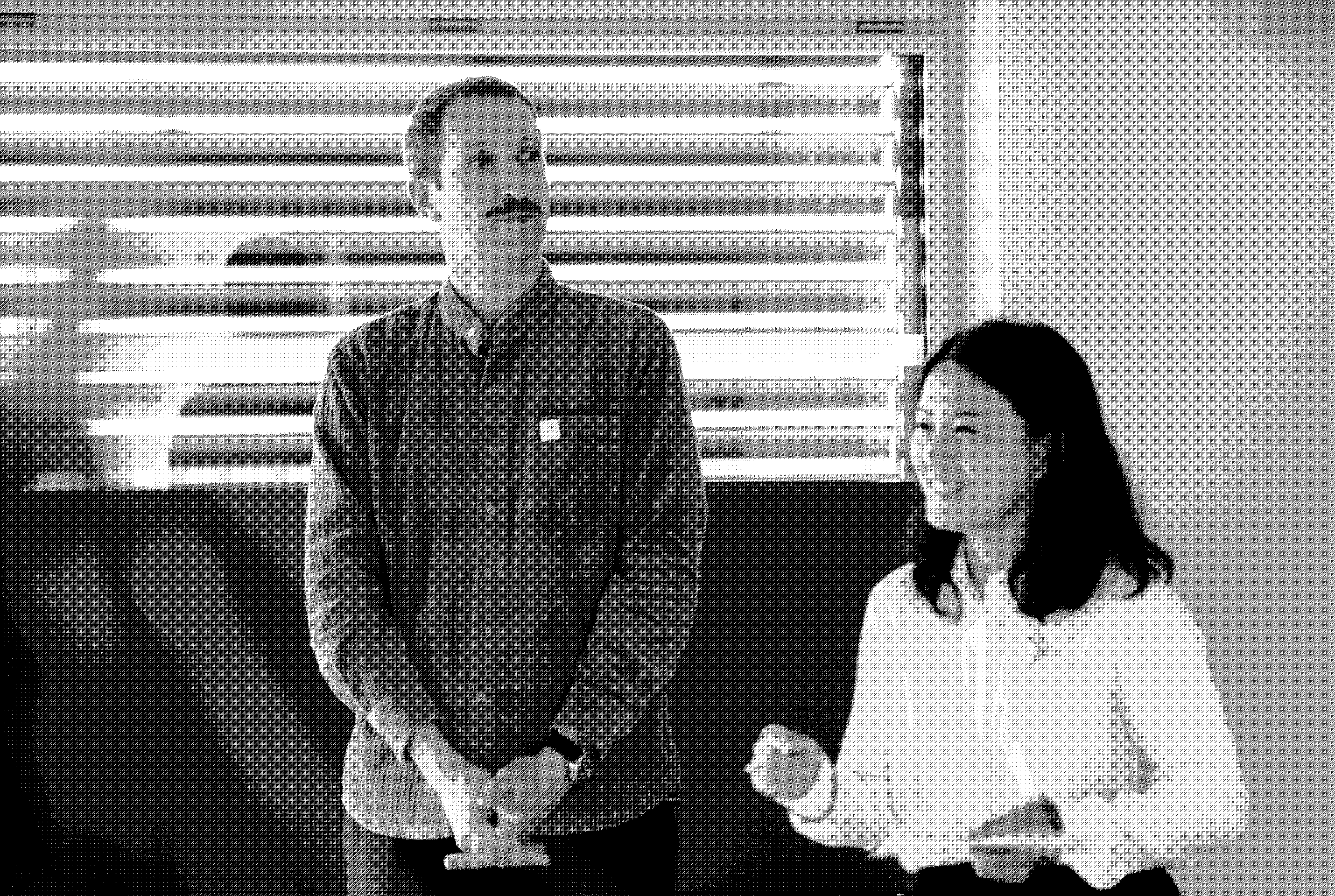
Parametric approach focused on eco-design
Né en Chine en 2019, Paramétrique, s'est installé aux Sables d'Olonne il y a un an. Fondé par Maxence Loisson de Guinaumont et Junying Wang, le bureau d'études se spécialise dans la réduction de l'impact environnemental des produits industriels dès la conception. Lauréat du Réseau Entreprendre Vendée, Paramétrique vise un marché local de TPE-PME avec un objectif de CA de 91 k€ pour sa première année de lancement.
Founded in China in 2019, the Parametric design office (formerly Trashaus) settled a year ago in Les Sables d'Olonne to support manufacturers in reducing the environmental impact of their products.
“I lived in China for eight years,” says Maxence Loisson de Guinaumont, co-founder of Paramétrique. “I worked in industrial design for large electronics manufacturers. I could see that there were things to improve in terms of the environment, but technology is a field where you have to move fast or risk being overtaken by the competition. There’s little room for questioning design methods and proposing new solutions. Meanwhile, my wife Junying was working in digital on projects that weren’t always honest about the environmental responsibility they claimed to uphold. We decided that to make a difference, it was better to be independent.”
With a third partner, they launched the business in 2019. “We started empirically, manufacturing materials from plastic waste. We notably carried out projects for the Chinese Uber Eats company (Meituan), making delivery boxes from their own waste, the collection of which we had organized.” He added: “For now, plastic recycling in France remains low nationally (20%), but some private companies are already achieving rates of 80%, thanks to a second sorting process. The sector is becoming increasingly organized.
There will always be waste to be recovered, but we believe that plastic will no longer be part of it within five to ten years. I am convinced that sorting centers will solve the problem rather than designers like us. Our area of expertise lies elsewhere, right from the product design stage. That's what determines 70 to 80% of the environmental impact.” »
Winner of the Réseau Entreprendre Vendée award at the beginning of the summer, Paramétrique, currently in its commercial launch phase, is targeting a market of local micro-enterprises and SMEs in order to establish itself in the region and aims for a turnover of €91k for its first year.
Readn the article 👇
https://www.informateurjudiciaire.fr/actualites/parametrique-mise-sur-lecoconception/

Vendée: They designed an innovative, modular surfboard
Collaboration Innovante entre Newave Surfboards et Paramétrique pour une Planche de Surf Démontable et Éco-Conçue
The demountable surfboard project by the company Newave Surfboards has benefited from recent improvements thanks to the collaboration of another company from Les Sables-d'Olonne, Paramétrique.
Par Franck HermelPublié le 29 Nov 23 à 8:23
Voir mon actu Suivre Le Journal des Sables
The two students' idea has steadily gained traction. It is now becoming a reality. Ewen Mahevas and Hadrien Nauroy, the founders of Newave Surfboards, will soon be able to offer their famous modular surfboard to the public.
A pre-sale will open in December, and a launch party is planned for November 30, 2023.
The concept? A surfboard that can be disassembled into three pieces. Ideal for solving storage problems, but also transportation issues. Until now, the length of the board has been a hindrance for surfers traveling by two-wheeler, taking public transportation, or driving a car that's too small. The Newave board solves all of these problems.
Its design took a crucial step forward with the company moving into new premises within the Olonne-sur-Mer business incubator.
With a new neighbor who would play his part in the development of the board: Parametric.
A wonderful encounter
Paramétrique is the new name Junying Wang and Maxence Loisson de Guinaumont have given to the company they recently founded in Les Sables-d’Olonne. Originally called Trashhaus, their company is a design consultancy whose mission is to find solutions that minimize a product's environmental impact. This eco-design approach allows them to assess the viability of a project and then optimize it to reduce its carbon footprint as much as possible. What materials should be chosen? What uses? What lifespan? These are just some of the many questions that arise from a multitude of perspectives (see sidebar).
The heads of Paramétrique and Newave were a perfect match. “We had heard about this collapsible surfboard, and as luck would have it, we became neighbors,” says Maxence Loisson de Guinaumont.
Optimisation
The meeting between the two companies quickly led to a fruitful partnership. “We found Newave’s project interesting, but we also saw that there was a way to make the board assembly and disassembly process even simpler,” explain the two partners at Paramétrique.
“This collaboration allowed us to work on improving the ergonomics of the assembly,” confirms Ewan Mahevas.
“The idea is to make this board as easy to use as possible. It’s designed for beginners as well as experienced surfers. And it must offer the same performance as a traditional board.”
Various Projects
Paramétrique continues its collaborations with other companies to design more responsible products. The company is currently working on recycled toys with the brand Lonaeh. It is also developing prototypes of a wide variety of objects, such as a beach mat made of natural materials that can easily be converted into a beach tent. The company is also working on a new amplifier model designed to avoid the drawbacks of more traditional amplifiers. "Designed as a single unit, they become unusable if a function malfunctions. Our project is a model composed of different elements, one for each function, making it repairable and giving it a longer lifespan." These are just a few examples of the diverse aspects that can make an object less environmentally impactful.
Marketing
All this comes at a slightly higher price than a standard surfboard, around €990 for the entry-level model. Newave is now entering a crucial phase: commercialization. Pre-orders will be available starting in December for delivery in April.
Read the article 👇