LumiSleep
Rethinking the headphone
The project began with a simple question: how can a technical device become almost imperceptible during sleep?
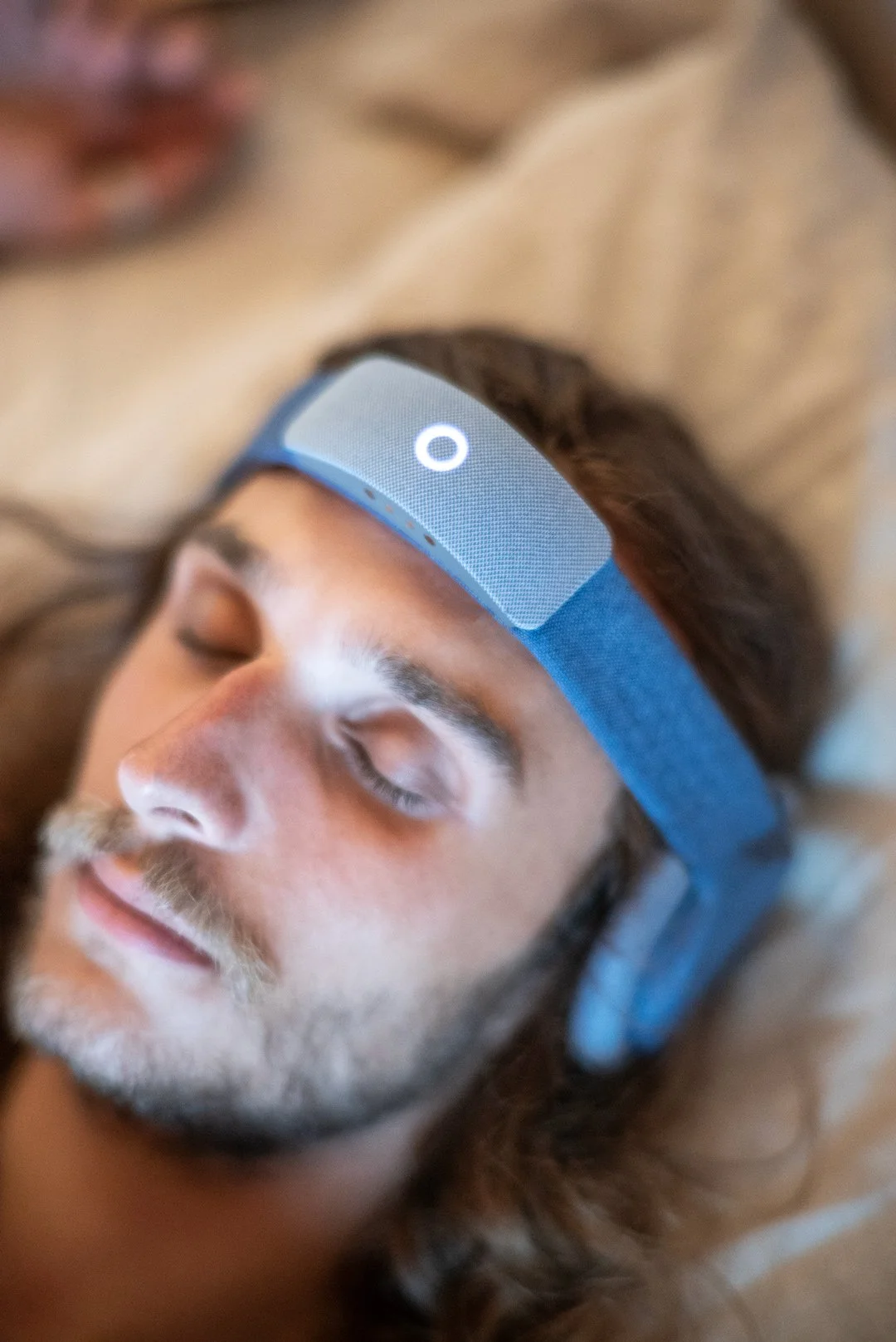
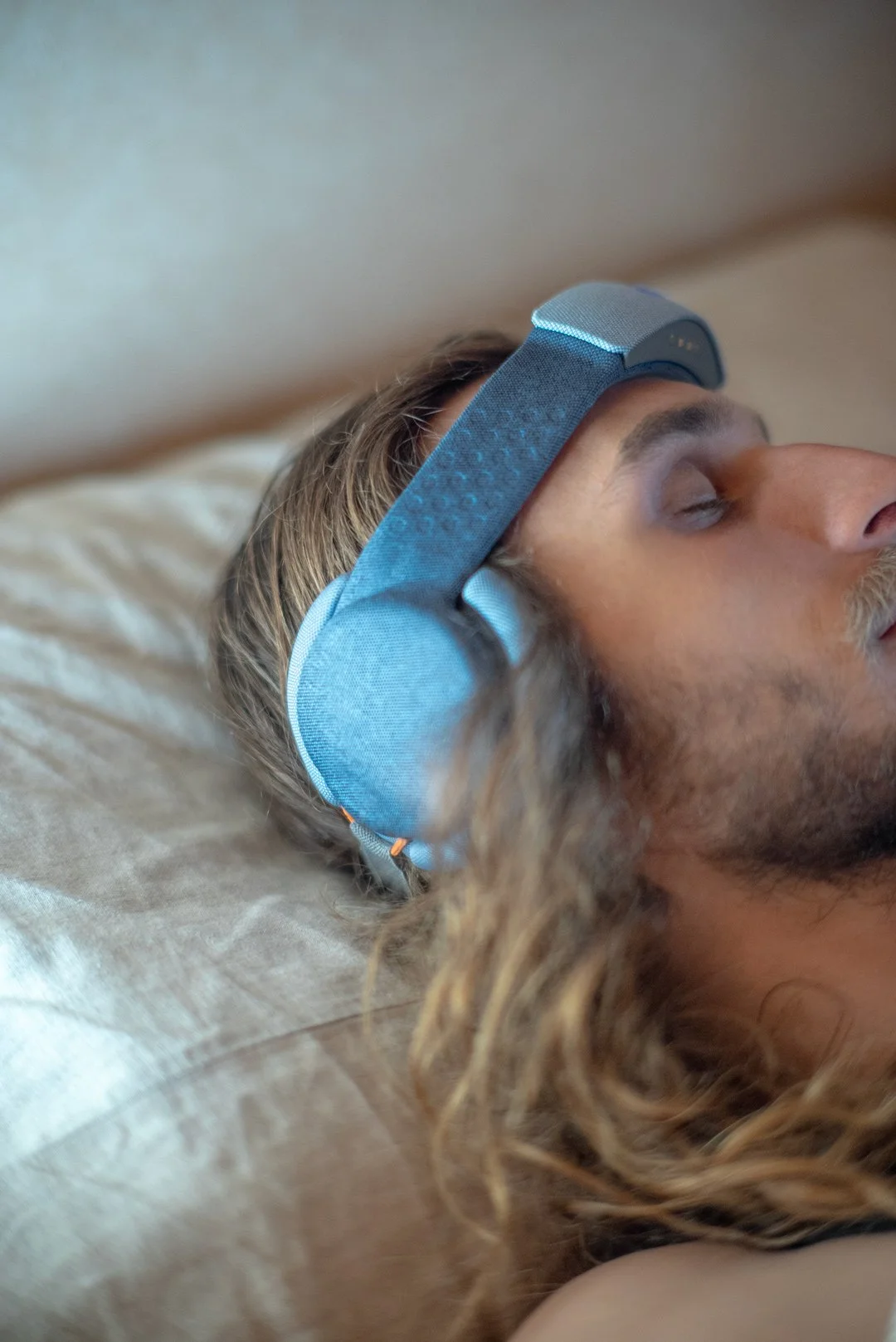
Unlike conventional headphones, LumiSleep needs to remain comfortable for several hours, accommodate different sleeping positions and avoid creating pressure when the head rests against a pillow. At the same time, we wanted to move away from the clinical appearance often associated with sleep-monitoring devices, creating an object that feels calm, soft and naturally at home in the bedroom.
A long-standing interest in sound
Sound has been a recurring subject within our work at Paramétrique, from Hi-Fi and audio equipment to headphones and wearable products. We are interested in the relationship between sound, technology and the human body, and in how industrial design can shape that relationship.
This interest can be seen in our work on the Amp 01 Hi-Fi amplifier, where we explored the relationship between engineering, craftsmanship and the physical presence of an audio object.
Our exploration of headphones has an even more personal starting point. In 2012, Maxence Loisson de Guinaumont developed a foldable headphone as his diploma project atECAL. The project became the starting point for a long-standing fascination with headphones as objects that sit at the intersection of sound, technology and the human body.
Since then, we have continued to explore and collect different headphones, developing a particular interest in their ergonomics, mechanisms, materials and interaction with the body.
LumiSleep offered an opportunity to take this research into a new context.
What happens when a headphone is no longer designed primarily for listening, but for sleeping?
Designing for the unconscious
Sleep fundamentally changes the relationship between a wearable object and its user.
When awake, we can adjust a headphone, change its position or simply remove it if it becomes uncomfortable. During sleep, the product has to adapt to the body instead.
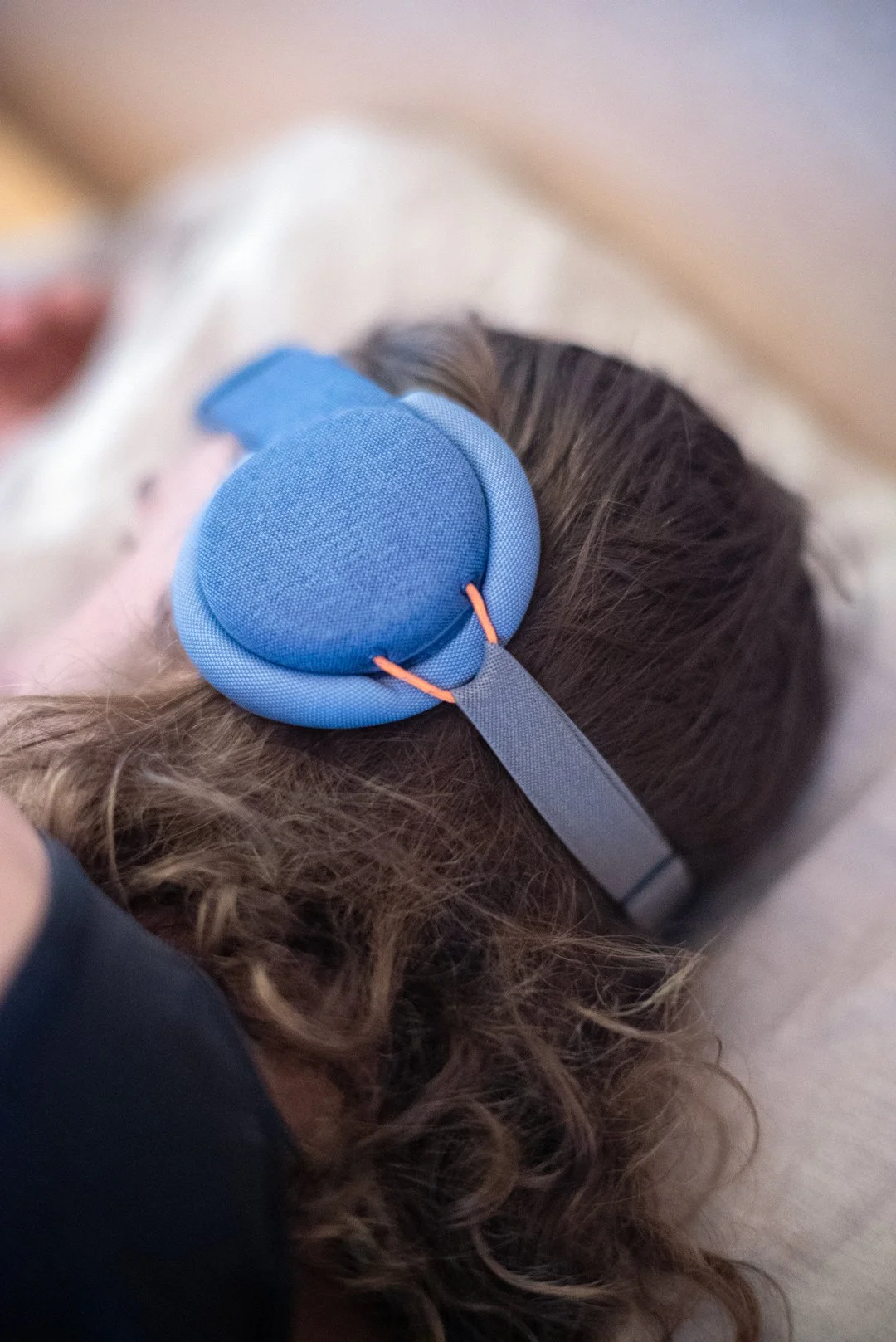
This led us to reconsider the rigid structures and hard plastic commonly found in headphones. We explored a softer and more flexible construction capable of adapting to the head, reducing pressure points and allowing the user to move naturally throughout the night.
The objective was not simply to make a more comfortable headphone.
It was to make a product comfortable enough to forget.
Softness as a design language
The move away from rigid plastic was both an ergonomic and aesthetic decision.
Soft materials and rounded forms communicate comfort while helping move LumiSleep away from the appearance of medical or electronic equipment. The object becomes more personal and familiar, better suited to the quiet environment of the bedroom.
The physical design reflects the intended experience: technology that is present when needed, but otherwise fades into the background.
Technology in the background
LumiSleep combines brain-signal monitoring with adaptive sound to accompany the user during the transition into sleep.
The technology is integrated directly into the device, allowing it to operate independently and respond to the user's state without requiring a phone or cloud connection.
Rather than making this complexity visible, we wanted it to disappear into the experience. The user does not need to interact with the technology during the night. The device simply becomes part of the bedtime ritual.
The complexity of the technology should not translate into complexity of use.
From listening to sleeping
LumiSleep is a continuation of our research into headphone design, but it also represents a shift in what a listening device can be.
Moving from listening to sleeping changes the priorities of the object. Comfort becomes more important than clamping force, adaptability more important than rigid structure, and the most successful interaction is one that eventually goes unnoticed.
LumiSleep brings together industrial design, ergonomics, material exploration and audio technology to create a wearable object for a different kind of listening experience.
A headphone designed not to be listened to, but to disappear.